
Diving: Types, Techniques, History and Uses
Diving is the act of moving downward into water or toward a surface; it includes recreational and competitive forms, plus underwater practices such as scuba and freediving.
Overview
Diving describes the controlled act of moving downward from one medium or level to another — for example from air into water or from air toward ground. It also refers to organized athletic disciplines that emphasize form, acrobatics and precise entry. At its core diving is purposeful movement downward executed with attention to body position, timing and safety.
Image gallery
10 Images




Types and common techniques
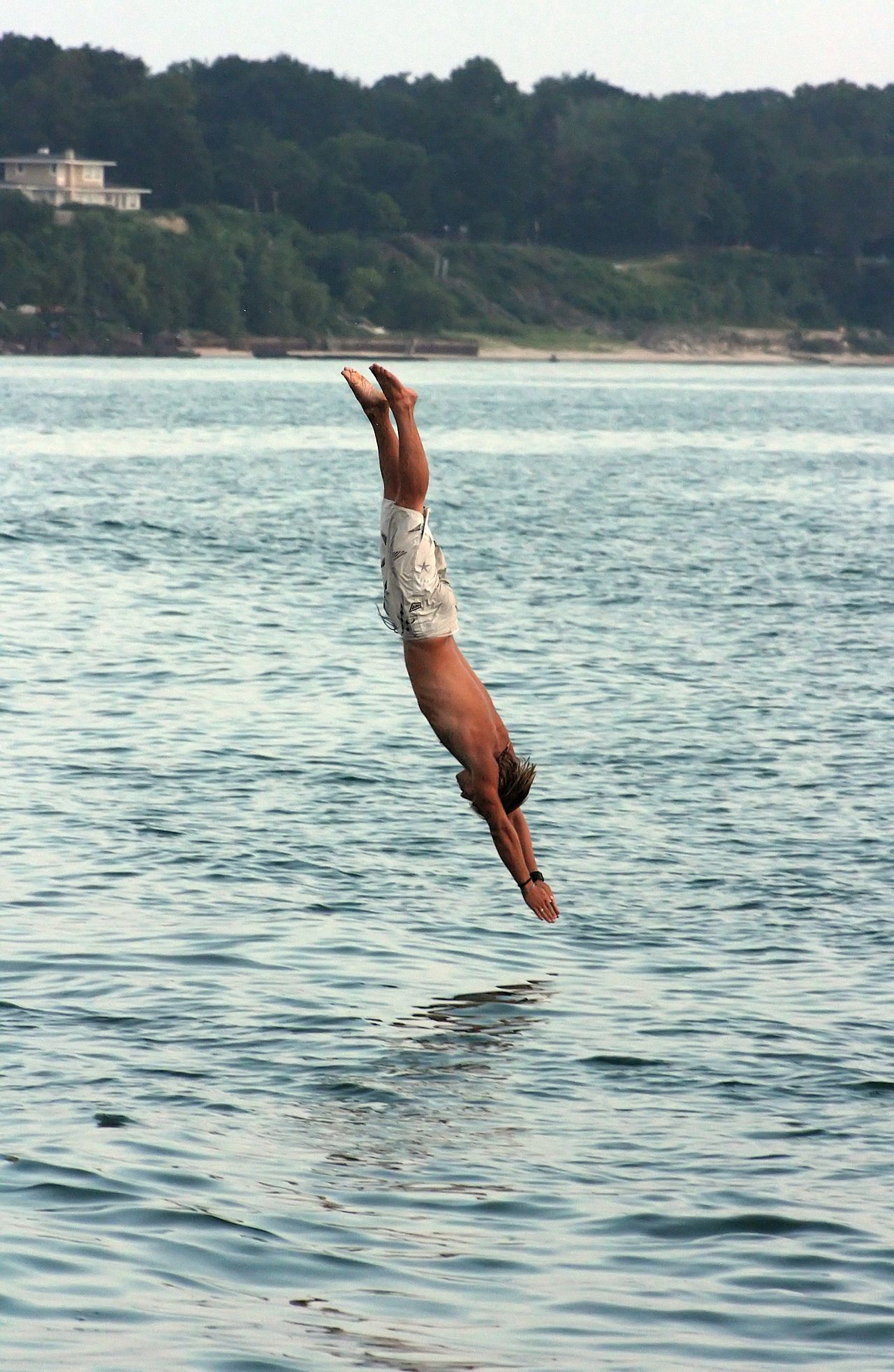
Broadly, diving falls into categories that include competitive springboard and platform events, recreational pool and cliff diving, and underwater diving activities. Competitive diving typically uses a springboard or elevated platform, with athletes performing flips, twists and controlled entries. Underwater or scuba-related entries are more utilitarian; underwater diving techniques focus on safe water entry and gear preparation.
- Common competitive entries: forward, backward, reverse, inward, twisting and armstand dives.
- Typical recreational/scuba entries: seated, stride, giant stride and backward roll for surface water entries.
- Equipment: minimal for competitive divers, but includes boards and platforms; scuba divers use masks, regulators and tanks.
History and competitive development
Diving as an athletic pursuit evolved from simple jumps and acrobatic displays into formal competition during the modern era. Organized contests refined rules, scoring criteria and difficulty classifications. Over time, diving became a staple of international multisport events and developed coaching systems, judging standards and technical training methods.
Uses, training and safety
Diving serves many purposes beyond sport: it is a component of rescue and military operations, a method for scientific and underwater work, and a recreational pastime. Training emphasizes approach, takeoff, aerial control and entry to reduce injury. Safety practices include learning in supervised settings, using appropriate depth for the dive type, and gradual progression from simple to complex maneuvers.
Distinctions and notable facts
Competitive diving focuses on aesthetics and precision, judged for technique and splash on entry, while underwater disciplines prioritize breathing systems, buoyancy and long-duration tasks. Scuba diving entries are generally straightforward and functional rather than acrobatic. For more technical guidance, training resources and governing rules, consult coaching materials and recognized authorities on aquatic sports and diving practices via sport organizations and instructional bodies (see overview). Additional references and resources may be found through introductory guides and specialist publications (ground safety, water techniques, springboard, platform).
Questions and answers
Q: What is diving?
A: Diving is a form of movement downwards from air to ground or water.
Q: Is diving always a sport?
A: No, diving can also be an act of movement downwards. However, it is often done as a sport.
Q: What are some platforms divers may use?
A: Divers may use a springboard or elevated platform to dive.
Q: What is scuba diving?
A: Scuba diving is a form of underwater diving.
Q: Is scuba diving considered a sport?
A: No, scuba diving is typically not considered a sport.
Q: Are the dives used in scuba diving complex?
A: No, the dives used in scuba diving are relatively simplistic.
Q: Can you give an example of a dive used in scuba diving?
A: An example of a dive used in scuba diving is the giant stride entry, also known as a stride dive.
Related articles
Author
AlegsaOnline.com Diving: Types, Techniques, History and Uses Leandro Alegsa
URL: https://en.alegsaonline.com/art/27812