
Dit Clapper: Boston Bruins Legend and Two‑Way Hockey Pioneer
Biography of Aubrey “Dit” Clapper, his career with the Boston Bruins, role on the Dynamite Line, transition to defence, coaching, records and lasting influence on professional hockey.
Aubrey Victor "Dit" Clapper (February 9, 1907 – January 20, 1978) was a Canadian professional ice hockey player best known for a long and influential career spent entirely with the Boston Bruins of the National Hockey League. Celebrated for durability, leadership and positional versatility, Clapper became one of the earliest and most prominent examples of a genuine two‑way player in top‑level hockey.
Image gallery
3 Images
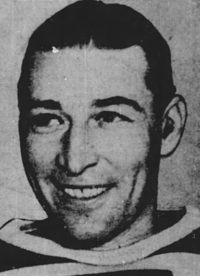

Early career and rise
Clapper began his skating and junior experience in Canada before breaking into the professional ranks. He established himself quickly as a dependable performer, combining a physical approach with sound defensive instincts and enough offensive ability to be noticed in a league that was evolving rapidly in style and structure. His early years featured steady improvement and a reputation for playing through injuries and adversity, attributes that contributed to a long tenure with a single franchise.
Role on the Dynamite Line
As a forward, Clapper was the right wing on the famed "Dynamite Line," alongside Cooney Weiland and Dutch Gainor. That trio was among the first forward combinations in the sport to earn a popular nickname and public recognition for its effectiveness. The line helped the Boston club set team and league scoring marks in the early 1930s, and it demonstrated the value of chemistry and complementary skills among linemates in an era when tactical systems were less formalized than in later decades.
Transition to defence and playing style
Later in his career Clapper made a successful transition from forward to defence. This change highlighted his hockey sense, positional awareness and ability to read the play. He was named an All‑Star at both forward and defence—one of only a very small number of players to receive that distinction—underscoring how rare and notable his two‑way competence was. Clapper combined physicality with accurate passing and steady decision making, traits that allowed him to remain effective even as the pace and structure of the game changed.
Longevity, leadership and coaching
Clapper was the first NHL player to play twenty seasons, a milestone that reflected both skill and remarkable longevity in a demanding sport. Near the end of his playing days he served as a player‑coach for the Bruins and then continued as head coach after retiring as a player. In those roles he applied on‑ice experience to team management and tactics, and he remained associated with the organization in various capacities, contributing to its continuity and institutional knowledge.
Honours and legacy
- Inducted into the Hockey Hall of Fame in recognition of his career and impact on the sport.
- Remembered as a pioneer of the two‑way player model and for exceptional loyalty to a single franchise.
- Laid groundwork for the modern appreciation of position flexibility and defensive responsibility among forwards and defencemen alike.
Clapper's career bridged distinct periods in hockey history—from an era of high scoring through more systematized defensive play—and his adaptability offered an early model for players and coaches seeking to balance offence and defence. His name remains part of Bruins lore and is often cited in discussions of players who combined long service with significant positional contributions.
Further reading and resources
For authoritative biographical summaries and institutional histories, see the Hockey Hall of Fame profile (Hall of Fame entry), Boston Bruins historical pages (team history), contemporary NHL statistical archives (player statistics), articles discussing the Dynamite Line and its era (line history), and retrospective essays on two‑way players and early NHL longevity (features and retrospectives).
These sources provide context for Clapper's achievements and assist readers seeking further verification of career milestones, period accounts, and the evolution of playing roles in professional hockey.
Questions and answers
Q: Who was Dit Clapper?
A: Dit Clapper was a Canadian ice hockey player.
Q: Which team did he play for in his entire professional career?
A: He played for the Boston Bruins of the National Hockey League.
Q: What is significant about Dit Clapper's career in the NHL?
A: He was the first NHL player to play twenty seasons and one of only two to be an All-Star at both forward and defence.
Q: What was the name of the famous forward line that Dit Clapper played on?
A: Dit Clapper played on the "Dynamite Line" along with Cooney Weiland and Dutch Gainor.
Q: What accomplishments did the "Dynamite Line" achieve in hockey history?
A: The "Dynamite Line" broke several scoring records in the 1930s.
Q: Did Dit Clapper ever pursue coaching?
A: Yes, towards the end of his career, he became a player-coach of the Bruins and held the coaching position after his retirement as a player.
Q: Was Dit Clapper inducted into the Hockey Hall of Fame?
A: Yes, Dit Clapper was inducted into the Canadian Hockey Hall of Fame.
Related articles
Author
AlegsaOnline.com Dit Clapper: Boston Bruins Legend and Two‑Way Hockey Pioneer Leandro Alegsa
URL: https://en.alegsaonline.com/art/27781
Sources
- emcnorthwest.ca : "Dit Clapper story needs to be told says local writer"
- bruinslegends.blogspot.com : "Dit Clapper"
- legendsofhockey.net : "Dit Clapper, Biography"
- hhof.com : "One On One With Dit Clapper"
- hockey-reference.com : "NHL Progressive Leaders for Games Played"
- news.google.com : "Dit Clapper Candidate"
- news.google.com : "Dit Clapper Dead At 70"
- emcquinte.ca : "Hockey hero gets his day in Hastings"
- communitypress.ca : "Hastings honours hockey great Dit Clapper"