
The Dionne Quintuplets: birth, public spectacle, and legacy
Canadian quintuplets born in 1934 who became a global sensation, were placed in state care and exhibited to the public, later returned to their family and won compensation for exploitation.
Overview
The Dionne quintuplets were five identical sisters born in rural Ontario, Canada on May 28, 1934. They were the first known quintuplets to survive infancy and quickly attracted international attention. Their story intersects medicine, government policy, popular culture and debates about children's rights.
Image gallery
6 Images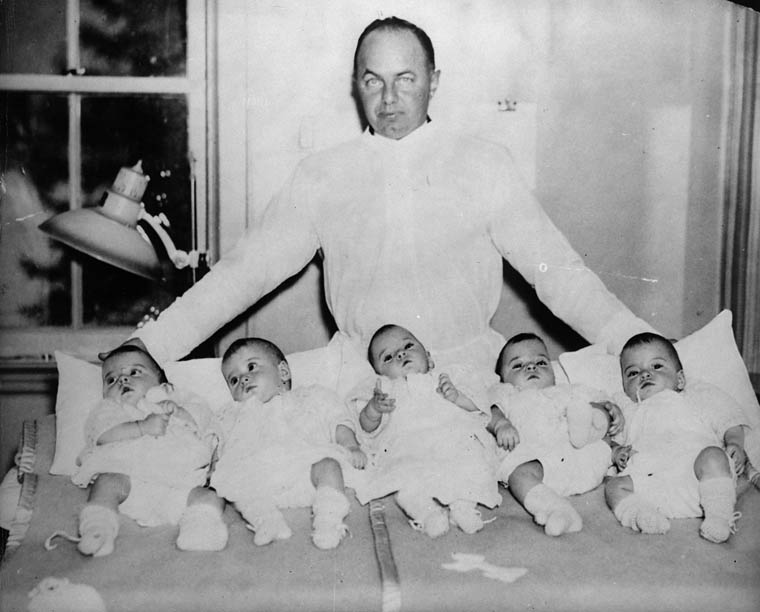



Names and early medical facts
The sisters were named Annette, Cécile, Émilie, Marie and Yvonne. Their birth and infancy required close medical supervision under Dr. Allan Roy Dafoe, the physician who delivered them and who became closely identified with their care. The sisters' later deaths are part of the historical record:
- Annette
- Cécile
- Émilie — died on August 6, 1954 from a condition associated with epilepsy and a seizure
- Marie — died on February 27, 1970 after complications described as a blood clot in the brain
- Yvonne — died on June 23, 2001 from cancer
Custody, care and public display
Not long after their birth the girls were placed under the guardianship of Dr. Dafoe and, effectively, the provincial government. They were housed in a specially prepared facility often described as "Quintland" and set up so that visitors could observe them as part of a staged, amusement-style environment. The complex has been characterized as a theme park-like attraction because of its visitor facilities and theatrical presentation.
The sisters were photographed extensively, licensed for merchandising and featured in commercial endorsements. Souvenirs included dolls, and they appeared in advertisements for household products such as corn syrup and breakfast foods. At the height of public interest thousands of tourists visited each day to see the quintuplets; the phenomenon raised questions about the ethics of public exposure for minors.
Return to family and later developments
In 1943 custody was returned to the girls' father, and the sisters left the public exhibit to live with their family. Over time the sisters spoke about difficult family dynamics and later allegations that their upbringing included mistreatment; some accounts and interviews reference claims of abuse and of being deprived of privacy and normal childhood experiences.
Legal redress and legacy
Decades after their childhood publicity the surviving sisters sought legal recognition of the harms they suffered as public spectacles. In 1998 they brought a claim against the provincial government alleging exploitation; the litigation concluded with a settlement and compensation reported at 4 million Canadian dollars. That settlement acknowledged, in part, the injustices of how their care and image had been managed.
The Dionne quintuplets remain a subject of study for historians, ethicists and media scholars. Their case is used to examine the intersection of medical curiosity, governmental authority, commercialization of childhood and the protection of vulnerable people. It also illustrates how popular fascination can have long-term consequences for those at the center of a public spectacle.
Further reading and archival materials are available from provincial and national repositories and from contemporary press coverage and medical reports; these sources trace changing public attitudes toward child welfare and celebrity in the twentieth century.
Questions and answers
Q: What are the names of the Dionne Quintuplets?
A: Annette, Cecile, Emilie (who died on August 6, 1954 from an epilepsy seizure), Marie (who died on February 27, 1970 from a blood clot in the brain), and Yvonne (who died on June 23, 2001 from cancer).
Q: Who delivered the babies?
A: Dr. Allan Roy Dafoe delivered them.
Q: Where did they live after their birth?
A: After their birth they were housed in a special theme park-like area just across the street from the house where their parents and six other siblings lived.
Q: How many people visited them each day?
A: At one time 6,000 people visited them each day at this location which was called "Quintland".
Q: What products did they appear in commercials for?
A: They appeared in commercials for products like corn syrup and Quaker oats oatmeal.
Q: When did Olivia get custody of his daughters again? A: In 1943 Olivia got custody of his daughters again.
Q: What happened to Dr. Dafoe after he gave custody of the girls back to Olivia? A:Dr. Dafoe died soon after that.
Q: What action did the surviving sisters take against Ontario government in 1998? A:In 1998 the surviving sisters sued the government of Ontario for being exploited as kids and were rewarded 4 million Canadian dollars.
Related articles
Author
AlegsaOnline.com The Dionne Quintuplets: birth, public spectacle, and legacy Leandro Alegsa
URL: https://en.alegsaonline.com/art/27544