
Diocletian — Roman emperor and reformer of the late third century
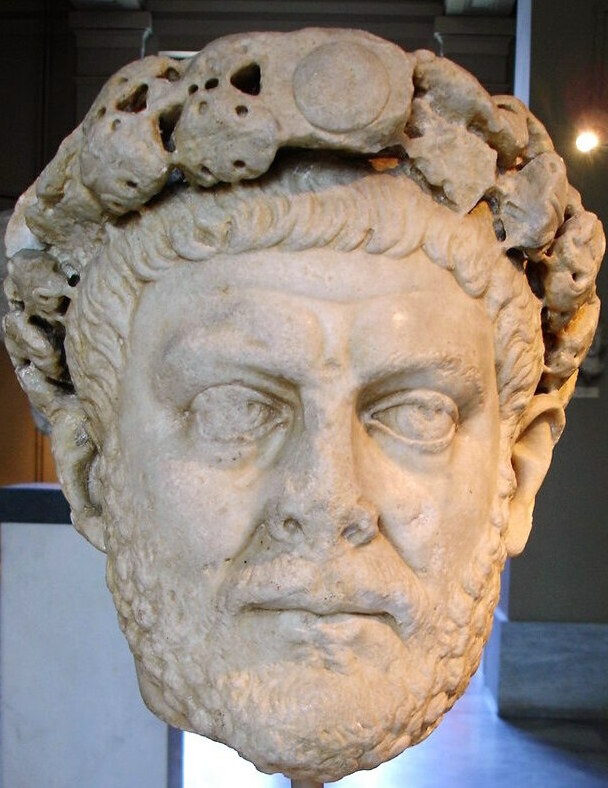
Emperor Diocletian (ruled 284–305) reorganized Roman government, military and coinage, initiated the Tetrarchy, launched the empire's last widespread persecution of Christians, and retired to his palace in Dalmatia.
Overview
Gaius Aurelius Valerius Diocletianus, commonly called Diocletian, rose from modest origins in Dalmatia to become Roman emperor in 284 CE. His reign brought an end to the prolonged instability known as the Crisis of the Third Century, a period of rapid successions, civil wars and fragmentation. Diocletian sought to restore imperial authority through wide‑ranging reforms of government, the army and the economy, and by redefining how power was shared at the top of the state.
Image gallery
10 Images



Government and the Tetrarchy
Diocletian reorganized imperial rule by creating the Tetrarchy — a system of two senior emperors (Augusti) and two junior colleagues (Caesars). This arrangement aimed to provide clearer lines of succession and a faster response to threats across the empire. Administratively, he increased the number of provinces and grouped them into larger units often called dioceses (from which the modern term derives), each overseen by imperial appointees. The result was a more hierarchical and bureaucratic state, with more officials and clearer division of responsibilities.
Economic and fiscal measures
Facing monetary disorder and rising prices, Diocletian introduced reforms intended to stabilize coinage and tax revenue. He attempted to restore a bimetallic standard by enforcing stricter rules for gold and silver coins and by curbing debasement. To improve state finance he instituted more regular censuses and a system of taxation designed to collect revenues more predictably from land and people. In an effort to control runaway price inflation he issued edicts that prescribed maximum prices for many goods and services; these measures had mixed results and were difficult to enforce across the whole empire.
Military reorganization
Military reform was central to Diocletian's program. He strengthened frontier defenses and created a clearer distinction between troops stationed along borders and more mobile field forces. Local garrison units were positioned at frontier zones such as the regions along the Rhine and Danube to deter incursions, while other elements were kept ready to respond to internal rebellions or large invasions. Pay and promotion were regularized to improve soldier morale and loyalty.
Religion and persecution
Diocletian supported traditional Roman polytheism and took a conservative stance toward religious practice. In 303 he presided over a series of imperial edicts targeting communities that refused to conform to state cults; this campaign is often called the Great Persecution and included measures such as the closure of places of worship, confiscation of scripture and punishment of clergy and lay leaders. Those policies varied by province in severity and were later relaxed under his successors. Accounts emphasize that executions and corporal punishments occurred, including methods like crucifixion in some cases, though the scale and administration differed across regions. The campaign opposed the growing Christian movement to reassert the traditional polytheistic order.
Notable policies and consequences
Diocletian confronted economic symptoms such as the flow of precious metals toward the east and domestic gold losses and inflation. He attempted to legislate monetary purity and to organize taxation more effectively. His rule also restructured how provincial and municipal governments interacted with the central authority, increasing administrative complexity but improving fiscal extraction and coordination.
Retirement and legacy
Unusually for a Roman emperor, Diocletian voluntarily abdicated in 305 and retired to a villa complex on the Dalmatian coast, now famous as the Palace of Diocletian. He died a few years later, around 311. His reforms stabilized the empire after decades of crisis and shaped imperial institutions for generations. The Tetrarchy eventually unraveled, and later emperors, notably Constantine, altered many of Diocletian's policies. Nevertheless, his administrative and fiscal changes left a durable imprint on late Roman government and the transition to the fourth century.
- Further reading: Overviews of late Roman administration and the Great Persecution often discuss Diocletian's role; see general histories for context and primary-source compilations for the edicts.
- Birthplace and early life
- End of the third-century crisis
- Policies affecting Christians
- Forms of punishment
- Roman religious policy
- Monetary issues
- Inflation and price controls
- Frontier defenses
Questions and answers
Q: Who was Diocletian?
A: Diocletian (Gaius Aurelius Valerius Diocletianus) was a Roman Emperor from 20 November 284 to 11 May 305. He was born in Dalmatia of poor parents.
Q: What period did he end?
A: Diocletian ended the period known as the Crisis of the Third Century (235–284).
Q: How did he handle religion?
A: He persecuted Christians, crucifying more than any other emperor, and imposed the traditional polytheistic religion of the Romans.
Q: What did he do to address economic issues?
A: Recognizing a gold drain from the western Mediterranean to the east, he tried to stop inflation by legislation and decreed that coins could only be made of gold or silver. He also improved the tax system.
Q: How did he change military practices?
A: Diocletian changed army practices from garrison defense to small outposts on borders with local soldiers who farmed and lived with their families in villages. They lit signal fires on towers to warn against possible invasions by Germans across borders, and soldiers were paid regular wages for their services. He also allowed them to move up through ranks based on years of service and actions taken in battle.
Tags
Related articles
Author
AlegsaOnline.com Diocletian — Roman emperor and reformer of the late third century Leandro Alegsa
URL: https://en.alegsaonline.com/art/27528