
Dinosaur Renaissance: rebirth of modern dinosaur science
The Dinosaur Renaissance refers to the shift in paleontology since the 1970s that transformed dinosaurs from sluggish reptiles to active, often birdlike animals, driven by new fossils, fresh ideas, and changing public images.
Overview
The term "Dinosaur Renaissance" describes a major change in how scientists and the public understand dinosaurs. Coined in the mid-1970s and popularized in a 1975 article in Scientific American, the phrase captures a broad reassessment of dinosaur biology and behavior that began in the 1960s and continues to influence research today. Key figures associated with this shift include paleontologists such as Robert Bakker and John Ostrom, and the movement drew on renewed fieldwork and new analytical approaches in paleontology.
Image gallery
5 Images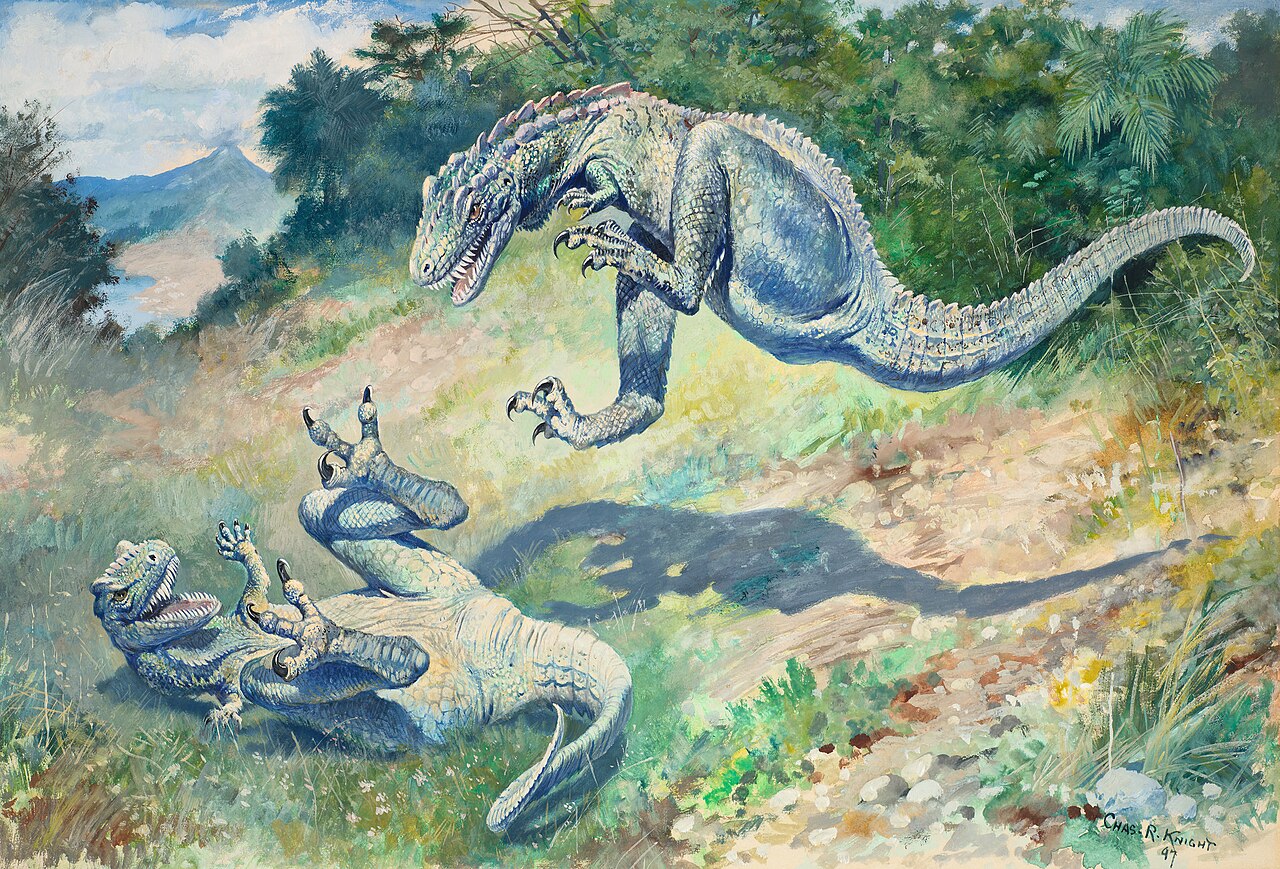


What changed: characteristics and evidence
Before the renaissance, popular and scientific views often pictured dinosaurs as slow, cold-blooded reptiles. New fossil finds and reinterpretation of older specimens suggested different possibilities: many dinosaurs were agile, active, and in some cases had birdlike anatomies. Anatomical features emphasized in this reinterpretation included limb posture and hip structure indicating upright gait, stiffened tails and specialized muscles for balance, and in some lineages, evidence consistent with insulating coverings or feathers. Observations of bone structure, predator-prey mechanics, and trackways all contributed to the view that at least some dinosaurs had high metabolic rates and complex behaviors.
Key discoveries and proponents
John Ostrom's 1964 description of Deinonychus was particularly influential: its blade-like claw, long legs and flexible tail suggested a fast, active predator rather than a sluggish animal. Ostrom's work inspired students and colleagues, including Bakker, who argued for warm-bloodedness and behavioral complexity. Anatomical details such as long strings of ossified tendons along the tail were cited as evidence of a stiff, counterbalancing structure (tendons) that supported agile locomotion. These findings prompted renewed comparisons between dinosaurs and birds and revived interest in dinosaur ecology and life history.
Major consequences and examples
- Scientific: a surge in field expeditions and new analytical methods shifted research toward behavior, growth, and physiology.
- Museum and public impact: prehistoric animals began to appear in art, films, and exhibits as dynamic creatures rather than static giants.
- Paleoart: illustrators and model makers adopted more active postures and, later, incorporated feathered reconstructions where supported by fossils (illustrators).
Ongoing debates and nuances
Although the renaissance popularized the idea that many dinosaurs were more active and possibly warm-blooded, paleontologists caution against simple generalizations. Evidence for high metabolism (metabolism) is stronger in some groups than others; dinosaur physiology likely varied across clades and through time. The recognition that birds are living dinosaurs further complicated classifications and prompted studies of feathers, growth rates, and parental care, tying modern avian biology to deep evolutionary roots.
Legacy
Today the Dinosaur Renaissance is seen as a turning point that modernized the field and reshaped popular imagination. It stimulated a generation of research that continues to refine our picture of dinosaur life: many species are now reconstructed as active, ecologically diverse animals, part of a wider narrative about the origin of birds and the evolution of warm-bloodedness. For readers seeking primary sources and further reading, classic works and reviews by figures linked above remain useful starting points (Scientific American, writings by Bakker, and papers by Ostrom), and more recent syntheses expand on physiological and feathered-dinosaur evidence.
Further context and detailed studies can be found in general treatments of paleontology and in museum literature. For a quick reference to the discoveries that influenced this shift, see discussions of Deinonychus, analyses of tail tendons, and summaries of arguments about dinosaur metabolism. For perspectives on public representation, consult resources on scientific illustration (illustrators).
Questions and answers
Q: What is the "dinosaur renaissance"?
A: The "dinosaur renaissance" is a term that refers to the renewed interest in paleontology that began in the 1970s and has continued to the present.
Q: What was the cause of the dinosaur renaissance?
A: The dinosaur renaissance was caused by a great increase in dinosaur discoveries and by new ideas about how they lived.
Q: Who coined the term "dinosaur renaissance"?
A: The term "dinosaur renaissance" was coined by Robert Bakker in a 1975 issue of Scientific American.
Q: Why was John Ostrom's discovery of Deinonychus important?
A: John Ostrom's discovery of Deinonychus was important because it showed that at least some dinosaurs had an active lifestyle and were capable of leaping and slashing or stabbing with their "terrible claw".
Q: What conclusion did some scientists draw from the discovery of Deinonychus?
A: Some scientists concluded that at least some dinosaurs had a high metabolism and were warm-blooded, which challenged the traditional view of dinosaurs as slow, cold-blooded, small-brained reptiles.
Q: Who popularized the idea of warm-blooded dinosaurs?
A: The idea of warm-blooded dinosaurs was popularized by Robert Bakker, who was a student of John Ostrom.
Q: How did the dinosaur renaissance change the public's perception of dinosaurs?
A: The dinosaur renaissance changed how dinosaurs were pictured both by professional illustrators and in the public eye, and challenged the traditional view of them as slow, cold-blooded, small-brained reptiles.
Related articles
Author
AlegsaOnline.com Dinosaur Renaissance: rebirth of modern dinosaur science Leandro Alegsa
URL: https://en.alegsaonline.com/art/27503
Sources
- ucmp.berkeley.edu : Dromaeosauridae
- ui.adsabs.harvard.edu : 1974Natur.248..168B
- doi.org : 10.1038/248168a0
- doi.org : 10.1080/02724634.1996.10011361
- jstor.org : 4523770
- ui.adsabs.harvard.edu : 1972Natur.238...81B
- doi.org : 10.1038/238081a0
- books.google.com : "Were the dinosaurs warm-blooded or not?"
- ui.adsabs.harvard.edu : 1990Natur.344..858P
- doi.org : 10.1038/344858a0
- doi.org : 10.2307/3515240
- jstor.org : 3515240
- ui.adsabs.harvard.edu : 1979Natur.282..296H
- doi.org : 10.1038/282296a0
- lindahall.org : Bakker's illustration