
Dilemma: meaning, types, and logical formulations
A dilemma presents two or more alternatives that lead to different outcomes. This article explains everyday and formal meanings, types (constructive, destructive, trilemma), history, and practical implications.
Overview
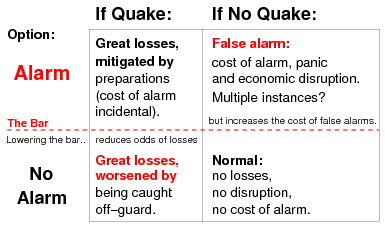
A dilemma is a situation in which a person or group faces two or more competing options or propositions, each of which leads to a consequence that may be undesirable, costly, or otherwise problematic. In plain language, the phrase often implies a difficult choice between two unattractive outcomes — commonly described as being "on the horns of a dilemma." The word itself has roots in Greek; see Greek etymology for a concise origin note.
Image gallery
2 Images
Characteristics and common forms
Dilemmas can differ by scope and structure. They may involve two clear alternatives, several alternatives, or options that are not strictly mutually exclusive. Typical features include competing obligations, mutually incompatible goals, or consequences that force a trade-off. When more than two horns are involved, the situation may be called a trilemma or, more generally, a polyfacing problem; compare the term trilemma.
Formal logic and standard patterns
In logic, the word "dilemma" is used more precisely. A logical dilemma is an argument form in which a disjunction and conditional statements together allow a single conclusion regardless of which disjunct holds. Two principal forms are named:
- Constructive dilemma: If X then Y; if W then Z; X or W; therefore Y or Z.
- Destructive dilemma: If X then Y; if W then Z; not Y or not Z; therefore not X or not W.
Symbolically, the general pattern of a logical dilemma can be written as: A ∨ B, A ⇒ C, B ⇒ C ⊢ C. In this sense the dilemma is not about unattractive outcomes but about inevitability: different premises converge on the same conclusion. For more technical background, consult resources on formal logic.
History and development
The notion of dilemma appears repeatedly in classical rhetoric and philosophy as a device for testing arguments and exposing contradictions. Ancient logicians and sophists used dilemma-like constructions to force interlocutors to acknowledge consequences. Over time the term widened in ordinary speech to include difficult choices of moral, political, or practical kind, rather than only a formal inferential pattern.
Uses, examples, and importance
Dilemmas arise across ethics, law, public policy, and everyday decision-making. Examples include moral dilemmas (conflicting duties), legal dilemmas (incompatible obligations under different laws), and strategic dilemmas (choices that trade off safety, cost, or reputation). In debate and argumentation, pointing out a dilemma can pressure an opponent to accept an unattractive concession or to refine their position to avoid the forced consequence.
Distinctions and notable facts
Not every difficult choice is a true logical dilemma. Ordinary dilemmas often involve value judgments and uncertain outcomes, while the logical form requires well-defined premises and implications. Dilemmas can sometimes be resolved by rejecting a premise, finding a third option, or reinterpreting the consequences. Awareness of the type of dilemma at hand—practical versus formal—helps clarify possible responses and remedies.
Questions and answers
Q: What is a dilemma?
A: A dilemma is when two solutions or possibilities are present, and both outcomes are undesirable or impossible.
Q: How is a dilemma expressed in formal logic?
A: In formal logic, the definition of a dilemma differs from everyday usage. Two options are still present, but choosing between them is immaterial because they both imply the same conclusion. This can be symbolically expressed as "one (or both) of A or B is known to be true, but they both imply C, so regardless of the truth values of A and B we can conclude C."
Q: Are there different types of dilemmas?
A: Yes, there are constructive and destructive dilemmas. Constructive dilemmas involve if-then statements that lead to two possible conclusions while destructive dilemmas involve two choices that each lead to an undesirable outcome.
Q: How many choices does a horned dilemma have?
A: Horned dilemmas can present more than two choices - the number of choices determines their alternative names such as two-pronged (two-horned) or three-pronged (three-horned).
Q: What does it mean to be on the horns of a dilemma?
A: To be on the horns of a dilemma means that neither outcome is comfortable - it's an unpleasant situation where you must choose between two undesirable options.
Q: What do constructive dilemmas involve?
A: Constructive dilemmas involve if-then statements that lead to two possible conclusions.
Related articles
Author
AlegsaOnline.com Dilemma: meaning, types, and logical formulations Leandro Alegsa
URL: https://en.alegsaonline.com/art/27427