
Allakaket, Alaska
Small Koyukon Athabascan city in Alaska's Yukon-Koyukuk Census Area, located on the Koyukuk River. Subsistence-based community with a history tied to river travel and Indigenous culture.
Allakaket (Koyukon: Aalaa Kkaakk’et) is a small incorporated city in Alaska, within the Yukon-Koyukuk Census Area of the Unorganized Borough of the United States. It sits along the Koyukuk River near the mouth of the Alatna River and shares close geographic, cultural and family ties with the neighboring community across the river, Alatna. Census counts recorded fewer than a few hundred residents; for example, the population was 97 in 2000 and 105 in 2010.
Image gallery
2 Images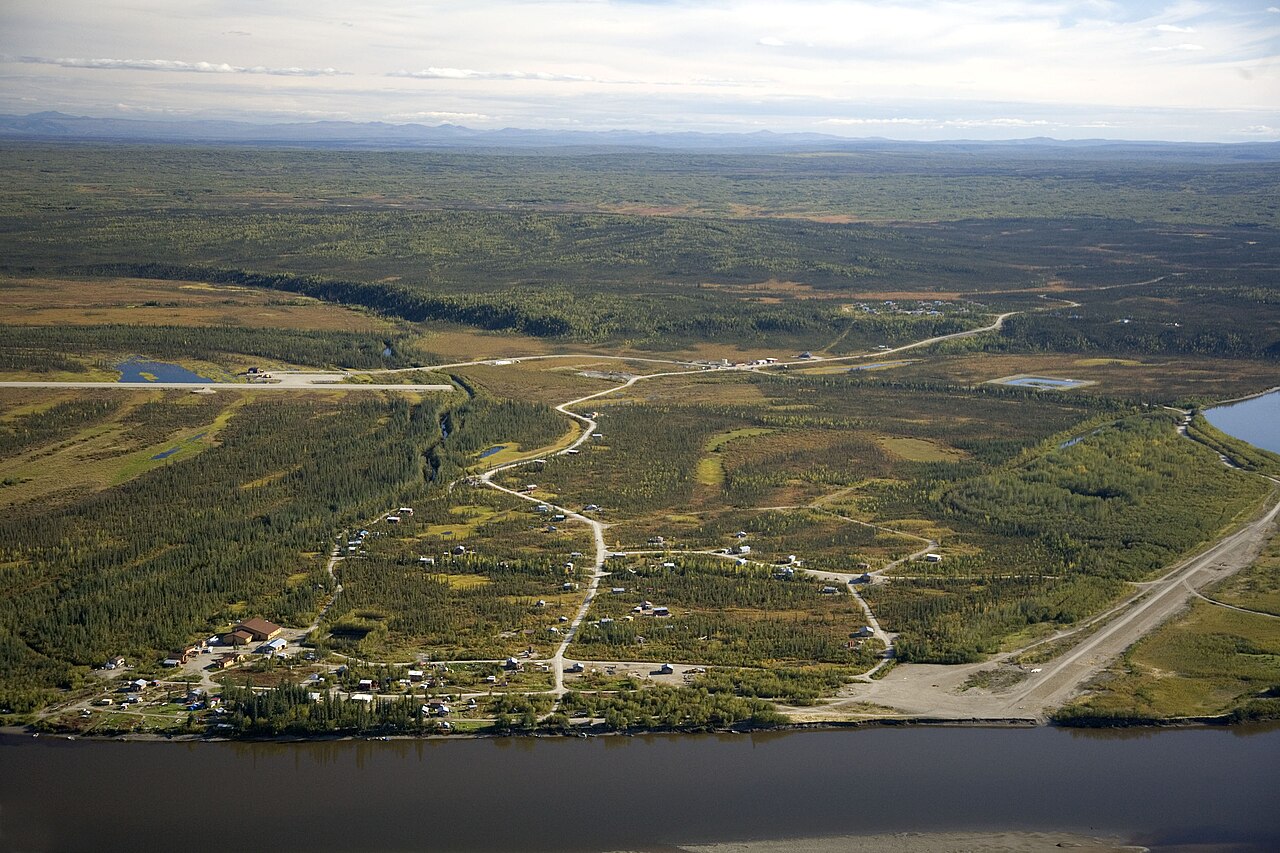

Geography and access
Allakaket occupies a riverine setting typical of many interior Alaska villages. The town is accessible primarily by small aircraft and by river during the ice-free months; in winter, travel is possible by snowmachine and seasonal ice roads. The surrounding landscape is boreal forest and tundra, with abundant fish and game that support local subsistence activities.
People and culture
The community is predominantly Koyukon Athabascan and maintains many traditional practices, including fishing, hunting, trapping and berry gathering. Koyukon language and cultural knowledge remain important to daily life, interwoven with modern services and institutions maintained by the local city government and tribal organizations.
History and development
Allakaket developed as a gathering and trading location for Indigenous families and later saw influences from missionaries, traders and regional government services. Like other river communities, it has been shaped by seasonal cycles of river travel and by environmental events; flooding and changing river patterns have affected settlement, infrastructure and planning over time.
Economy and services
The local economy is based largely on subsistence resources, supplemented by employment in community services, education and small-scale commercial activities. The village supports basic public services such as a school, community facilities and health outreach programs; more specialized services are typically obtained in larger regional hubs.
Notable facts
- Allakaket uses its Koyukon name, Aalaa Kkaakk’et, reflecting the area's Indigenous heritage.
- Its location at river confluence makes river travel central to transportation and subsistence.
- As part of the Unorganized Borough, it receives state-level administration for some services rather than borough government.
For further information about the community, governance and regional programs, consult local tribal resources and regional planning documents or follow links provided by state and federal agencies that work with rural Alaska communities.
Questions and answers
Q: Where is Allakaket located?
A: Allakaket is located in the state of Alaska in the United States.
Q: What is the population of Allakaket?
A: The population of Allakaket was 97 in 2000 and 105 in 2010.
Q: What is the Yukon-Koyukuk Census Area?
A: The Yukon-Koyukuk Census Area is a region in the Unorganized Borough of Alaska.
Q: Is Allakaket a big city?
A: No, Allakaket is not a big city. It has a small population.
Q: What is the Koyukon language?
A: Koyukon is a language spoken by the indigenous people of the Allakaket region.
Q: What is the Unorganized Borough?
A: The Unorganized Borough is a region of Alaska that is not governed by a borough or county government.
Q: Is Allakaket a coastal city?
A: No, Allakaket is not a coastal city. It is located inland in Alaska.
Tags
Related articles
Author
AlegsaOnline.com Allakaket, Alaska Leandro Alegsa
URL: https://en.alegsaonline.com/art/2741
Sources
- www2.census.gov : "2016 U.S. Gazetteer Files"
- factfinder2.census.gov : "Profile of General Population and Housing Characteristics: 2010 Demographic Profile Data"
- census.gov : "US Gazetteer files: 2000 and 1990"
- dnr.alaska.gov : "Recorder's Office, Frequently Asked Questions"
- factfinder.census.gov : "American FactFinder"