
Dignitas — Roman concept of personal standing and authority
Dignitas was a Roman idea denoting a man's accumulated reputation, moral worth, and claim to respect. It shaped political behavior, social rank, and rhetorical appeals in the Republic and later periods.
Overview
Dignitas in Roman usage described the aggregate of personal prestige, social worth, and moral authority a male citizen accrued during his lifetime. It combined elements of reputation, entitlement to respect, and the perceived weight of a person's character and achievements. Because it embedded public and private dimensions, the term cannot be fully captured by a single modern English word.
Image gallery
2 Images
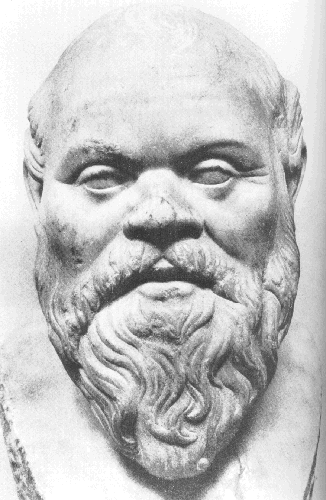
Key characteristics
The concept included several interlocking features. It depended on family background, service in public office, military success, rhetorical skill, and the judgment of peers and posterity. Dignitas could be strengthened or diminished by conduct, scandal, legal outcomes, or political reversals. It was both personal—reflecting an individual's virtues—and relational—manifest in how others treated and deferred to that individual.
Components and related terms
- Auctoritas: the informal authority or influence someone had in public life; often went hand in hand with dignitas.
- Fama: public reputation or fame, which fed into a person's perceived dignity.
- Pietas and gravitas: moral seriousness and dutifulness that supported claims to respect.
Many modern discussions note that there is no precise English equivalent. Writers sometimes render the word as translation terms like dignity or prestige, but these carry narrower meanings than the Roman usage. The English term dignity derives from the same Latin root, and that etymological link explains some overlap while also highlighting differences between ancient social practices and modern ethical senses.
Historical development and political role
In the Republic, dignitas was central to elite competition: legislation, oratory, patronage, and officeholding were avenues to build it. Prominent generals and statesmen sought to increase their standing by winning military victories, public honors, and the esteem of the Senate and people. Over time, especially as political structures changed under imperial rule, the distinctive power of private dignitas was reshaped by imperial prerogative and formal rank.
Uses and examples
Roman authors invoked dignitas in different registers: as a justification for seeking or refusing honors; as a virtue to be defended in legal and moral disputes; and as a criterion for mourning, burial, and commemoration. Funeral monuments, speeches, and biographies often aimed to preserve or enhance a subject's dignitas for future generations. Because it was assessed publicly, actions that bolstered prestige—successful commands, eloquent speeches, or visible patronage—were cultivated carefully.
Translations, scholarship, and notable facts
Scholars rely on lexical works such as the Oxford Latin Dictionary and close readings of Latin authors to explain the term. The dictionary and classicists list senses ranging from worthiness and rank to impression and honor, reflecting the word's layered meanings. Some commentators treat the English word derivative forms as helpful prompts, while cautioning against assuming a single, stable meaning. For further reading on Roman social values and the interplay of authority and reputation, see general works on Roman political culture and rhetoric (dignity, translation).
Distinctions and lasting relevance
Dignitas differs from legal rank or office: it is an informal, reputational currency rather than a formal title. Its study helps explain elite motives and the performative nature of Roman public life, showing how honor, moral standing, and social influence shaped institutions and behavior. Modern interest in the term centers on its value for understanding Roman identity, patronage networks, and political rhetoric.
Questions and answers
Q: What is Dignitas?
A: Dignitas refers to the sum of personal influence that a male citizen acquires throughout his life in Ancient Rome. It also includes personal reputation, moral standing, and ethical worth, and the entitlement to respect and proper treatment as well.
Q: How is Dignitas defined in the Oxford Latin Dictionary?
A: According to the Oxford Latin Dictionary, Dignitas is defined as fitness, suitability, worthiness, visual impressiveness or distinction, dignity of style and gesture, rank, status, position, standing, esteem, importance, and honor.
Q: Does Dignitas have a direct translation in the English language?
A: No, Dignitas does not have a direct connotation or translation in the English language.
Q: What are some interpretations of Dignitas in English?
A: Some interpretations of Dignitas in English include dignity (which is merely a derivation) and prestige.
Q: Was Dignitas exclusive to male citizens in Ancient Rome?
A: Yes, Dignitas was exclusive to male citizens in Ancient Rome.
Q: What does Dignitas include?
A: Dignitas includes personal reputation, moral standing, and ethical worth, as well as the entitlement to respect and proper treatment.
Q: How was Dignitas acquired in Ancient Rome?
A: Dignitas was acquired throughout a male citizen's life in Ancient Rome through personal influence.
Related articles
Author
AlegsaOnline.com Dignitas — Roman concept of personal standing and authority Leandro Alegsa
URL: https://en.alegsaonline.com/art/27404
Sources
- thelatinlibrary.com : Ad Familiares 4.14
- www2.classics.unibo.it : J. Paul Leonard Library, San Fransisco. Cicero, Epistulae ad familiares. San Francisco State University. 18 May 2007