
Allahabad Address (1930) — Muhammad Iqbal's political vision
A concise encyclopedia entry on the Allahabad Address delivered by Sir Muhammad Iqbal on 29 December 1930, its themes, historical context, and its role in the development of Muslim political thought in British India.
Overview
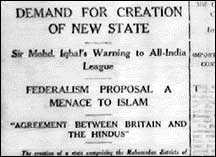
The Allahabad Address is a landmark political speech delivered by the poet-philosopher and statesman Sir Muhammad Iqbal on 29 December 1930 at the 25th annual session of the All-India Muslim League in Allahabad (Urdu: خطبہ الہ آباد). In this address Iqbal outlined a vision for the political future of Muslims in British India, arguing that their political and cultural rights required a distinct constitutional arrangement in the northwestern regions of the subcontinent.
Image gallery
3 Images
Contents and main themes
The speech combined philosophical reflection with practical political proposals. Key themes included:
- Defense of Muslim cultural and communal identity and the need for political safeguards.
- A proposal for the consolidation of Muslim-majority provinces in northwestern India into a single autonomous unit.
- Emphasis on constitutional means, not violent upheaval, to secure autonomy and equitable representation.
- Reflection on the limits of majoritarian rule and the importance of communal parity in a plural society.
Historical context and delivery
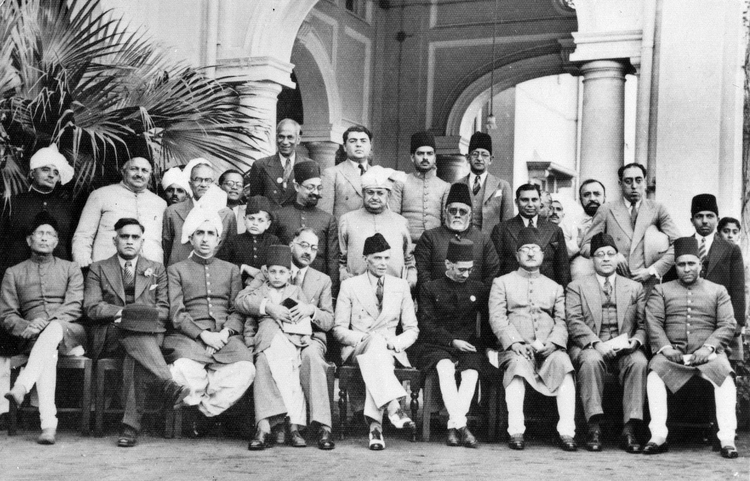
Delivered in Allahabad (the city then within British India), the address took place during a period of intense political debate over reform, representation, and competing nationalist movements. Iqbal—also described in contemporary notices as a leading scholar and poet—spoke as many Muslim leaders were reassessing their political strategy in response to British reforms and the Indian National Congress's demands.
Immediate impact and later importance
The address did not itself create a new state, but it is widely regarded as a conceptual stimulus for later proposals that culminated in the Pakistan movement. Within the Muslim League and among Muslim intellectuals, Iqbal's ideas helped crystallize arguments for territorially based safeguards and for a federated arrangement that recognized communal differences.
Legacy and interpretations
Iqbal's Allahabad Address is remembered both for its poetic eloquence and its political implications. Historians debate its precise intent: some view it as an explicit blueprint for a separate state; others interpret it as a call for substantial autonomy within a federated India. Regardless, the speech remains a central document in discussions of South Asian constitutional history and Muslim political thought. For further reading on the speech, its text and commentary are available through scholarly collections and archives that document the evolution of constitutional proposals for the northwestern provinces and other regions.
Because the address sits at the intersection of literature, religion, and politics, it continues to be studied by scholars of history, political theory, and South Asian studies, and it is often cited in discussions about the formation of communal identities under colonial rule.
Questions and answers
Q: Who gave the Allahabad Address and when was it given?
A: The Allahabad Address was given by Pakistani scholar Sir Muhammad Iqbal on 29 December 1930, at Allahabad, British India.
Q: Where was the Allahabad Address given and during which event?
A: The Allahabad Address was given at Allahabad, British India, during the 25th annual session of the All-India Muslim League.
Q: What was the objective of Iqbal's speech?
A: Iqbal wanted an independent state for Muslim-majority provinces in northwestern India.
Q: What did Iqbal say about the privileges of Muslim provinces?
A: Iqbal said there could be no peace until the Muslim provinces were given the same privileges as the Hindu provinces.
Q: What is the Allahabad Address?
A: The Allahabad Address is a speech given by Pakistani scholar Sir Muhammad Iqbal on 29 December 1930, at Allahabad, British India, during the 25th annual session of the All-India Muslim League.
Q: What was the goal of the All-India Muslim League?
A: The goal of the All-India Muslim League was to protect the rights of Indian Muslims and to advocate for their political representation.
Q: Why did Iqbal call for an independent state for Muslim-majority provinces?
A: Iqbal called for an independent state for Muslim-majority provinces because he believed that Muslims needed their own self-governing state in order to protect their religious and cultural identity.
Related articles
Author
AlegsaOnline.com Allahabad Address (1930) — Muhammad Iqbal's political vision Leandro Alegsa
URL: https://en.alegsaonline.com/art/2736
Sources
- allamaiqbal.com : "Allahabad Address"