
Dieppe Raid (Operation Jubilee) — 1942 Allied amphibious attack on Dieppe
The Dieppe Raid (Operation Jubilee) was a costly Allied amphibious assault on the German-held port of Dieppe, France on 19 August 1942 that influenced later Allied invasion planning.
The Dieppe Raid, known in planning as Operation Jubilee and briefly as Operation Rutter, was an Allied amphibious assault against the German-occupied port of Dieppe on the northern coast of France on 19 August 1942. Launched principally by Canadian infantry with British support, the operation was intended as a limited raid to seize and hold the town for a short period, to gather intelligence, to test German coastal defenses and amphibious techniques, and to demonstrate an Allied capacity to strike across the Channel.
Image gallery
10 Images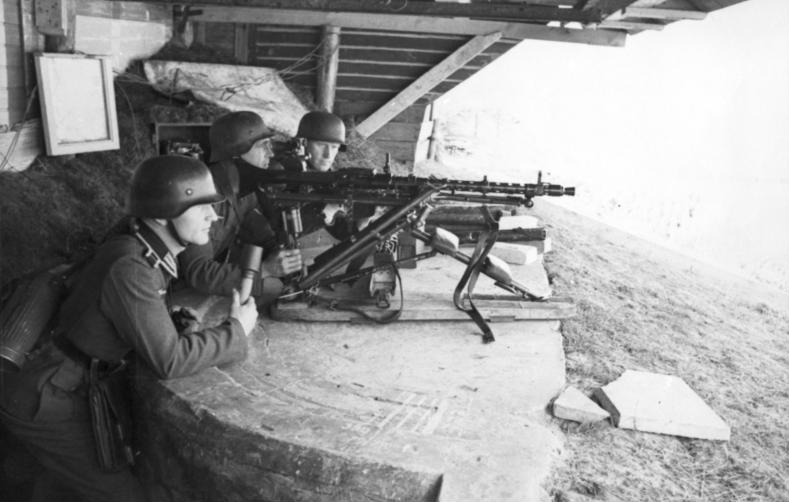


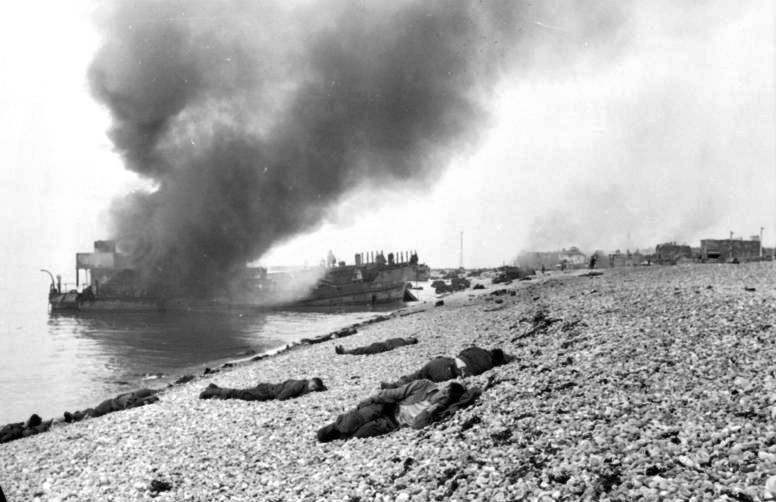
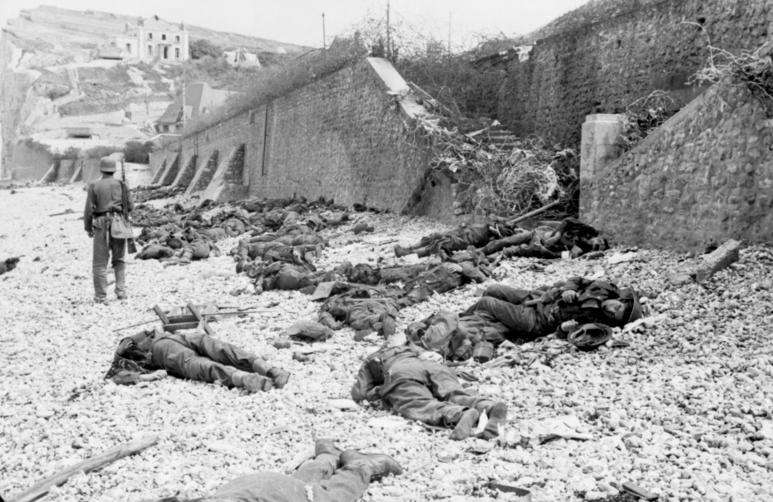


Objectives and planning
Planners set several aims: a temporary capture of the port to destroy key installations, the collection of information on enemy defenses and materials, and a boost to Allied morale by showing resolve to attack western Europe. The force — roughly six thousand men, predominantly Canadian infantry with a Canadian armoured regiment and substantial naval and air support — faced heavily fortified beaches and a defended harbor. The plan relied on quick landings, effective fire support and surprise, but it underestimated the strength of German preparations and the difficulty of close-shore operations against prepared positions.
Forces involved
The assault force combined elements of the Canadian Army, the British Army and supporting services, backed by the Royal Navy and air cover from the Royal Air Force. Many of the infantry were volunteers for commando-style operations; armoured units were to move offlanding to engage objectives. Naval craft were to deliver troops and provide evacuation if necessary. Air operations sought to suppress German coastal units and to engage the Luftwaffe when possible. Contemporary accounts and later studies emphasize the predominance of Canadian troops among the assaulting force.
Course of the raid
Landings began in the pre-dawn hours, but the attack soon encountered serious problems: inadequate preliminary bombardment, unanticipated beach obstacles, tightly sited German machine-gun and artillery positions, and difficulties in coordinating armour and infantry on shingle beaches. Several assault elements became pinned under intense fire, and attempts to reach harbour facilities were repelled. By mid-day commanders ordered a withdrawal and evacuation of surviving troops. Many soldiers were killed, wounded or captured before boats could extract them.
Casualties, losses and immediate results
The raid proved costly. Of the roughly 6,000 men who landed, about 3,600 were killed, wounded or taken prisoner. The Royal Air Force suffered significant aircraft losses while attempting to gain air superiority and support ground forces; the Royal Navy lost landing craft and a destroyer while attempting to evacuate survivors. The operation failed to hold or significantly damage the port or coastal installations, and it did not achieve its principal objectives of a lasting foothold or a decisive blow against German forces.
Consequences and legacy
Although the Dieppe Raid is often remembered for its high cost, it yielded practical lessons that influenced later amphibious operations. Analysts used the experience to improve planning for naval gunfire support, combined-arms coordination, intelligence on beach obstacles, and airborne support. These lessons contributed to changes in training, equipment and doctrine that were applied in later operations such as the North African landings and the Normandy invasion.
Notable facts and further reading
- The Dieppe operation is commonly referenced under several names in primary sources and postwar histories; see Allied planning records for contemporary terminology.
- Most of the ground troops were Canadian; consult unit histories for personal accounts and battalion-level details.
- Air operations and losses are recorded in Royal Air Force histories; an overview appears at air support summaries.
- German air and coastal defenses (the Luftwaffe and Kriegsmarine shore batteries) heavily influenced the outcome; see German defensive reports.
- Operational lessons informed planning for subsequent campaigns like Operation Torch in North Africa and the cross-Channel invasion preparations.
- Dieppe is regarded as a painful but instructive episode in Allied amphibious warfare, and it is often linked in studies to later operations such as the Normandy landings and the larger Operation Overlord.
For readers seeking more detail, unit war diaries, veteran testimonies and postwar inquiries provide in-depth perspectives on decisions made before and during the raid, and on how lessons learned were translated into revised doctrine. The Dieppe Raid remains a subject of study for military historians and a solemn chapter in the wartime experience of those nations that contributed forces.
Questions and answers
Q: What is the Dieppe Raid also known as?
A: The Dieppe Raid is also known as the Battle of Dieppe, Operation Rutter and, later, Operation Jubilee.
Q: When did the attack take place?
A: The attack took place on the northern coast of France on 19 August 1942.
Q: Who was involved in the attack?
A: Over 6,000 infantrymen, mostly Canadian, were supported by a Canadian Armoured regiment. They were also helped by a strong force of Royal Navy and smaller Royal Air Force group.
Q: What was the goal of the raid?
A: The goal was to capture a major port for a short period and to gather information. Upon retreat, the Allies also wanted to destroy coastal defences, port structures and important buildings. The raid was also intended to improve morale and demonstrate the commitment of the United Kingdom to attack a Western front in Europe.
Q: Was any of these goals achieved?
A: None of these goals were achieved. There was not enough Allied artillery support. The troops were trapped on the beach by obstacles and German gunfire. After less than 10 hours since the first landings, all Allied troops had been either killed, evacuated or captured by Germans.
Q: How many casualties occurred during this raid?
A: A total of 3,623 out of 6,086 men (almost 60%) who went ashore were either killed wounded or captured during this raid.
Q: How did this event affect future plans for other operations?
A::The events at Dieppe affected plans for both North African (Operation Torch) and Normandy landings (Operation Overlord).
Related articles
Author
AlegsaOnline.com Dieppe Raid (Operation Jubilee) — 1942 Allied amphibious attack on Dieppe Leandro Alegsa
URL: https://en.alegsaonline.com/art/27293
Sources
- thecanadianencyclopedia.com : Dieppe Raide
- junobeach.org : "Dieppe raid."
- bbc.co.uk : "The Dieppe Raid."
- combinedops.com : "Operation Jubilee."
- canadianmilitaryhistory.ca : "The German View of the Dieppe Raid."
- thegazette.co.uk : "No. 35729"
- thegazette.co.uk : "No. 35729"
- thegazette.co.uk : "No. 35730"