
Diego de Almagro (Chile)
Small inland city and commune in Chañaral Province, Atacama Region, northern Chile. Desert setting with links to mining and transport; municipal governance; named for the Spanish conquistador Diego de Almagro.
Diego de Almagro is a small inland city and administrative commune in northern Chile. It is located in Chañaral Province within the Atacama Region, a part of the country dominated by arid desert landscapes and extractive industries. The settlement is officially classified as a city and operates as the local centre of government and services for surrounding rural and industrial areas.
Image gallery
2 Images
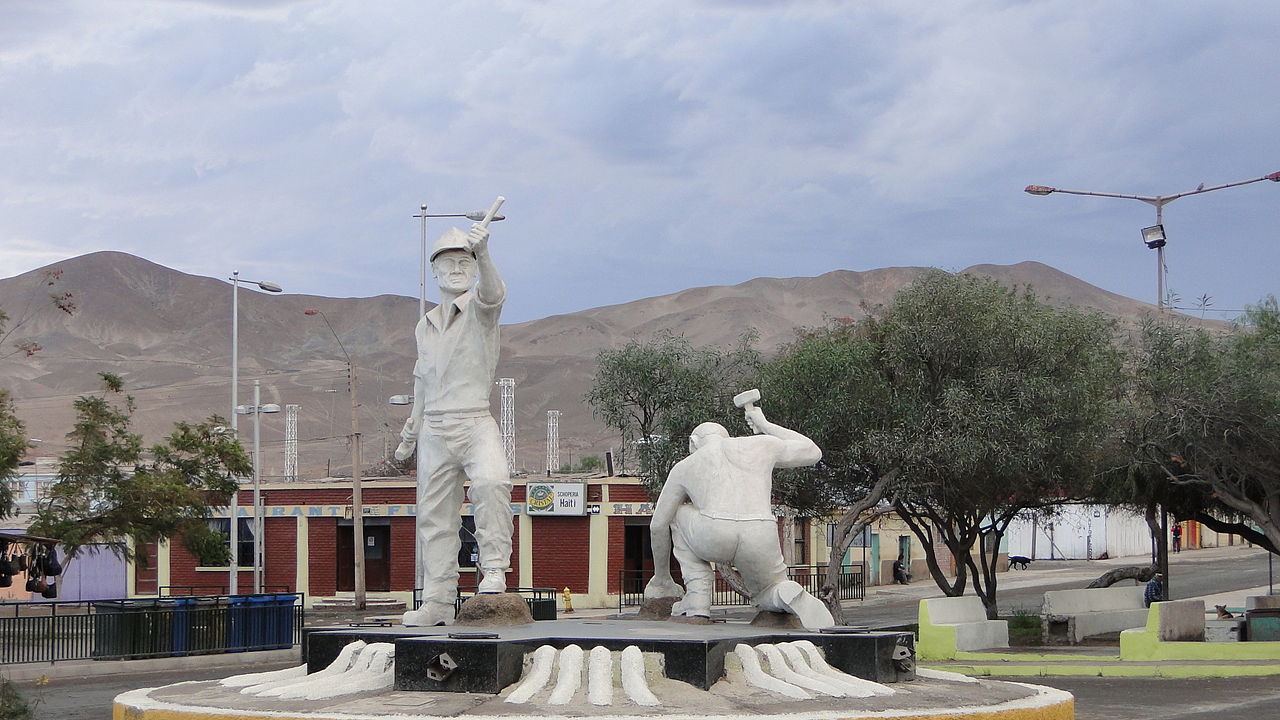
Geography and climate
The commune lies within the broader Atacama environment, one of the driest regions on Earth. Terrain is characterized by wide plains, rocky outcrops and sparse vegetation. Strong daily temperature swings, low precipitation and limited surface water shape land use, agriculture and settlement patterns. These environmental conditions influence infrastructure needs, particularly water management and transport across long distances.
Economy
Economic life in Diego de Almagro is closely linked to mining and the services that support extractive operations, including logistics, maintenance and local commerce. Small businesses, public services and transport providers form the urban economic base. The commune also contends with the economic cycles of mineral markets and with efforts to diversify where possible.
Administration and population
As a Chilean commune, Diego de Almagro is governed by an elected mayor (alcalde) and a municipal council responsible for local planning, public services and community programs. Residents are commonly called dieguinos (women: dieguinas). The municipal seat performs administrative, educational and health functions for a dispersed population in a largely rural and industrial territory.
History and name
The commune takes its name from Diego de Almagro, a Spanish conquistador who was one of the early European explorers associated with expeditions into the territory that became Chile. The modern settlement and its administrative boundaries developed during the republican period of Chile, with significant growth tied to 19th- and 20th-century mining activity.
Infrastructure, culture and contemporary issues
Local planning priorities include water supply, road connectivity, housing and environmental management of mining legacies. Cultural life reflects mining heritage, regional traditions and community festivals; public institutions and local associations play a role in maintaining services and social cohesion. Visitors typically encounter a landscape shaped by mineral extraction, desert scenery and small urban centres that provide essential services to a wider hinterland.
Questions and answers
Q: What is Diego de Almagro?
A: Diego de Almagro is a small city and commune located in the Chañaral Province, Atacama Region of Chile.
Q: Who is Diego de Almagro named after?
A: The commune is named after Diego de Almagro, a Spanish conquistador.
Q: What is the meaning of dieguinos and dieguinas?
A: Dieguinos and dieguinas are the names given to the inhabitants of Diego de Almagro, with dieguinos being used for men and dieguinas for women.
Q: What is the position of Diego de Almagro in Chile?
A: Diego de Almagro is located in the Atacama Region of Chile.
Q: What is the history of Diego de Almagro?
A: Diego de Almagro was named after a Spanish conquistador and was later established as a commune in the Chañaral Province.
Q: Which province is Diego de Almagro part of?
A: Diego de Almagro is part of the Chañaral Province.
Q: What is the language spoken in Diego de Almagro?
A: The official language of Chile is Spanish, which is also the primary language spoken in Diego de Almagro.
Related articles
Author
AlegsaOnline.com Diego de Almagro (Chile) Leandro Alegsa
URL: https://en.alegsaonline.com/art/27270
Sources
- imda.cl : "Alcalde"
- ineatacama.cl : "Región de Atacama"
- leychile.cl : "Decreto ley 1758 de 1977: Sustituye denominación del pueblo y comuna de "Pueblo Hundido" por la de "Diego de Almagro""
- info.ngwa.org : "The Hydrogeology and Utilization of Brines in El Salado, Chile"