
Didynamipus — the four‑digit toad, a monotypic genus of Bufonidae
Didynamipus is a small, monotypic genus of true toads (Bufonidae) containing Didynamipus sjostedti, the four‑digit toad, native to parts of West and Central Africa and threatened by habitat loss.
Overview
The genus Didynamipus is a small, monotypic taxon in the family Bufonidae, meaning it contains a single recognised species, Didynamipus sjostedti. Commonly called the four‑digit toad, this amphibian is native to parts of West and Central Africa and is notable for distinctive morphological traits and a restricted distribution. It occupies humid forest environments and has drawn conservation attention because of ongoing habitat change.
Image gallery
1 Image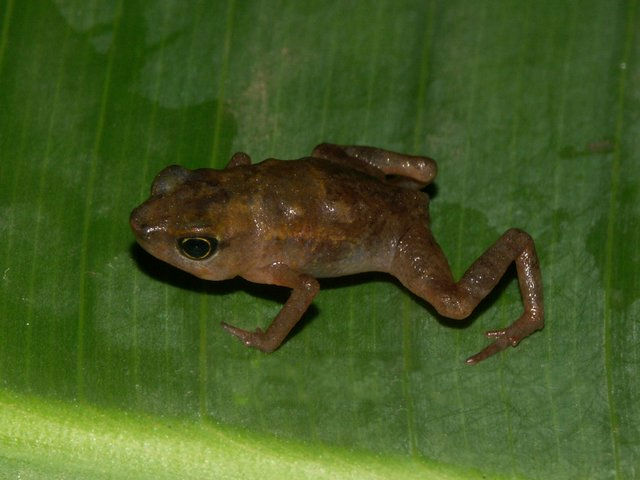
Physical characteristics
Didynamipus sjostedti is identified by a compact body shape and features typical of true toads—robust limbs, relatively dry, granular skin, and terrestrial habits. The vernacular name reflects a reduced number of digits compared with many other toads; this reduction is one of several characters used by herpetologists to distinguish the species. Like other bufonids, it likely possesses glands that produce defensive secretions, but the detailed anatomy and life‑history traits remain incompletely documented in the literature.
Distribution and habitat
The species occurs in parts of western and central Africa, with confirmed records from Cameroon, Equatorial Guinea and Nigeria. It is associated with humid forest zones and tolerates a range of forested elevations. Typical habitats include:
- Subtropical or tropical moist lowland forests
- Subtropical or tropical moist montane forests
- Heavily degraded former forest and secondary growth where some forest structure remains
Ecology and behaviour
Information on the ecology of Didynamipus is limited. As with many forest bufonids, it is expected to be primarily terrestrial, breeding in temporary or permanent water bodies or moist microhabitats. Diet is assumed to consist of small invertebrates. Observations suggest it is secretive and may be locally uncommon, which complicates population monitoring.
Conservation and significance
The four‑digit toad faces pressure from habitat loss and degradation caused by agriculture, logging, and human expansion. Because it occupies forested areas that are often fragmented, its populations can be vulnerable to local extirpation. Conservation efforts focus on protecting remaining forest habitat and improving knowledge of its distribution, population trends and reproductive biology to inform management decisions.
Taxonomy and naming
Didynamipus is treated as a distinct genus within the diverse family Bufonidae. The genus name and the species epithet are used in scientific literature to refer to this narrowly defined lineage; the colloquial name "four‑digit toad" highlights an easily observed morphological trait. Further taxonomic research, including molecular studies, could refine its relationships within Bufonidae and clarify whether additional diversity exists within the lineage.
For authoritative species accounts and conservation status, consult specialist resources and regional amphibian assessments via links above and relevant herpetological databases.
Questions and answers
Q: What is Didynamipus?
A: Didynamipus is a genus in the Bufonidae family.
Q: How many species are in the Didynamipus genus?
A: The Didynamipus genus has only one species, which is Didynamipus sjostedti, also referred to as the four-digit toad.
Q: Where can we find Didynamipus sjostedti?
A: Didynamipus sjostedti can be found in Cameroon, Equatorial Guinea, and Nigeria.
Q: What type of habitats do Didynamipus sjostedti prefer to live in?
A: Didynamipus sjostedti prefer to live in subtropical or tropical moist lowland forests, subtropical or tropical moist montane forests, and heavily degraded former forest.
Q: What is the threat to Didynamipus sjostedti?
A: Didynamipus sjostedti is threatened by habitat loss.
Q: Is Didynamipus sjostedti common or rare?
A: It is not mentioned if Didynamipus sjostedti is common or rare.
Q: What is another name for Didynamipus sjostedti?
A: Another name for Didynamipus sjostedti is the four-digit toad.
Related articles
Author
AlegsaOnline.com Didynamipus — the four‑digit toad, a monotypic genus of Bufonidae Leandro Alegsa
URL: https://en.alegsaonline.com/art/27252
Sources
- iucnredlist.org : Didynamipus sjostedti
- iucnredlist.org : 2006 IUCN Red List of Threatened Species.
- commons.wikimedia.org : Didynamipus sjostedti