
Dicynodonts — two‑tusked herbivorous therapsids
Dicynodonts (Dicynodontia) were diverse, mainly herbivorous therapsids with a beak and two tusks. Widespread from the Permian into the Triassic, they played major ecological roles and left a rich fossil record.
Overview
Dicynodonts are an extinct lineage of non‑mammalian synapsids often grouped within the larger assemblage of therapsids. The name means "two dog teeth" and refers to the characteristic pair of tusk‑like caniniform teeth present in most members. They were primarily herbivores and ranged from small, burrowing forms to large, heavy‑bodied browsers. Over time dicynodonts became one of the most abundant and ecologically important groups of land vertebrates in many Permian and Triassic ecosystems.
Image gallery
10 Images




Anatomy and adaptations
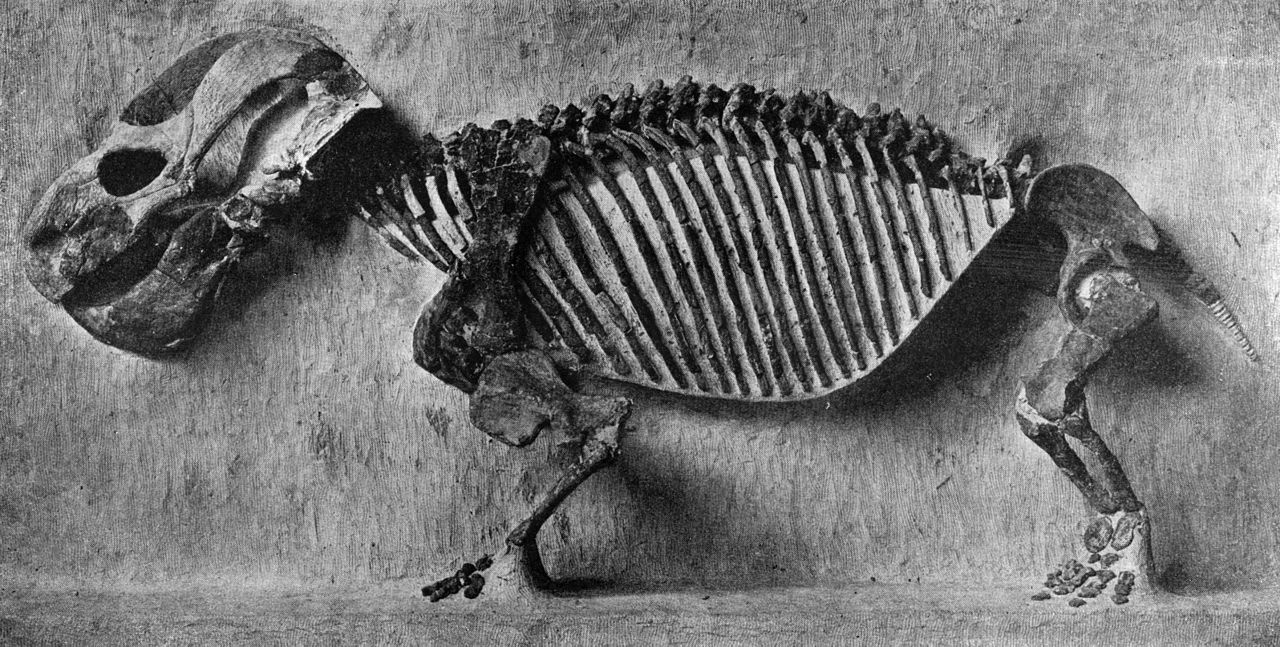
Despite variation in size and proportions, dicynodonts share a consistent anatomy adapted to a plant‑eating lifestyle. Their skulls typically combine a horny, parrot‑like beak at the front of the jaws with reduced or absent postcanine teeth; the only prominent teeth in many species are the two upper tusks. Strong jaw muscles and specialized jaw joints allowed efficient shearing and grinding of tough vegetation.
- Skull: broad temporal region for powerful muscles, beak‑like rhamphotheca, and often the two tusks.
- Dentition: mostly edentulous (toothless) behind the beak, with occasional palatal teeth in some forms.
- Posture and limbs: robust shoulder and pelvic girdles with stout limbs arranged to support heavy bodies; locomotion was generally slow but capable of sustained movement.
- Body plan: barrel‑shaped torso, short tail, and sometimes armored or thickened skull bones in certain genera.
Evolutionary history
Dicynodonts first appear in the fossil record in the Permian and diversified widely before and after the end‑Permian mass extinction. Many lineages persisted into the Triassic where they occupied a variety of ecological niches as primary herbivores. Some fossil discoveries from Europe emphasize that large dicynodonts survived in the Late Triassic; notable examples from Poland illustrate this prolonged tenure. Reports of fragmentary remains from Queensland have led to cautious suggestions that dicynodont‑like animals might have persisted in isolated southern regions into the Cretaceous, though such claims remain debated and are not universally accepted.
Ecology and significance
As abundant herbivores, dicynodonts played key roles in terrestrial food webs, affecting vegetation structure and serving as prey for large predators. Their wide geographic distribution—across parts of what were then Gondwana and Laurasia—reflects their adaptability to different climates and plant communities. The group's success is evident in the number of distinct genera described and the variety of body sizes and lifestyles known from fossils.
Distinctions and relationships
While dicynodonts are therapsids, they are not the direct ancestors of mammals. The mammalian lineage is more closely tied to another therapsid group, the cynodonts, which show anatomical trends leading toward mammalian features. Dicynodonts instead represent a parallel, highly successful experiment in synapsid herbivory: they developed a beak and tusks, heavy bodies, and powerful jaws rather than the specialized teeth and jaw mechanics seen in the mammal line.
Notable discoveries and ongoing questions
Key dicynodont fossils continue to refine understanding of their diversity, paleobiology, and extinction. New finds sometimes prompt revisions to their geographic and temporal range, so interpretations—especially of fragmentary or isolated specimens—are treated cautiously. For a general introduction to therapsids and related groups, see broader resources on therapsids and the evolution of synapsids. Further reading can explore regional fossil reports such as those from Poland, fieldwork in Queensland, and discussions of deep‑time biogeography in ancient Gondwana. Additional context about major geological intervals is available for the Upper Triassic and the Cretaceous, and comparisons with the mammal‑ancestor line are accessible via resources on cynodonts.
Questions and answers
Q: What are Dicynodontia?
A: Dicynodontia are a sub-group of extinct animals called therapsids.
Q: What did Dicynodontia eat?
A: Dicynodontia were herbivorous, meaning they ate plants.
Q: What does the term "dicynodont" mean?
A: The term "dicynodont" means "two dog tooth" in reference to the two tusks that all dicynodonts had.
Q: How successful and diverse were the Dicynodontia?
A: The Dicynodontia were the most successful and diverse of the non-mammalian therapsids, with over 70 known genera.
Q: What was the body shape of Dicynodontia?
A: The body shape of Dicynodontia was similar to certain types of modern mammals such as pigs and rhinoceros.
Q: When did Dicynodontia live until?
A: Fossils discovered in Poland suggest that Dicynodontia lived until about 200 million years ago during the Upper Triassic period. However, six fragments of fossil skull bone found in Australia indicate that some Dicynodontia may have survived until about 150 million years ago during the Cretaceous period in the region called the southern Gondwana.
Q: Were Dicynodontia the ancestors to mammals?
A: No, the Dicynodontia were a sub-group of therapsids but were not ancestors to mammals. The group which evolved into mammals was the cynodonts.
Related articles
Author
AlegsaOnline.com Dicynodonts — two‑tusked herbivorous therapsids Leandro Alegsa
URL: https://en.alegsaonline.com/art/27237