
Deviled eggs
Classic appetizer of hard‑boiled eggs halved and filled with a seasoned yolk mixture; served cold, widely varied, and popular at gatherings worldwide.
Deviled eggs are a small savory appetizer made by halving hard‑boiled eggs, removing the yolks, and returning a seasoned mixture into the white halves. They are typically served chilled and presented as hors d'oeuvres, picnic food, or buffet items.

Image gallery
4 Images
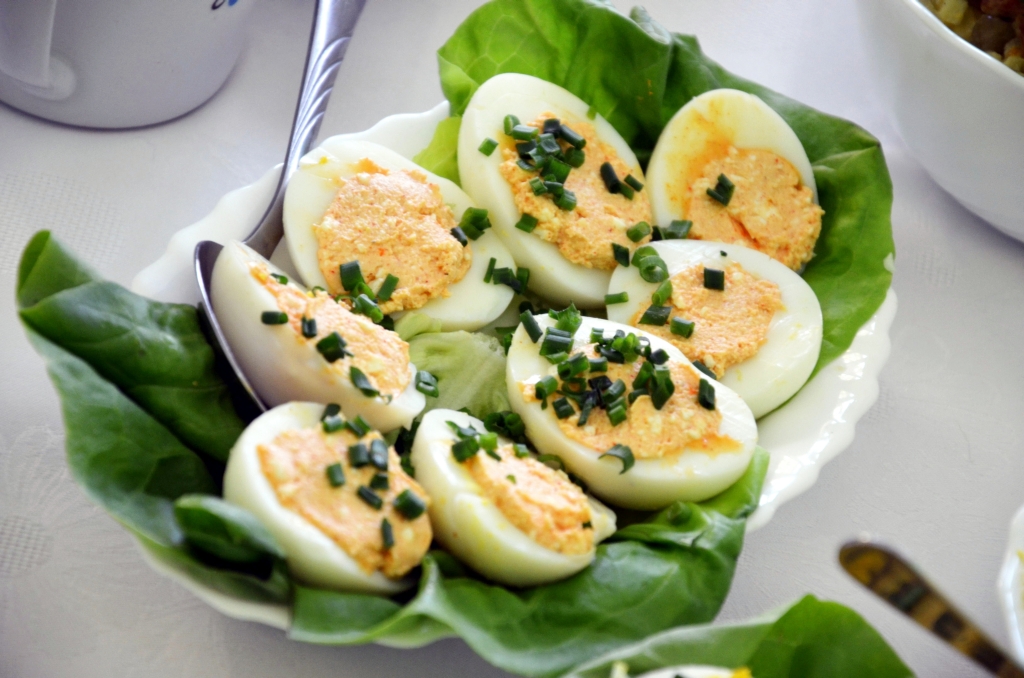


Preparation and components
The basic preparation involves boiling eggs until firm, cooling and peeling them, slicing them in half, and extracting the yolks. The yolks are mashed and blended with ingredients such as mayonnaise, mustard, vinegar or lemon juice, salt, and pepper, then spooned or piped back into the egg white cups. Common garnishes include a dusting of paprika, chopped chives, or small pickles.
Common fillings and garnishes
- Traditional: mayonnaise, mustard, salt, pepper, and paprika
- Regional or modern twists: bacon, curry powder, smoked salmon, avocado, or sweet variations in novelty recipes
- Presentation: piped rosettes, halved cherry tomatoes, capers, or microgreens
History and name
The word "deviled" has been used in English cookery since at least the 18th century to describe foods prepared with spicy or zesty seasonings. Stuffed or dressed eggs appear in many culinary traditions under different names, and the form familiar today—halved eggs with a creamy yolk filling—became especially popular as an inexpensive, portable appetizer in the 19th and 20th centuries.
Uses, variations and food safety
Deviled eggs are often served at parties, potlucks, and holiday meals because they can be prepared ahead and adapted to many tastes. Variations range from classic to creative (including novelty recipes that pair unexpected flavors). Because they contain mayonnaise and cooked yolk, they should be kept refrigerated and are best consumed within a couple of days for quality and safety.
Nutrition and distinctions
A single deviled egg is relatively small; calorie content varies with the filling, commonly falling in the rough range of 60–90 calories each. They are a source of protein and fat and differ from related dishes such as egg salad (where yolks and whites are chopped and mixed) or Scotch eggs (whole eggs coated and fried). Their adaptability and simple technique keep them a perennial favorite on many tables.

Related articles
Author
AlegsaOnline.com Deviled eggs Leandro Alegsa
URL: https://en.alegsaonline.com/art/26984