
Desalination: Methods, Uses, and Environmental Considerations
Overview of desalination — how salty or brackish water is made into usable freshwater, the main technologies, applications, environmental impacts, and notable global examples.
Overview
Desalination is the suite of processes used to remove excess salts and other dissolved minerals from water so it becomes suitable as fresh water for human use. The goal is to produce a water supply safe for drinking, animal consumption, agricultural irrigation, or industrial needs where natural freshwater is scarce. Desalination is applied to both seawater and less salty sources such as coastal groundwater or inland brackish aquifers.
Image gallery
6 Images


Common technologies
Modern desalination relies mainly on two families of technologies — thermal processes and membrane processes — each with several variants and trade-offs:
- Thermal methods: These include multistage flash (MSF) and multi-effect distillation (MED), where water is heated and condensed to leave salts behind. Traditional distillation approaches are energy-intensive but well established for large-scale seawater treatment. An early and widespread thermal approach is generically called distillation.
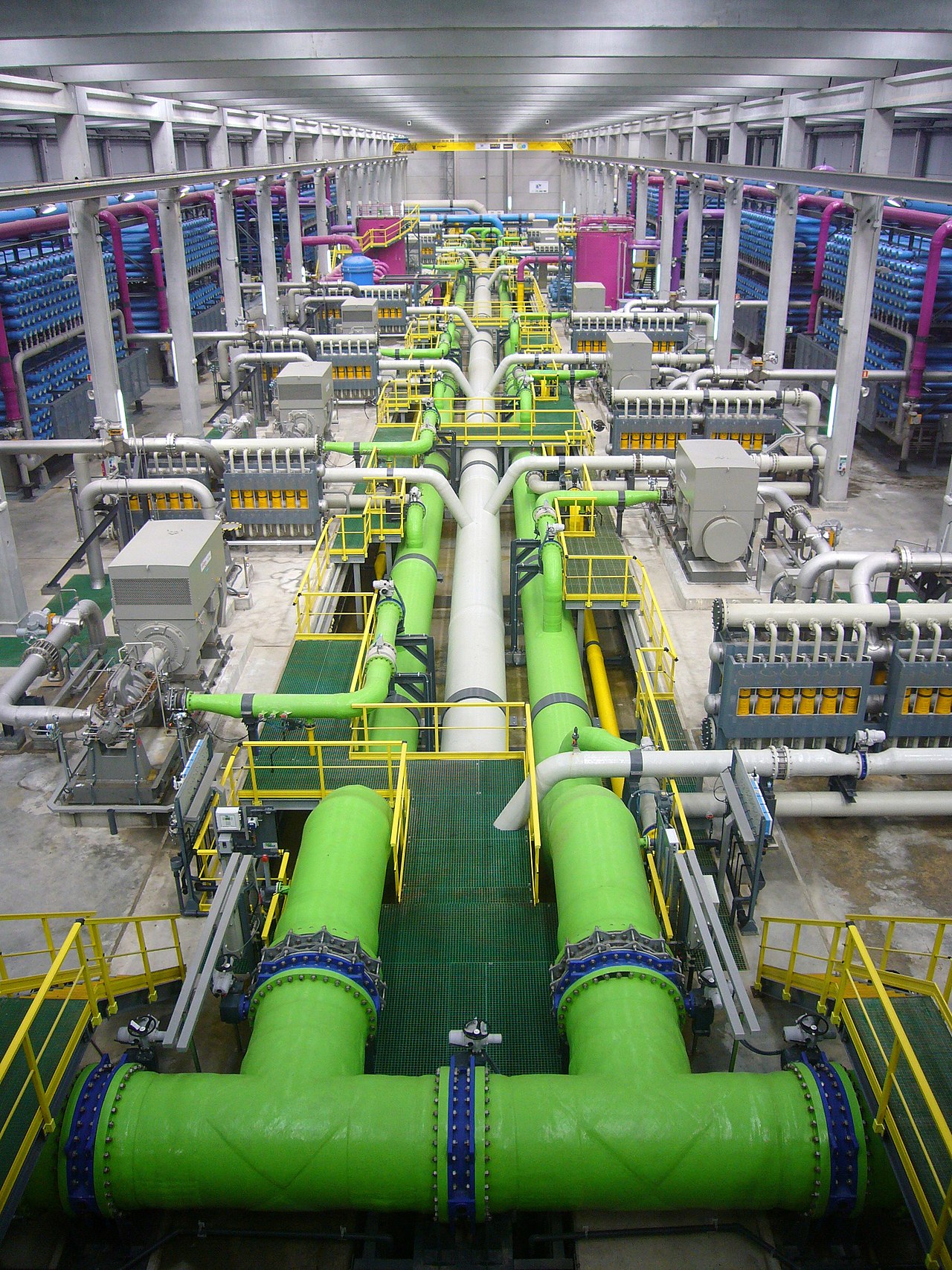
- Membrane methods: The dominant membrane technique today is reverse osmosis (RO), which forces water through semipermeable membranes that block salts. RO plants tend to be more energy-efficient than thermal systems for many applications and have become the most widely used method globally.
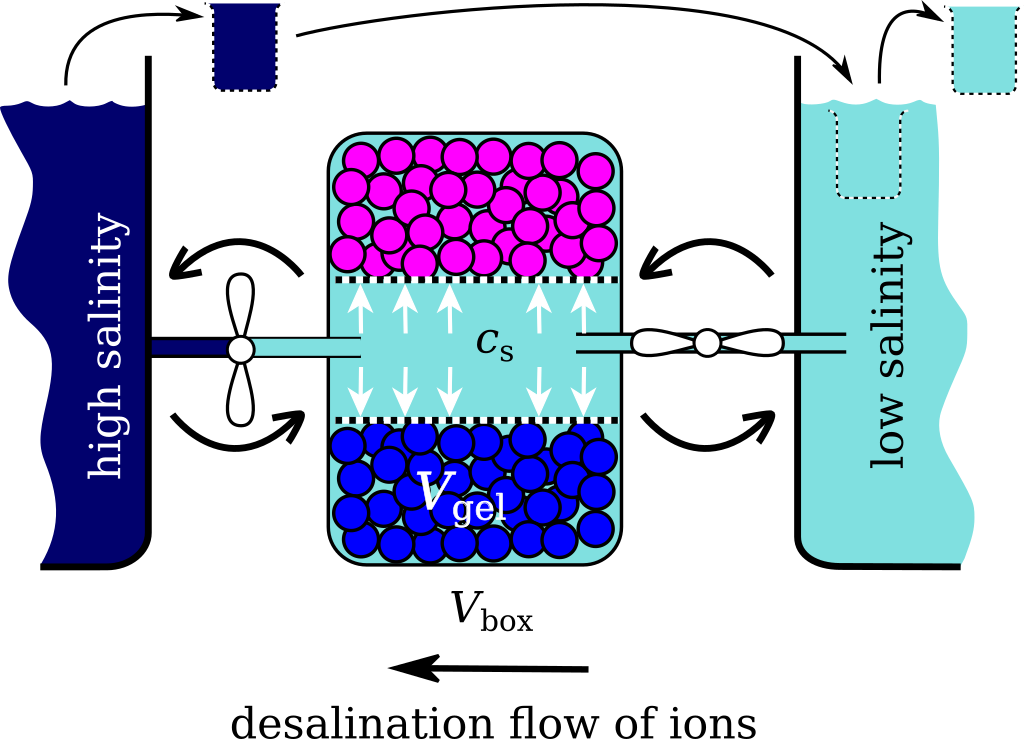
- Other approaches: Electrodialysis, freeze desalination, and emerging hybrid or solar-driven systems are used in niche settings or research projects. Concentrated reject streams, commonly called brine, are an inevitable byproduct and present disposal or recovery challenges.
History and scale
Desalination has been practiced in rudimentary form for centuries, but large-scale industrial plants expanded in the 20th century as coastal population growth and industrial water demand rose. Facilities treating low-salinity sources, often called brackish water, are widespread in arid regions and in places with stressed freshwater supplies. In some countries, national water strategies include desalination as a cornerstone of supply planning; for example, projects in the United States address local shortages and cross-border commitments for river flows into Mexico.
Uses and notable examples
Desalinated water serves municipal drinking systems, industrial processes, and agriculture where other sources are inadequate. Nations with abundant energy and limited freshwater resources have invested heavily in desalination infrastructure. Saudi Arabia and other states in the Arabian Peninsula rely on desalinated supplies for a substantial share of urban and agricultural needs. Large facilities, such as the Jebel Ali complex, illustrate how thermal and hybrid plants can operate at very large scale to supply cities and industry.
Environmental and economic considerations
Key trade-offs for desalination include capital and operating costs, energy use, and environmental effects. Energy demand raises operating costs and, when supplied by fossil fuels, contributes to greenhouse gas emissions. Disposal of high-salinity brine can harm marine ecosystems if not properly diluted or managed, and intake systems can impact marine life. To address these issues, modern plants adopt measures such as high-efficiency pumps, energy recovery devices for RO, brine dilution, and integration with renewable energy sources where feasible.
Distinctions and future directions
Choosing a desalination solution depends on source salinity, scale, energy availability, and water quality targets. Seawater requires more robust treatment than brackish groundwater. Advances in membrane chemistry, energy recovery, and hybrid plant designs are steadily reducing costs and environmental footprints. Resource recovery from brine — extracting minerals and salts — is an active area of research that could improve economics and reduce waste. For further reading and technical references, consult dedicated water-treatment resources and national water authorities.
salts and other dissolved minerals | water | fresh water | animal consumption | irrigation | distillation | reverse osmosis | brine | brackish water | United States | Mexico | Saudi Arabia | Jebel Ali
Questions and answers
Q: What is desalination?
A: Desalination is a process that removes excess salt and minerals from water to obtain fresh water suitable for animal consumption or irrigation.
Q: How is most desalination done?
A: Most desalination is done by distillation.
Q: What are some other methods of desalination?
A: Some other methods of desalination include reverse osmosis and other methods.
Q: What is the main purpose of desalination?
A: The main purpose of desalination is to make water suitable for people to use.
Q: What happens to the salt during desalination?
A: During desalination, the salt is usually carried away as brine, but in some places, the solid salt is extracted.
Q: Why is desalination of brackish water done in the United States?
A: Desalination of brackish water is done in the United States in order to meet treaty obligations for river water entering Mexico.
Q: Which country has the highest number of desalination plants in the world?
A: Saudi Arabia has the highest number of desalination plants in the world, accounting for about 24% of total world capacity.
Related articles
Author
AlegsaOnline.com Desalination: Methods, Uses, and Environmental Considerations Leandro Alegsa
URL: https://en.alegsaonline.com/art/26814
Sources
- sciencedirect.com : "Desalination brine disposal methods and treatment technologies - A review"
- doi.org : 10.1016/j.scitotenv.2019.07.351
- worldcat.org : 0048-9697
- swcc.gov.sa : Saline Water Conversion Corporation