
Derwent River (Tasmania)
Major river on the island of Tasmania, Australia. Flows from the central highlands to the estuary at Hobart; shaped local history, economy, hydroelectric development, navigation and environmental management.
Overview
The Derwent River is a principal river on the island of Tasmania, Australia. It drains a large catchment of highland lakes and agricultural valleys before widening into an estuary at the city of Hobart and emptying into Storm Bay. The river has served as a focus for Indigenous occupation, European settlement, farming, hydroelectric development and commercial navigation.
Image gallery
8 Images


Geography and features
Rising in the central highlands, the Derwent flows generally southeast through a mix of steep uplands, pastoral lowlands and urban estuary. Tidal influence extends well inland from the mouth, producing a broad navigable channel near Hobart that supports shipping and recreational boating. The river's tributaries and impoundments in the high country form part of a larger hydrological network that supplies irrigation, town water and hydroelectric schemes.
History and name
European explorers named parts of the waterway in the late 18th century; British Commodore John Hayes applied the name derived from the River Derwent in Cumbria, a word from the Brythonic Celtic language meaning a valley with abundant oaks. Later charting extended that name to the entire river. Long before European arrival, Tasmanian Aboriginal people occupied camps and used river resources for food, transport and cultural activities.
Human uses and settlements
Communities along the Derwent include rural towns, satellite suburbs and Tasmania's capital, Hobart, at the estuary. The river supports diverse uses:
- Transport and port activity around Hobart, including commercial shipping and ferry services.
- Hydroelectric generation and water storage in the upper catchment.
- Agriculture and horticulture in valley plains sustained by river flows.
- Recreation: boating, fishing, rowing and waterfront tourism.
Environmental issues and management
The Derwent has experienced the common pressures of developed estuaries: changed flows from dams, urban and industrial discharges, and legacy contaminants in sediments in parts of the lower river. Ongoing monitoring, river management and remediation projects aim to reduce pollution, protect habitats and balance competing demands from industry, aquaculture and community recreation.
Notable facts
The river has been the site of memorable events in Tasmania's modern history, and its crossings and bridges are important local landmarks. Its mix of wild highland waterways and broad tidal reaches makes the Derwent both an ecological asset and a key element of Tasmania's cultural and economic landscape.
Questions and answers
Q: Where is the Derwent River located?
A: The Derwent River is located in Tasmania, Australia.
Q: Who named the Derwent River?
A: The Derwent River was named by British Commodore John Hayes who explored it in 1793.
Q: What is the meaning of the name Derwent?
A: The name Derwent comes from the Brythonic Celtic language and means "valley thick with oaks".
Q: Did John Hayes place the name "Derwent River" on the entire river?
A: No, John Hayes placed the name "Derwent River" only in the upper part of the river.
Q: Who placed the name "Derwent River" on all of the river?
A: Matthew Flinders placed the name "Derwent River" on all of the river.
Q: What was the Derwent River's surroundings like before European settlers arrived?
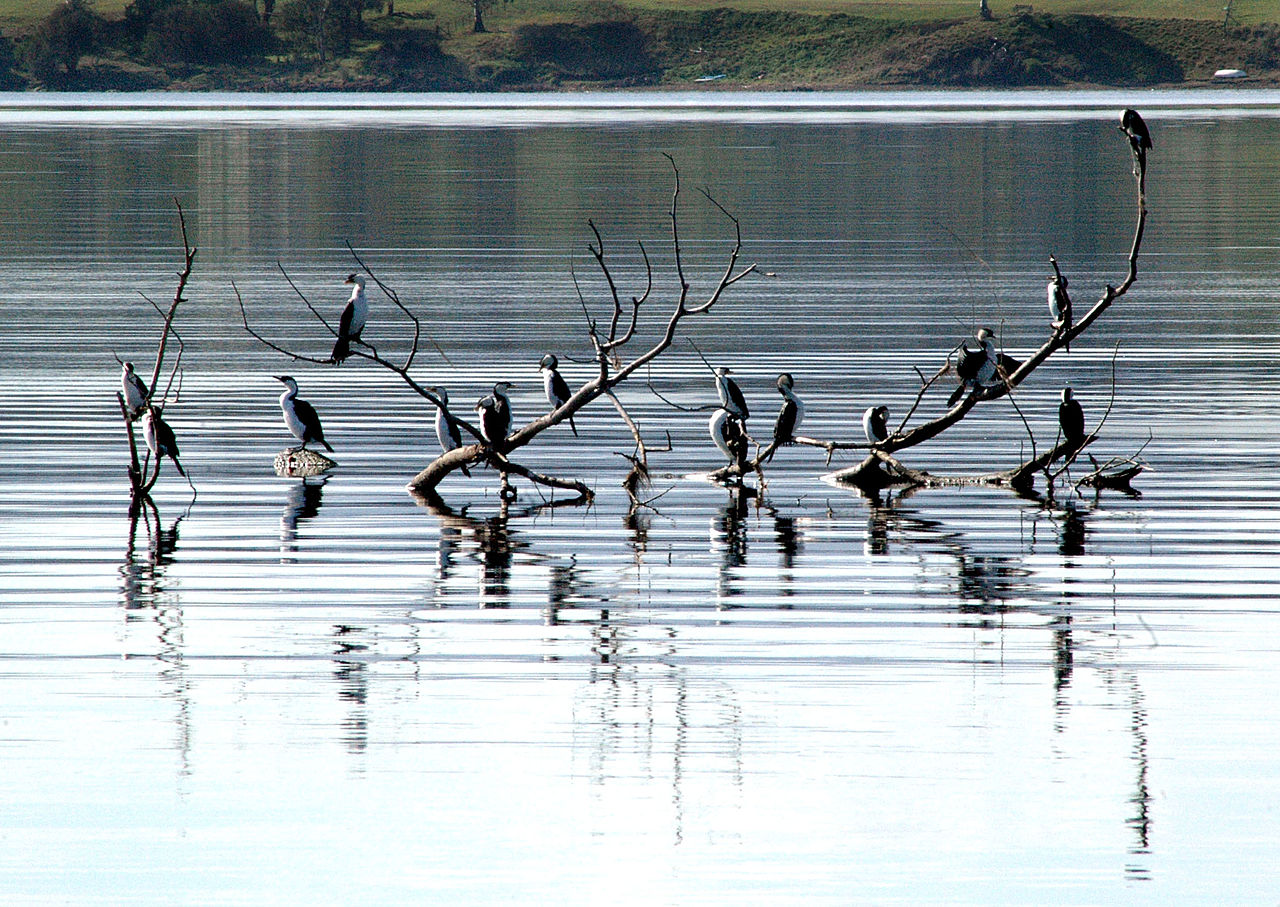
A: Before European settlers arrived, the banks of the Derwent River were covered by forests and occupied by Aborigines.
Q: What happened to the Derwent River during the 20th century?
A: During the 20th century, many dams were built on the tributaries of the Derwent River.
Related articles
Author
AlegsaOnline.com Derwent River (Tasmania) Leandro Alegsa
URL: https://en.alegsaonline.com/art/26802
Sources
- web.ukonline.co.uk : Names of Rivers
- yorksj.ac.uk : Celtic Place Names