
Alitta succinea (pile worm): description, biology, and ecological role
Alitta succinea, the pile or clam worm, is a common nereid polychaete found in shallow coastal waters. This article covers its anatomy, life cycle, habitat, ecological importance and uses.
Overview
Alitta succinea, commonly called the pile worm or clam worm, is a nereidid polychaete inhabiting shallow coastal and estuarine sediments. It is a soft-bodied segmented annelid notable for its active, free-swimming juveniles and burrowing adults. The species is one of several ragworms or sandworms referred to by these common names; careful attention to anatomical details is needed to distinguish A. succinea from similar worms. For general context see polychaete and related descriptions.
Image gallery
2 Images
Physical characteristics
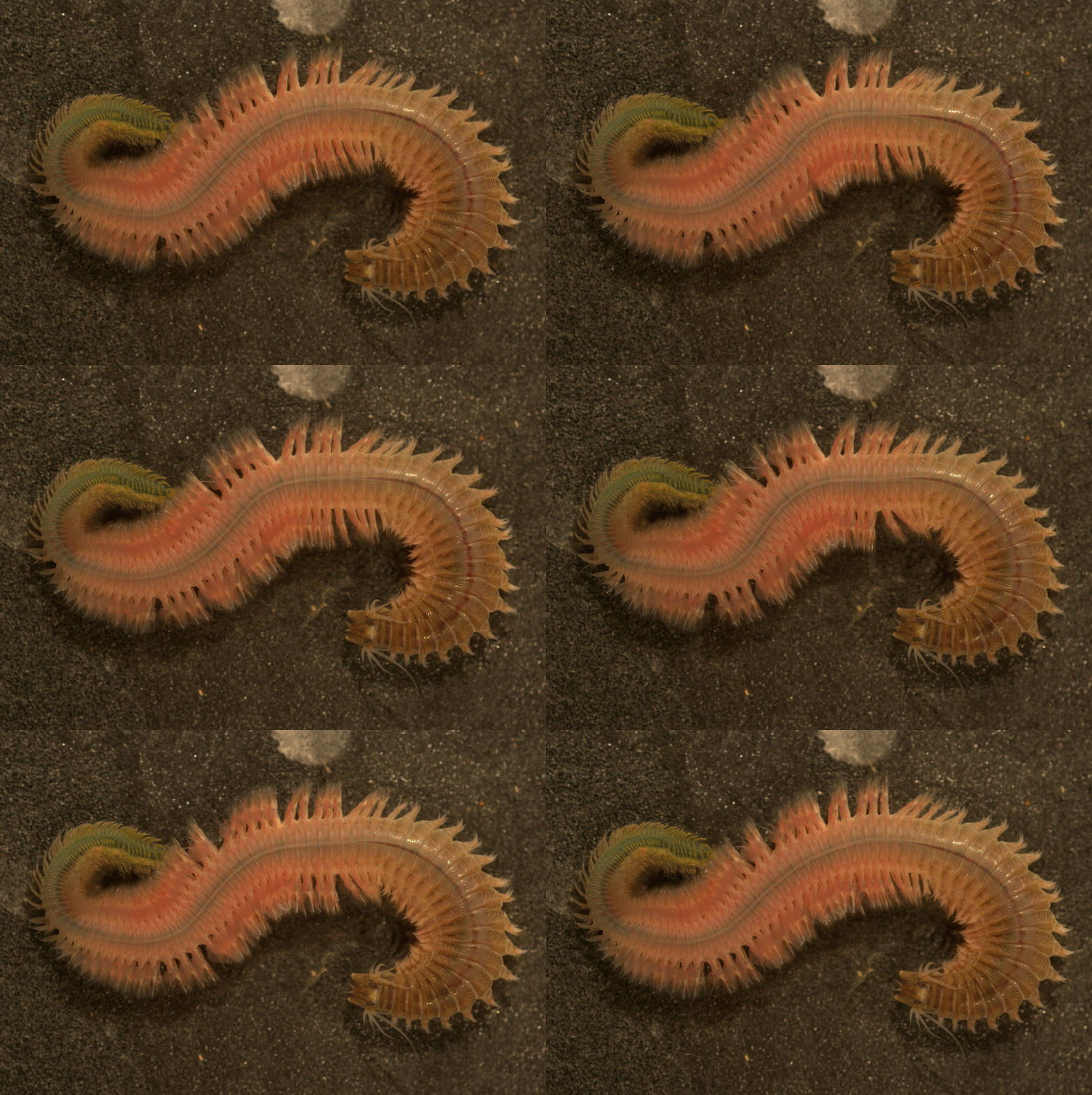
Adults typically reach lengths up to about 15 cm, though most individuals are smaller. The body is elongated and segmented, with each segment bearing parapodia (paired fleshy lobes) used for crawling and swimming. Coloration often ranges from reddish-brown on the anterior segments to a duller brown toward the posterior. The head region (prostomium and peristomium) carries sensory structures: four simple eyes, a pair of palps, and multiple tentacular cirri. The palps and tentacles serve for touch and for manipulating food; see palps for a general sense of these organs.
Like many nereidids, A. succinea has an eversible pharynx that can be protruded to seize prey or scavenge detritus; this structure often contains chitinous jaws in related species. Locomotion and respiration are aided by parapodia and bristles (chaetae) on each segment. When threatened some individuals secrete mucus that may form a temporary sheath or allow them to withdraw into burrows.
Habitat, distribution and behavior
Alitta succinea is found in shallow marine waters, commonly in intertidal and subtidal zones, living among sand, mud, under rocks, and inside algal mats or detritus. It is an opportunistic feeder — scavenging, predating on smaller invertebrates, and ingesting organic material from the sediment. Juvenile and reproductive stages may be planktonic; larvae develop in the water column before settling to the bottom as benthic juveniles. For a description of planktonic stages in marine invertebrates see planktonic.
Life cycle and reproduction
Development begins with free-swimming larval stages typical of many marine annelids. Larvae feed in the plankton, grow, and eventually settle as benthic juveniles. Reproduction in nereidids can include seasonal or synchronous spawning, releasing gametes into the water where fertilization occurs. Some related ragworms exhibit transformations and swarming behavior around spawning time; A. succinea releases gametes after planktonic development and contributes larvae back to the planktonic community.
Ecological role, interactions and importance
Pile worms are ecologically significant in coastal food webs. They serve as prey for bottom-feeding fish, shorebirds, and crustaceans and help transfer energy from detrital and benthic sources into higher trophic levels; many fishes and decapods consume ragworms and other benthic polychaetes. See examples of predators under crustaceans and fish that feed on benthic invertebrates. By burrowing and feeding, A. succinea also contributes to sediment mixing and nutrient cycling in intertidal habitats.
Human uses, handling and similar species
- Fishing bait: Ragworms are commonly collected as bait for recreational and commercial fisheries.
- Research and monitoring: Because of their abundance and sensitivity to sediment conditions, they are sometimes used in ecotoxicology and environmental monitoring studies.
- Handling: These worms can bite with their eversible pharynx if provoked, so care is recommended when collecting them.
Distinguishing A. succinea from other 'clam' or 'sand' worms relies on morphology (head appendages, parapodia form and chaetae) and local species guides. For a broader taxonomic context see the page on species descriptions of nereidids and note that the common names "ragworm" and "sandworm" may apply to several taxa including other genera of nereid polychaetes such as those listed under sandworm.
Overall, Alitta succinea is a widespread, ecologically important polychaete whose life history connects planktonic and benthic marine communities and whose presence influences both food webs and sediment dynamics.
Questions and answers
Q: What is Alitta succinea?
A: Alitta succinea is a common polychaete worm also known as the pile worm or clam worm.
Q: What are ragworm and sandworm?
A: Ragworm and sandworm are terms that can refer to any one of a number of other species.
Q: How long can Alitta succinea reach in length?
A: Alitta succinea can reach up to 15 centimeters (6 inches) in length.
Q: What is the color of the rear and body of Alitta succinea?
A: The rear of Alitta succinea is brown in color, and the rest of its body is reddish-brown.
Q: What are the features of the head of Alitta succinea?
A: Alitta succinea has a head with four eyes, two sensory feelers or palps, and eight tentacles.
Q: Where can Alitta succinea be found?
A: Alitta succinea is a freeswimming polychaete scavenging on the bottom of shallow marine waters.
Q: What is the importance of clam worms?
A: Clam worms are an important food source for bottom-feeding fish and crustaceans.
Related articles
Author
AlegsaOnline.com Alitta succinea (pile worm): description, biology, and ecological role Leandro Alegsa
URL: https://en.alegsaonline.com/art/2649
Sources
- sms.si.edu : "Neanthes succinea clam worm"