
Delgadillo's Snow Cap Drive-In
A compact history and guide to Delgadillo's Snow Cap Drive-In in Seligman, Arizona — a whimsical Route 66 roadside restaurant founded by Juan Delgadillo, noted for its jokes, kitsch and role in Route 66 preservation.
Overview
Delgadillo's Snow Cap Drive-In is a small, famously quirky roadside eatery on the historic alignment of U.S. Route 66 in Seligman, Arizona. Established as a drive-in-style attraction, the Snow Cap opened in the mid-20th century and became known as much for its playful attitude and novelty decorations as for its simple food. The restaurant functions as a living piece of Americana and a touchstone for travelers following the Mother Road.
Image gallery
9 Images




Character and main attractions
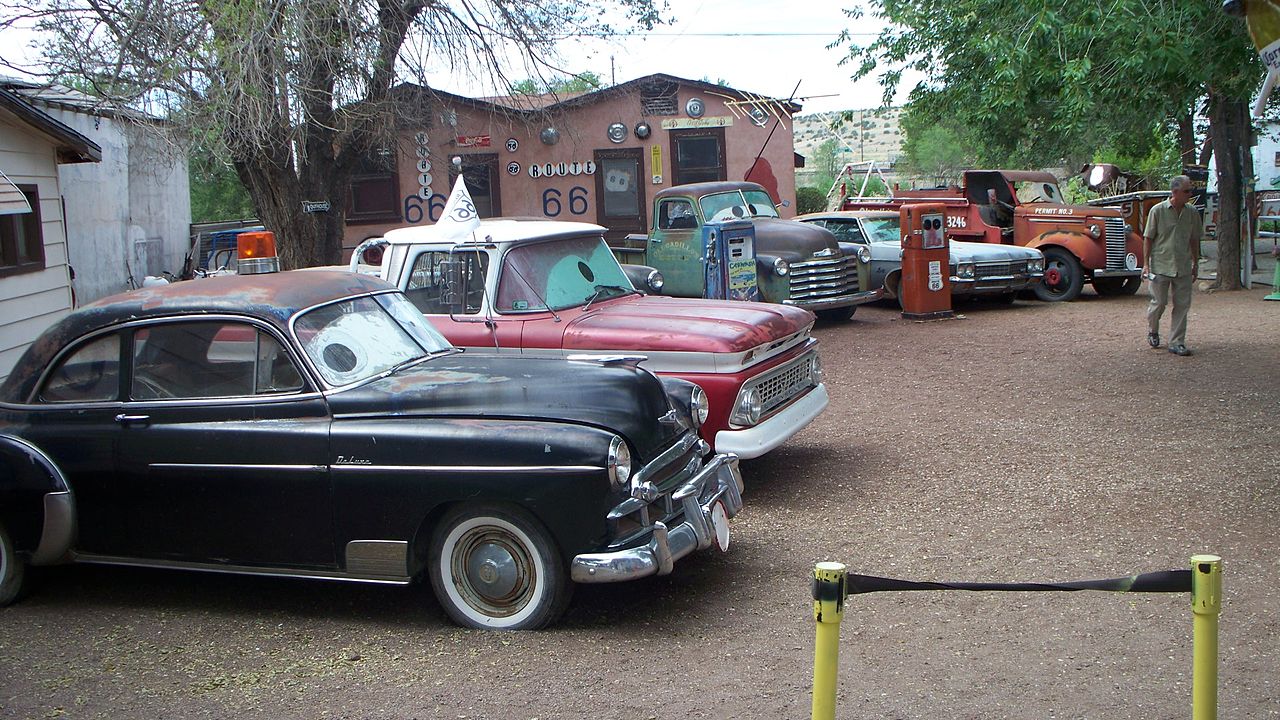
The Snow Cap's character comes from a blend of handmade signage, visual gags and an intentionally silly menu. The small building was mostly built from reclaimed materials scavenged from the nearby railroad yard; the founder relied on thrift and imagination to create an eye-catching roadside stop. Visitors immediately notice the humorous paintwork, hand-lettered warnings such as "parking at your own risk," and a neon sign that reads "Sorry, we're open." These flourishes are part of the venue's long-running tradition of good-natured pranks.
- Automotive oddities: A 1936 Chevrolet with its roof removed was decorated and placed on the property as a centerpiece; it is one of several retro vehicles that contribute to the drive-in's visual identity. The Chevrolet and other relics serve as props and conversation pieces.
- Playful menu items: The menu intentionally lampoons expectations with offerings and names such as a "cheeseburger" accompanied by the punchline of asking whether customers want cheese. Another menu joke uses a name like "dead chicken" to surprise and amuse patrons.
- Decor and garden: "Juan's Garden" — a name given to the yard behind the restaurant — is a curated collection of old car parts, toys and homemade sculptures often accented by an artificial Christmas tree and other whimsical bits. An anchor point for this display is the artificial tree that the founder installed as a humorous touch. The tree often appears in photographs and guides to the site.
History and development
The Snow Cap was founded by Juan Delgadillo, a longtime Seligman resident who opened the shop using scrap lumber and repurposed materials during the early 1950s. The modest construction and the founder's penchant for jokes and theatricality quickly made the restaurant memorable to motorists. The business remained family-run: Juan's playful service style — teasing customers, staging small pranks and inventing humorous menu descriptions — set a tone that has been continued by his descendants since his death. Records and local histories cite the restaurant's opening year in the early 1950s. The opening date is commonly referenced in Route 66 histories.
The fate of many small Route 66 towns shifted dramatically when the Interstate highway system redirected long-distance traffic. When nearby Interstate 40 was completed, through traffic that had sustained businesses along the old road diminished, altering the community and economy of Seligman. Local preservation efforts and the quirky appeal of places like the Snow Cap helped renew interest in the highway and the towns that line it.
Legacy, cultural importance, and connections
Delgadillo's Snow Cap is often cited in discussions of roadside Americana, kitsch and vernacular architecture. It has attracted photographers, Route 66 enthusiasts and travelers seeking authentic mid-century attractions. The Snow Cap also figures in modern popular culture: while researching the history and characters of Route 66 for an animated film, filmmaker John Lasseter encountered local figures including Seligman barber and preservation advocate Angel Delgadillo, whose stories contributed to broader attention for the road and its landmarks.
Angel Delgadillo has been a prominent voice in efforts to preserve and promote Route 66 and its towns; local advocacy helped spur heritage tourism that benefits attractions like the Snow Cap. The restaurant's walls and counters are covered with mementos and business cards left by visitors from around the world, a visible record of its international appeal. Writers who document the Mother Road frequently include the Snow Cap in their accounts; author Michael Wallis discusses it while chronicling Route 66's history.
Visiting today
Today the Snow Cap remains a stop for tourists traveling the historic corridor. Members of the Delgadillo family continued to operate and maintain the site after the founder's death, keeping alive the spirit of playful hospitality with which it began. Visitors should expect a compact venue where the experience is as much about the jokes, signage and collection of found objects as it is about food. For many, a stop at the Snow Cap captures an essential aspect of roadside culture: a small, local place that tells stories about travel, ingenuity and the way communities adapt to changing transportation networks.
For further reading about Route 66, its people and places, consult general histories and guidebooks that treat the road as both a transportation corridor and a cultural phenomenon. The Snow Cap remains a vivid example of how a single small business can become a symbol of a broader American tradition.
More on drive-ins and roadside attractions | Seligman resources | Menu anecdotes | Food humor | Classic diner items | Historic cars and displays | Decorative features | Founding details | Animation and Route 66 | Local preservation | Interstate influences | Further reading
Questions and answers
Q: Who built Delgadillo's Snow Cap Drive-In?
A: Delgadillo's Snow Cap Drive-In was built in 1953 by Juan Delgadillo.
Q: How did he build the restaurant?
A: He built the restaurant mostly from scrap lumber he found at the nearby Santa Fe Railroad yard.
Q: What was one of his unique ways to bring attention to his new restaurant?
A: He cut the roof off of a 1936 Chevrolet, put paint, horns and emblems from other cars all over it and placed an artificial Christmas tree in the rear of the car.
Q: What is on Delgadillo's menu?
A: The menu still has such choices as a "cheeseburger with cheese" and "dead chicken."
Q: What is Juan's Garden?
A: Juan's Garden is located at the rear of the restaurant and is where Mr. Delgadillo kept his collection of old cars and other strange things.
Q: Who runs Delgadillo's now that Juan has passed away?
A: Since Delgadillo's death in 2004, the Snow Cap has been run by his sons John-Michael and Robert. They both work the counter and play with customers like their father did.
Q:What book covers the history of Snow Cap Drive-In ?
A:The history of Snow Cap Drive-In is covered in Michael Wallis' book, Route 66 : The Mother Road
Related articles
Author
AlegsaOnline.com Delgadillo's Snow Cap Drive-In Leandro Alegsa
URL: https://en.alegsaonline.com/art/26386
Sources
- money.cnn.com : "Kings Of The Road Four Great Summer Road Trips"
- azcentral.com : "Seligman still getting kicks from Route 66"
- nl.newsbank.com : "RV rookies hit bumps in discovery of America"
- nl.newsbank.com : "Seligman, Ariz.: A historic stop on The Mother Road"
- travelbite.co.uk : "Disney's Cars inspires ultimate Route 66 holiday"
- travelsw.com : "Goodbye, Juan..."
- imdb.com : Internet Movie Database. The Inspiration for 'Cars. (2006)
- books.google.com : Route 66: The Mother Road