
Dejima — artificial island and controlled foreign trading post in Nagasaki
Dejima was a small, fan-shaped artificial island in Nagasaki Bay used from the 17th to 19th centuries to confine and regulate foreign trade, most notably as a Dutch trading post during Japan's sakoku era.
Overview
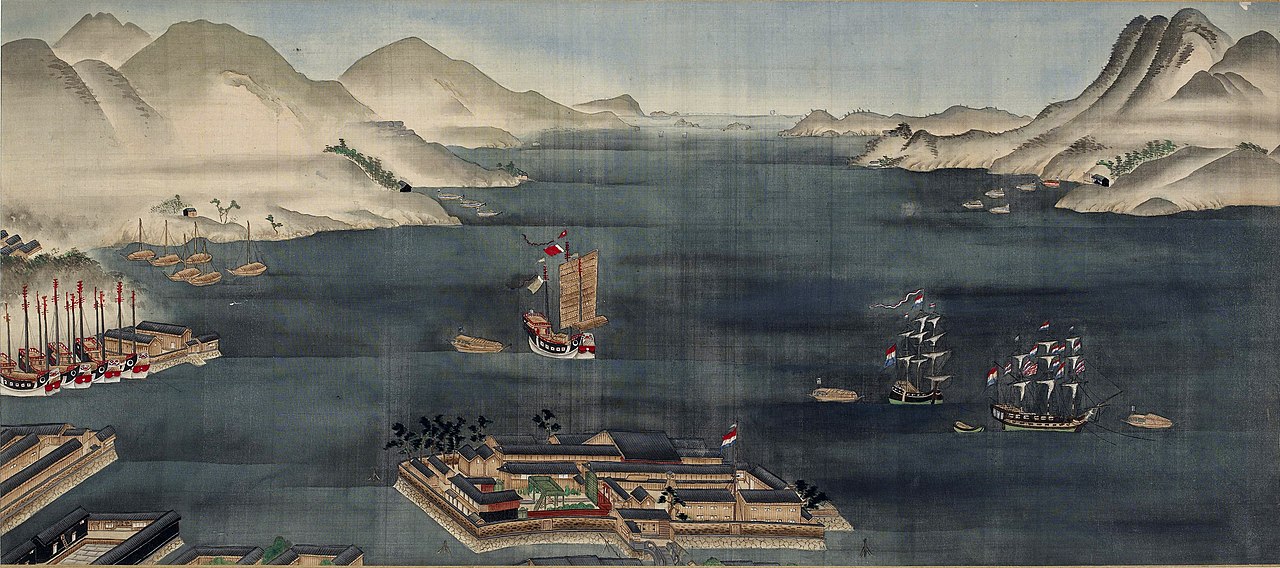
Dejima was a deliberately constructed, fan-shaped outpost in Nagasaki Bay, created in the early 17th century to regulate contact between Japan and foreign merchants. The facility occupied roughly 120 m × 75 m (about 9,000 m² or 0.9 hectares). Connected to the mainland by a single guarded bridge, it functioned as a contained hub where trade, diplomacy and strict supervision could take place without allowing unrestricted access to the Japanese interior.
Image gallery
10 Images



Origins and historical context
The artificial island was formed in the 1630s by cutting a canal through a small peninsula to isolate foreign merchants from the rest of Nagasaki. Its creation occurred within the political framework of the Edo period, when Tokugawa authorities adopted a policy often called sakoku, a system of tightly controlled foreign relations. Initially the site hosted Portuguese traders, but after expulsions and shifting politics the presence of merchants changed: Chinese traders were permitted for a time and, from 1641, the Dutch East India Company assumed a dominant role as the chief European presence on the island.
Design, construction and layout
Dejima’s fan-shaped layout and compact plan reflected its purpose. Buildings were arranged to serve warehouses, offices, living quarters and a quay for ships. The island’s size and shape deliberately limited expansion and helped Japanese authorities control movements, inspect goods and enforce quarantine. The narrow connection to the mainland simplified surveillance and made it possible to restrict contact to designated officials and interpreters.
Administration, rules and daily life
The island was administered under strict regulations: foreign residents lived under surveillance, communications with the Japanese populace were monitored, and trade was supervised by local magistrates. Ships arrived on scheduled visits; cargoes were logged and inspected; and specific procedures governed the reception of letters, scientific instruments and books. The arrangement turned Dejima into a purpose-built trading post where commercial activity could be concentrated and channelled through official channels.
Trade, goods and economic role
- Goods traded included silk, spices, sugar, metals and other items requested by domestic markets.
- Silver and copper were important in balancing trade; luxury and novelty items were also significant.
- Dejima served as a conduit for controlled imports and limited exports, enabling the Tokugawa state to benefit from selective commerce while restricting broader foreign influence.
Intellectual and cultural exchange
Although Dejima was designed to limit influence, it became a focal point for selective cultural and intellectual exchange. Through contacts there, Japanese scholars acquired Western books, medical texts, maps and instruments. This flow of knowledge is often described as rangaku, or "Dutch learning," and contributed to advances in medicine, astronomy, shipbuilding and cartography. The pragmatic interest of some Japanese officials and scholars in Western science allowed important techniques and ideas to enter Japan even during the isolationist period.
Decline, reopening and legacy
The special status of Dejima persisted until the mid-19th century, when external pressures and changing Japanese policy ended strict isolation. The arrival of foreign delegations and treaties transformed Nagasaki’s role and the exclusive commerce at Dejima came to an end. Over time the island was physically absorbed into the expanding urban fabric of Nagasaki and underwent changes in use. Today the site is recognized as an important historic place and has been the subject of archaeological research, partial reconstruction and museum presentation as the Dutch-era precinct is interpreted for visitors. Local and national authorities manage preservation and public education activities.
Significance and further resources
Dejima is remembered both as a symbol of Tokugawa-era containment of foreign influence and as an unexpected channel for cross-cultural exchange. It illustrates how controlled contact can still produce meaningful transfers of goods and knowledge. For thematic studies, one may consult resources on early modern maritime trade, the role of ports in the Japanese economy, and accounts of the interactions between the Portuguese, Portuguese traders, Chinese merchants and the Dutch. Scholarly and museum publications also treat technical aspects of the island’s construction and the canal that created it, and institutions maintain archives and exhibitions summarizing Dejima’s history and its preservation work; see institutional pages and guides linked to local studies and maritime surveys at canal and peninsula research portals.
Visiting and commemoration
Today Dejima’s reconstructed buildings, quay areas and exhibits offer visitors a sense of how the confined trading post operated. Interpretive displays address the administrative rules, daily life of residents and the broader context of the sakoku system during the Edo period. Those interested in focused studies are encouraged to consult museum catalogues, primary-source editions and curated digital collections identified by heritage agencies and research institutions; many summaries and guides use the island’s historic designation as a starting point for exploring the longer history of controlled contact and cultural exchange from the early modern period to the modern reopening of Japan.
Questions and answers
Q: What is Dejima?
A: Dejima is a fan-shaped artificial island in the bay of Nagasaki.
Q: When was Dejima built?
A: Dejima was built in 1634.
Q: What was the purpose of Dejima?
A: The purpose of Dejima was to keep foreign traders out of Japan as part of the "sakoku" self-imposed isolationist policy.
Q: Who were the traders on Dejima?
A: Dejima was originally built for Portuguese traders, but later became a Chinese and Dutch trading post from 1641 until 1853.
Q: How big is Dejima?
A: Dejima covers an area of 120 m x 75 m (9000 square meters, or 0.9 hectares).
Q: Is Dejima still standing?
A: Yes, Dejima is still standing and has become part of the city of Nagasaki. "Dejima Dutch Trading Post" is now a Japanese national historic site.
Q: What is the significance of Dejima?
A: Dejima was the only place of direct contact and trade between Japan and the outside world during the Edo period and is an important part of Japan's history and cultural heritage.
Related articles
Author
AlegsaOnline.com Dejima — artificial island and controlled foreign trading post in Nagasaki Leandro Alegsa
URL: https://en.alegsaonline.com/art/26334