
Deindustrialization: causes, consequences and historical patterns
Deindustrialization is the decline of industrial activity in a region or economy, often marked by shrinking manufacturing employment, plant closures and structural shifts toward services.
Deindustrialization refers to a sustained decline in industrial activity within a region or country, especially in the production of goods by factories and heavy manufacturing. It is commonly understood as the reverse of industrialization: fewer jobs in manufacturing, plant closures, and a reduced share of industry in output and employment. The term describes a process rather than a single event and may unfold unevenly across sectors and places.
Image gallery
2 Images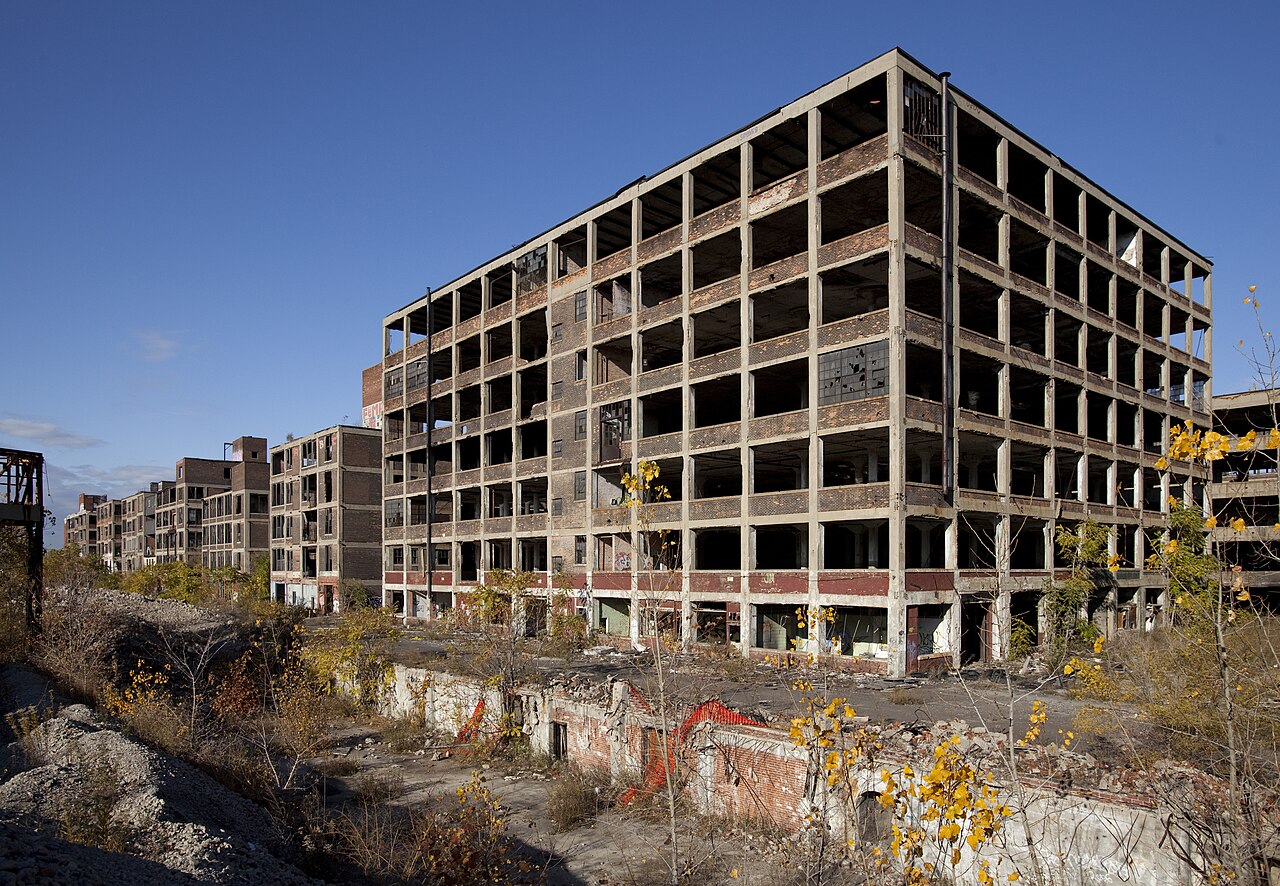

Characteristics and causes
Typical features include falling employment in factories, lower industrial output relative to services, and the relocation of production to other regions or countries. Causes are multiple and often interlinked: technological change and automation, rising labor costs, globalization and offshoring, shifts in consumer demand toward services, and policy choices such as trade liberalization. Economic restructuring can be voluntary (firms seeking greater efficiency) or driven by external competition.
Economic and social impacts
Deindustrialization reshapes labour markets and local economies. Workers who lose manufacturing jobs may face long-term unemployment, lower wages, or the need for retraining. Communities dependent on a single industry can experience reduced tax bases, population loss, and deteriorating infrastructure. At the same time, economies can gain in productivity and expand service, knowledge, and technology sectors—outcomes that vary by region and policy response.
History and patterns
The phenomenon has been widely observed since the late 20th century in many advanced economies, where manufacturing employment fell as productivity rose and companies shifted production to lower-cost countries. In other cases, industrial decline has followed political change, resource depletion, or deliberate economic diversification. Some countries experience partial reindustrialization or a transition to high-tech manufacturing rather than a simple disappearance of industry.
Responses and mitigation
Policy responses include active labour-market programs, targeted investment in education and retraining, industrial policy to support innovation and advanced manufacturing, and regional redevelopment initiatives. Successful responses often combine social support for displaced workers with efforts to attract new industries and improve local infrastructure.
Notable distinctions and examples
- Deindustrialization vs. deurbanization: the former concerns industry decline; the latter concerns the shifting population of cities.
- Structural change: a gradual shift toward services can accompany healthy economic development, while abrupt industrial collapse may indicate deeper problems.
- Geographic variability: regions within the same country can experience very different outcomes depending on local assets and policies.
Questions and answers
Q: What is deindustrialization?
A: Deindustrialization is the process of removing or reducing machines from how work is done, causing social and economic change in a country.
Q: What is the opposite of industrialization?
A: Deindustrialization is the opposite of industrialization.
Q: What happens to people during the deindustrialization of a country?
A: During the deindustrialization of a country, many people leave factory jobs to do other jobs that require little or no machines.
Q: How does deindustrialization cause social and economic change?
A: Deindustrialization causes social and economic change by changing the job market and leading to changes in the economy. It can also affect the social structure of a country, as people move from industrial jobs to other types of jobs.
Q: Is deindustrialization a common process?
A: Deindustrialization is a common process in countries that have experienced significant industrialization, such as European countries and the United States.
Q: How does deindustrialization affect the economy?
A: Deindustrialization can have varying impacts on the economy and can lead to shifts in the types of jobs available and the industries that are driving economic growth. It can also lead to changes in trade patterns and economic policies.
Q: What types of jobs do people usually move to during deindustrialization?
A: People who leave factory jobs during deindustrialization may move to jobs that require little or no machines, such as service jobs or jobs in the information technology sector.
Related articles
Author
AlegsaOnline.com Deindustrialization: causes, consequences and historical patterns Leandro Alegsa
URL: https://en.alegsaonline.com/art/26317