
Dean of the United States House of Representatives
The Dean is the longest-serving member of the U.S. House; a ceremonial position that traditionally administers the oath to a newly elected Speaker and reflects seniority privileges.
The Dean of the United States House of Representatives is the member with the longest continuous service in the House. This informal status is widely recognized in Congress and in public descriptions of House practice. The Dean is not an officer created by statute or the House rules, but a custom based on seniority and institutional memory. For a general reference to the placing of historic members, see longest-serving representative.
Image gallery
10 Images

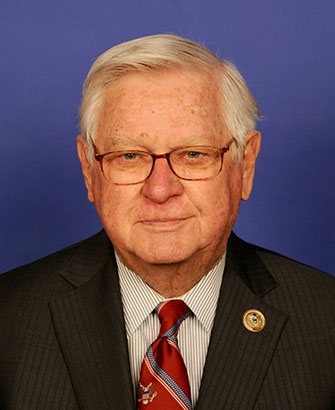


Customary duty
The most visible function of the Dean is ceremonial: when the House elects a new Speaker, the Dean customarily comes forward to administer the oath of office to the Speaker-elect. The role is limited to administering the oath; the Dean does not preside over the Speaker's election itself. The practice of swearing in the Speaker is noted in descriptions of House tradition and is one of the few routine duties associated with the title. Contemporary examples and biographies of deans, including recent holders such as Hal Rogers of Kentucky, are often cited to illustrate this custom.
Characteristics and privileges
Although the Dean holds no formal powers beyond custom, seniority in the House tends to bring practical advantages. Long-serving members are frequently assigned preferred or larger office space, a reflection of rank and party negotiations, and they often occupy influential committee positions. It is common for a Dean to be a committee chair or ranking member, and to enjoy staff and committee choices that come with extended tenure. Many biographies and House guides note that the Dean may receive some of the most desirable offices (office space) and committee placements.
Origins and comparisons
The label "Dean" emerges from parliamentary traditions that recognize senior members in legislatures elsewhere. In the United Kingdom, the comparable role is known as the Father of the House, and in Canada a similar custom exists for the longest-serving member of the House of Commons. Unlike those bodies, however, the Dean of the U.S. House does not have a formal duty to preside over the election of the chamber's presiding officer; that responsibility is typically handled by the Clerk or another temporary presiding official while the House organizes itself.
Practical significance and limits
In practice the Dean is a symbol of continuity rather than a source of institutional authority. The title signals experience and can confer informal influence, especially in debates over procedure or in mentoring newer members. Nevertheless, the Dean does not possess unique legislative powers, cannot compel votes, and serves at the pleasure of constituents and party leadership like any other representative. The oath that the Dean administers to the Speaker is simply the formal oath required of congressional officers; after that ceremony, the new Speaker administers the oath to the rest of the membership (oath).
Notable aspects and modern practice
- Selection: The title is determined solely by length of continuous House service and is not subject to election or appointment.
- Ceremony: The Dean's intervening role in swearing the Speaker is customary; the Speaker is sworn only after being elected (elected).
- Partisanship: The Dean may belong to any party; recent examples include members from both major parties, such as representatives identified publicly with party labels (Republican).
Although often mentioned in news accounts and reference works, the Dean remains a largely honorary designation that acknowledges longevity and institutional knowledge rather than conferring formal authority. For further reading on House customs, historical lists, and biographies of long-serving members see additional references and archives (Speaker of the House).
For research and archival materials, institutional guides and member histories collect information on deans and seniority, and these resources often clarify how the role fits within the broader practices of congressional organization and tradition (Kentucky, Hal Rogers, and other long-serving representatives are frequent case studies).
Finally, while the Dean benefits informally from seniority and recognition, the position should be understood as part of the House's social and ceremonial fabric rather than a separate office with codified duties or powers.
Questions and answers
Q: Who is the current Dean of the United States House of Representatives?
A: The current Dean of the United States House of Representatives is Hal Rogers, a Republican from Kentucky.
Q: When did Hal Rogers first enter office?
A: Hal Rogers first entered office on March 6th, 1973.
Q: What is the customary duty of the Dean?
A: The customary duty of the Dean is to swear in a Speaker of the House when he or she is elected.
Q: Does the Dean preside over the election of the Speaker?
A: No, unlike in other countries such as in Britain and Canada, the Dean does not preside over the election of Speaker.
Q: What privileges are associated with seniority for Deans?
A: Because of seniority privileges associated with being a Dean, they are usually given some desirable office space and generally either chair or ranking minority member on an influential committee.
Q: Is being a Dean an official position?
A: No, being a Dean in the United States House of Representatives is not an official position.
Related articles
Author
AlegsaOnline.com Dean of the United States House of Representatives Leandro Alegsa
URL: https://en.alegsaonline.com/art/25988
Sources
- library.clerk.house.gov : "Dean of the House"
- history.house.gov : "Oath of Office"
- house.gov : House of Representatives
- senate.gov : Senate