
Alicante (Alacant): Mediterranean port city and capital of Alicante province
Alicante (Valencian: Alacant) is a southeastern Spanish city and Mediterranean port, capital of the province of Alicante. Noted for Santa Bárbara Castle, beaches, tourism, a semi-arid climate and regional services.
Overview
Alicante (Spanish: Alicante; Valencian: Alacant) is a coastal city in southeastern Spain, serving as the capital of the province of Alicante within the Valencian Community. Located on the Mediterranean shore, the city has long been a port and a commercial hub for the surrounding region. Its urban area includes a mix of historic neighborhoods, modern shopping corridors and a developed waterfront that attracts residents and visitors alike.
Image gallery
10 Images


Geography and climate
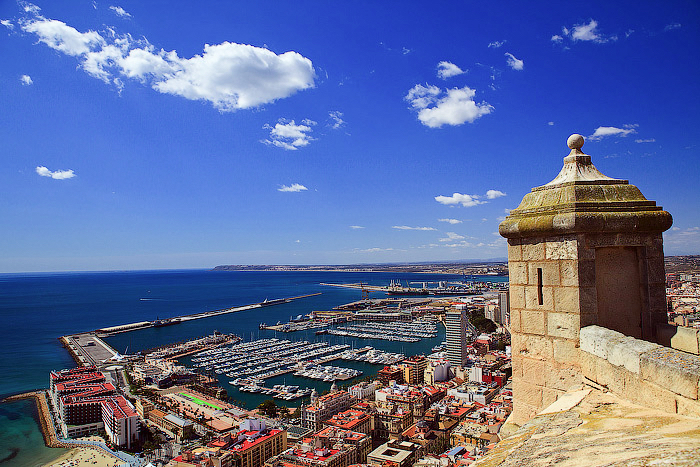
Alicante sits beneath the rocky spur of Benacantil and faces the Mediterranean Sea, with beaches such as the Playa del Postiguet immediately adjacent to the old town. The city's climate is classified as hot semi-arid (BSh), with mild winters, hot summers and relatively low rainfall compared with other coastal areas of Spain. Vegetation and urban planning reflect this dry, sunny environment, which supports tourism and outdoor life for much of the year.
History and landmarks
The site of Alicante has been occupied since ancient times, experiencing Iberian, Roman and later Muslim influence before being retaken during the Christian Reconquista. A prominent historic monument is Santa Bárbara Castle, positioned about 166 meters above sea level on Mount Benacantil; the castle overlooks the city and commemorates the medieval capture of the fortress in the 13th century. Other civic and cultural landmarks include the Explanada de España promenade, the central Luceros square, and a compact old quarter with churches, squares and narrow streets.
Economy, transport and urban life
Alicante's economy is built on services, tourism, commerce and its port activities. Avenida Maisonnave is the city's principal commercial avenue, hosting shops and department stores such as El Corte Inglés. The Port of Alicante supports passenger ferries, fishing and some freight; nearby Alicante–Elche airport provides international connections for visitors. As an urban region it forms part of a wider metropolitan area that includes neighboring Elche and various satellite towns, creating an extended economic and social zone around the city center.
Culture, festivals and attractions
Local culture blends Valencian and Spanish influences. The city is famous for the annual Bonfires of Saint John (Hogueras de San Juan), a large festival of parades, monuments built of cardboard and wood, fireworks and street parties held in June. Visitors also come for beaches, marina life, seafood cuisine and day trips to nearby natural and historic sites. Tourist information and services are concentrated along the seafront and in the historic core.
Notable facts and distinctions
- Alicante is the capital of its province and a major service center for the southern Valencian Community.
- The city combines an active port and a tourism-oriented economy; its population and metropolitan reach have grown through 21st-century development.
- For visitors, the mix of a compact old town, a hilltop castle and accessible beaches makes Alicante a frequent stop on Mediterranean itineraries. See regional resources for travel and municipal details: Mediterranean context, metropolitan area data and general tourism information.
A balanced view of Alicante emphasizes its historical depth, its contemporary role as a regional capital and service economy, and its ongoing appeal as a coastal destination with distinctive festivals and landmarks.
Questions and answers
Q: What is the name of the city in Spain?
A: The city in Spain is called Alicante (or Alacant in Valencian).
Q: What is the population of Alicante proper?
A: The population of Alicante proper as of 2014 was about 332,067.
Q: How many people live in the metropolitan area including Elche and satellite towns?
A: As of 2009, there were 795,034 people living in the metropolitan area including Elche and satellite towns.
Q: What type of climate does Alicante have?
A: Alicante has a hot semi-arid climate (BSh) according to the Koeppen climate classification.
Q: What is Maisonnave Avenue?
A: Maisonnave Avenue is a principal commercial street in the city of Alicante. It is considered to be one of the most expensive avenues in all of Spain.
Q: Who took Santa Barbara's Castle from the Arabs?
A: Santa Barbara's Castle was taken from the Arabs by Alfonso of Castilla on December 4th 1248.
Related articles
Author
AlegsaOnline.com Alicante (Alacant): Mediterranean port city and capital of Alicante province Leandro Alegsa
URL: https://en.alegsaonline.com/art/2588
Sources
- ine.es : Instituto Nacional de Estadística