
David Hilbert
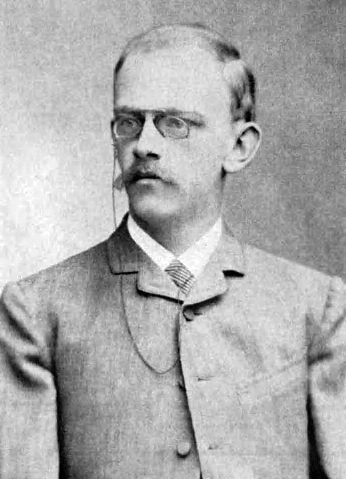
German mathematician David Hilbert (1862–1943) made foundational contributions to algebra, analysis, geometry, logic and the formal foundations of mathematics, and shaped 20th‑century mathematics via Göttingen.
Overview
David Hilbert (born 23 January 1862 in Königsberg; died 14 February 1943 in Göttingen) was a leading German mathematician whose work shaped many branches of modern mathematics. He combined deep technical results with a systematic interest in axioms and foundations, and he played a central role in establishing Göttingen as the world centre of mathematical research in the early 20th century.
Image gallery
9 Images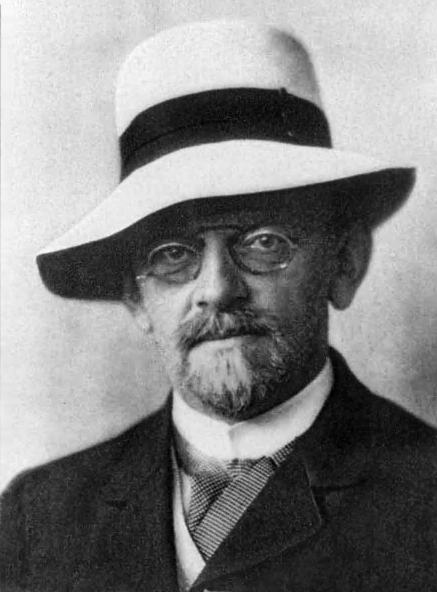
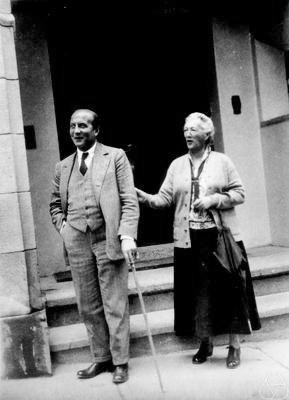
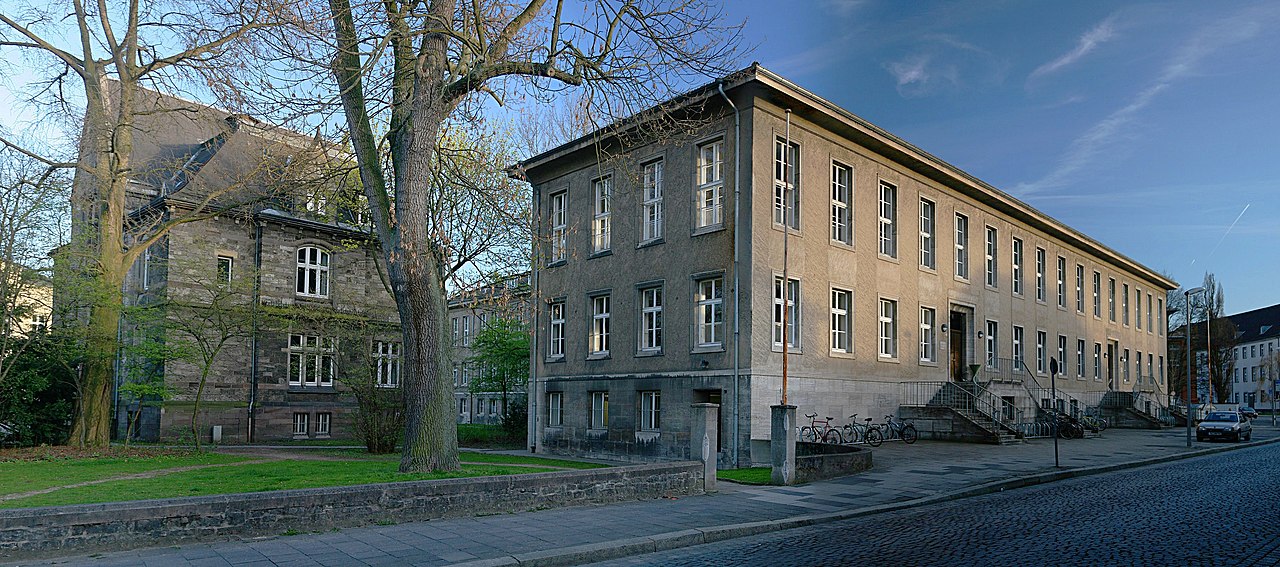
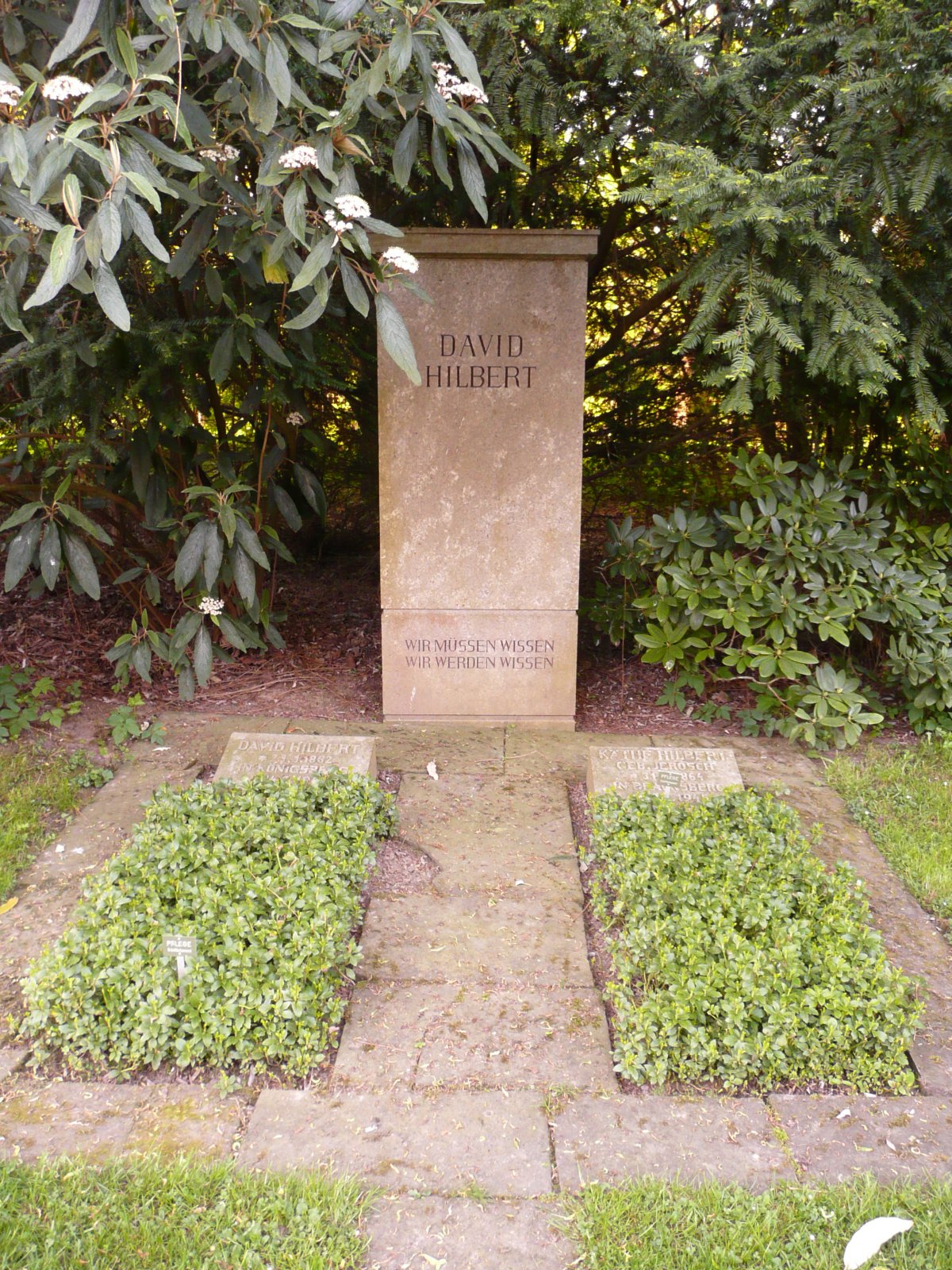



Main areas of work
Hilbert contributed to a wide array of fields. Early in his career he produced major results in algebra and invariant theory, including what are known as Hilbert's basis theorems and related algebraic theorems that clarified structure in polynomial ideals. In geometry he proposed a rigorous system of axioms for Euclidean geometry that clarified implicit assumptions and guided later work on axiomatization. His studies of integral equations, spectral theory and quadratic forms helped lay the groundwork for functional analysis; the abstract notion now called a "Hilbert space" formalizes many infinite‑dimensional settings useful in analysis and physics.
Foundations, logic and Hilbert's program
Beyond concrete theorems, Hilbert is famous for his work on foundations. He was a principal advocate of formal approaches to mathematics and initiated what became known as Hilbert's program: the project of axiomatizing significant parts of mathematics and proving their consistency by finitary means. This program stimulated the development of proof theory and metamathematics. Later developments in logic, notably Gödel's incompleteness theorems, showed limits to Hilbert's original aims, but the program nonetheless advanced our understanding of formal systems and provability.
Influence on physics and the Göttingen school
Hilbert and his circle supplied much of the mathematical language used by physicists in the first half of the 20th century. Concepts emerging from Hilbert's work contributed to the mathematical formulation of quantum mechanics and provided techniques used in general relativity and other physical theories. As a professor at the University of Göttingen, Hilbert attracted and mentored many influential mathematicians and helped turn Göttingen into an international centre for research and teaching.
Problems, students and legacy
At the International Congress of Mathematicians in 1900 Hilbert presented a famous list of 23 problems that outlined major challenges and guided research for decades. His supervision, encouragement and advocacy helped notable mathematicians—such as Emmy Noether and Richard Courant—develop their careers; Hilbert defended Noether’s place in the Göttingen faculty at a time when women faced institutional obstacles. His name is attached to many central concepts, theorems and methods that remain standard in modern mathematics.
Further reading and resources
- Biographical overview: early life in Königsberg
- Göttingen years and academic career
- Collected works and selected writings
- Exposition of Hilbert's axioms for geometry
- Historical notes on axiomatization
- Introduction to Hilbert spaces and functional analysis
- Relations to functional analysis and spectral theory
- Mathematical foundations used in quantum mechanics
- Mathematical contributions relevant to general relativity
- Proof theory, metamathematics and Hilbert's program
- Distinctions between mathematics and metamathematics
- Historical context: Cantor, set theory and debates of the era
Questions and answers
Q: Who is David Hilbert?
A: David Hilbert was a German mathematician, logician, and philosopher of mathematics.
Q: What is David Hilbert famous for?
A: David Hilbert is widely considered to be one of the most influential and greatest mathematicians of the 19th and 20th centuries. He discovered and developed a range of fundamental ideas in many areas, including invariant theory, the axiomization of geometry, and the notion of Hilbert space, which is one of the foundations of functional analysis. He also contributed to proof theory and mathematical logic and was one of the founders of these fields.
Q: What is Hilbert space?
A: Hilbert space is a concept that was developed by David Hilbert, and it is one of the foundations of functional analysis. It is a type of space that has certain properties related to its dimensions and inner product.
Q: What contribution did Hilbert make to quantum mechanics and general relativity?
A: David Hilbert and his students supplied much of the mathematics needed for quantum mechanics and general relativity. Specifically, Hilbert contributed to the development of the mathematics of the theories of quantum mechanics and general relativity.
Q: What is proof theory?
A: Proof theory is a branch of mathematical logic that studies the nature of mathematical proofs. David Hilbert was one of the founders of proof theory and contributed to its development.
Q: What is the distinction between mathematics and metamathematics?
A: David Hilbert was one of the first people to make the distinction between mathematics and metamathematics. Mathematics is about studying mathematical systems and their properties, while metamathematics is about studying the properties of mathematical systems themselves.
Q: What was Hilbert's stance on Georg Cantor's set theory and transfinite numbers?
A: David Hilbert was a supporter of Georg Cantor's set theory and transfinite numbers. He warmly defended Cantor's ideas in these areas.
Related articles
Author
AlegsaOnline.com David Hilbert Leandro Alegsa
URL: https://en.alegsaonline.com/art/25774