
Dattatreya — Hindu deity, sage, and Adi‑Guru
Dattatreya, regarded as an incarnation of the Hindu Trimurti and a model of the avadhuta sage, is revered as a teacher, ascetic ideal, and compassionate deity across several Indian traditions.
Overview
Dattatreya (or Dattātreya) is a complex figure in Hindu religious life, venerated both as a god and as an exemplary rishi (seer). In many accounts he is presented as an incarnation of the three principal deities of the Hindu pantheon: Brahma, Vishnu and Shiva. His name, often rendered Datta, means "given" and the epithet Atreya connects him to the sage Atri, his father in the traditional birth story. Dattatreya appears in a range of texts and devotional traditions and is valued both as a compassionate deity and as a model of renunciation and spiritual freedom.
Image gallery
7 Images


Iconography and symbolic elements
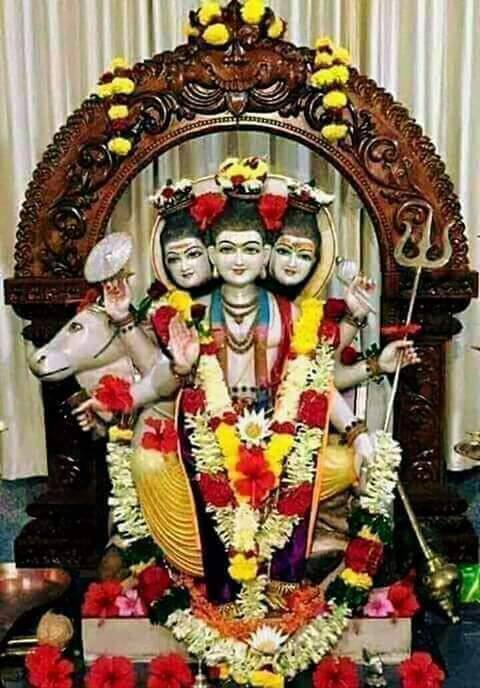
Dattatreya is commonly shown with three heads and six hands, symbolizing the unity of the Trimurti and their combined powers. Other recurring elements include a cow, which represents the Earth or the nourishing mother; four dogs, often interpreted as the four Vedas or as guardians of the spiritual path; and ascetic implements such as a kamandalu (water pot) and staff. Popular visual features carry layered meanings, combining theological claims with ascetic imagery.
- Three heads — unity of creation, preservation and destruction.
- Four dogs — often linked to the Vedas or to spiritual vigilance.
- Cow — symbol of abundance, dharma and the world sustained by God.
- Ascetic tools — signs of renunciation, pilgrimage and teaching.
Origins, texts and development
The birth legend describes Dattatreya as the son of the sage Atri and his wife Anusuya, who were blessed by the Trimurti and thereby given a son embodying all three deities. Dattatreya is mentioned in classical sources such as certain Puranas and other traditional texts. Several works of yoga and mystic instruction, including writings traditionally attributed to him like the Avadhuta Gita, present an ideal of enlightened independence and non‑attachment. These texts have been influential among ascetic and tantric circles and also within devotional schools.
Traditions, schools and worship
Different lineages emphasize distinct aspects of Dattatreya. Within the Nath tradition he is often revered as an Adi‑Guru (first teacher) and integrated into a Shaiva yogic lineage; some Nath teachers regard him as an avatar of Shiva and trace their teachings to him. Elsewhere Dattatreya functions as a deity of popular devotion: temples and household shrines celebrate him, especially in regions of western and southern India. Devotees may approach him for blessings, guidance on spiritual practice, or relief from difficulties.
Teachings, practices and cultural role
Dattatreya embodies two complementary orientations: the bhakti (devotional) approach in which he is worshipped as a compassionate divine figure, and the avadhuta or yogic ideal that models radical detachment and direct realization. His instruction often highlights simple, direct perception of reality and a detachment from social conventions. Some sources with tantric associations present Dattatreya as a teacher of esoteric practices, while other streams emphasize ethical conduct, devotion, and service. The plurality of approaches explains his wide appeal across caste, sect, and regional lines.
Distinctive facts and legacy
Dattatreya stands out for his simultaneous identity as god, guru and ascetic archetype. He has been assimilated into multiple religious milieus: classical Purānic devotion, tantric and yogic instruction, and regional devotional literature. Texts and hagiographies composed in various Indian languages recount his life and miracles and remain sources of inspiration. The figure of Dattatreya thus illustrates how a single religious personality can function both as a theological claim about divine unity and as a living example for spiritual practice.
For further reading about the divine aspects and the traditions associated with Dattatreya see sources on the identities of the Trimurti, the concept of an avatar, and tantric strands of Indian spirituality (Tantric literature).
Questions and answers
Q: Who is Dattatreya?
A: Dattatreya is the God who is an incarnation of the Divine Trinity Brahma, Vishnu and Shiva.
Q: Why is Dattatreya called "Given"?
A: Datta means "Given", and Dattatreya is called so because the divine trinity have "given" themselves in the form of a son to the sage couple Guru Atri and Mata Anusuya.
Q: Who were Guru Atri and Mata Anusuya?
A: Guru Atri and Mata Anusuya were a sage couple.
Q: What is the meaning of the name Atreya?
A: Atreya is the name given to Dattatreya as he is the son of Guru Atri.
Q: What is Dattatreya considered to be in the Nath tradition?
A: In the Nath tradition, Dattatreya is seen as an Avatar or incarnation of the Lord Shiva and as the Adi-Guru (First Teacher) of the Adi-Nath sampradaya of the Nathas.
Q: What were Dattatreya's traits in the beginning?
A: Although Dattatreya was at first a "Lord of Yoga" with Tantric traits.
Q: How is Dattatreya approached by millions of Hindus today?
A: While still worshiped by millions of Hindus, Dattatreya is approached more as a benevolent God than as a teacher of the highest essence of Indian thought.
Related articles
Author
AlegsaOnline.com Dattatreya — Hindu deity, sage, and Adi‑Guru Leandro Alegsa
URL: https://en.alegsaonline.com/art/25656
Sources
- mahendranath.org : Notes on Pagan India
- mahendranath.org : The Pathless Path to Immortality