
Data storage device: types, history, and practical uses
Overview of data storage devices: what they are, how they work, major types (magnetic, optical, solid‑state), historical development, key characteristics and common uses.
A data storage device is any physical medium or mechanism used to record and retain information. Historically this concept includes everything from carved symbols and paper records to modern electronic components. In computing contexts the term usually refers to hardware that retains digital information so it can be read, written and managed by systems and users. The basic purpose is to preserve the state of data over time, whether temporarily or permanently, and to enable retrieval, modification and transfer.
Image gallery
7 Images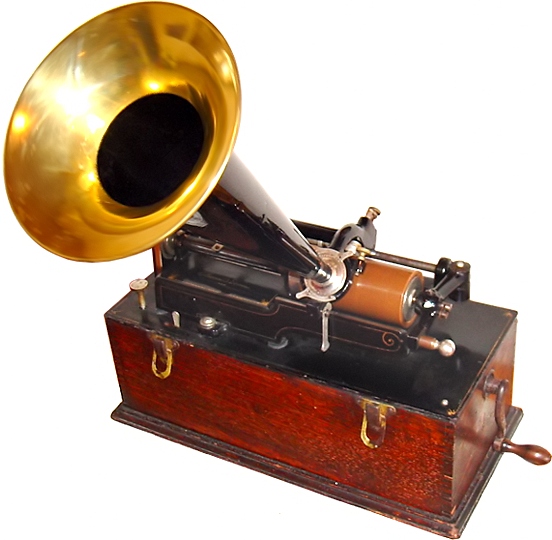




Core characteristics and categories
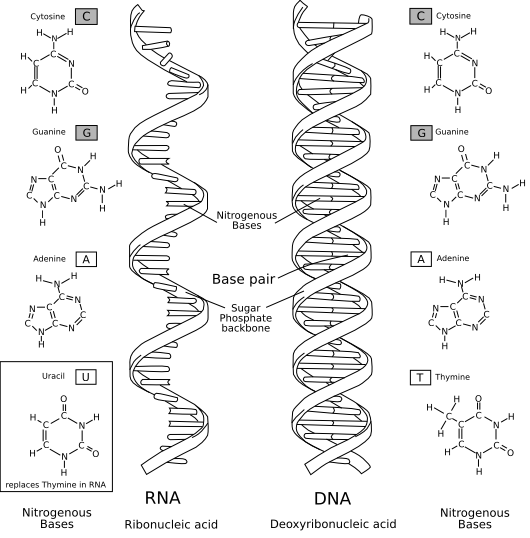
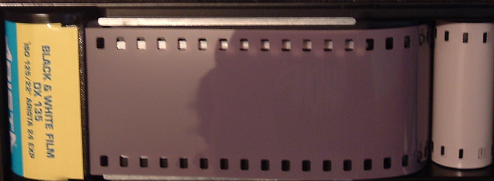
Storage technologies are commonly grouped by their method of encoding and access pattern. Major categories include magnetic (hard disk drives and tape), optical (CD, DVD, Blu‑ray), solid‑state (flash memory and SSDs), and emerging techniques such as biological or holographic research prototypes. Devices can also be classified as removable or fixed, volatile (loses content without power) or nonvolatile, and as primary (fast, directly used by a computer's processor) or secondary/archival (slower but higher capacity).
- Magnetic media store data via magnetization of a surface and are widely used for high capacity, cost‑effective archival storage.
- Optical media encode information as pits and lands read by laser light, useful for distribution and long‑term retention.
- Solid‑state devices use semiconductor memory to store bits electronically, offering low latency and high durability for many workloads.
How storage records and retrieves information
Recording data depends on changing a physical property that can be later sensed and interpreted. That change might be a magnetic orientation, a pattern of microscopic marks, charge on a transistor, or a chemical state. Electronic storage typically requires power to access or transfer data; however, nonvolatile devices keep their contents without continual power. Information is represented either as analog signals, which vary continuously, or as digital signals, which use discrete values to represent bits.
Brief historical context
Human data storage has ancient roots: images, inscriptions and manuscripts preserved knowledge for millennia. Mechanical and analog methods evolved into electromagnetic tapes and disks in the 20th century, then into compact optical discs and, more recently, semiconductor‑based solid‑state drives. Each generation emphasized higher density, faster access and better reliability, while software and file systems advanced to organize and protect growing volumes of data.
Common uses and examples
Devices serve many roles: everyday file storage on personal computers, enterprise arrays for databases and virtual machines, removable media for distribution and backup, and offline tape archives for long‑term retention. Portable flash drives and memory cards enable cameras, phones and embedded systems to retain images and sensor readings. Cloud services build on large arrays of storage devices to provide scalable, networked access.
Performance, durability and choice considerations
When selecting storage, people weigh capacity, cost per byte, throughput (read/write speed), latency, endurance (how many write cycles are supported), and resilience against failures. Redundancy, error correction and encryption are common features to protect data. For archival workloads longevity and stable media characteristics matter; for transactional systems low latency and high IOPS are priorities.
Further reading and related concepts
For concise definitions and comparisons consult introductory resources on data storage device basics and guides on recording techniques. To understand what is being stored, read about information theory and data formats. Materials science perspectives explain the varieties of energy and physical effects used in modern media. Historical surveys cover early media such as pictures and script, including developments in writing. For computing applications see resources on storage integration with computers and handling of files. Topics such as electricity dependency, analog versus digital representation are useful when comparing specific technologies.
Questions and answers
Q: What is a data storage device?
A: A data storage device is a device that records (stores) information (data).
Q: How long have people been storing data?
A: People have been storing data for thousands of years.
Q: What forms of energy can be used for recording data?
A: Virtually any form of energy can be used for recording data.
Q: How is modern storage different from ancient storage?
A: Modern storage devices may hold information, process information, or both. Ancient storage relied mainly on pictures and writing.
Q: What is electronic data storage?
A: Electronic data storage is storage that requires electricity to store and retrieve data.
Q: What type of data storage devices fall under the category of electronic data storage?
A: Most storage devices that do not require visual optics to read data fall into the category of electronic data storage.
Q: What are the two formats in which electronic data may be stored?
A: Electronic data may be stored in either an analog or digital signal format.
Related articles
Author
AlegsaOnline.com Data storage device: types, history, and practical uses Leandro Alegsa
URL: https://en.alegsaonline.com/art/25641
Sources
- doi.org : 10.1038/319618a0
- ukoln.ac.uk : '