
Darwinius — the Eocene primate known from the 'Ida' fossil
Darwinius is a genus represented by a single exceptionally complete Eocene primate fossil ('Ida') from the Messel Pit; notable for its preservation, scientific debate, and public impact.
Overview
Darwinius is a genus of early primate known from a single, exceptionally complete fossil specimen. The individual, nicknamed "Ida", comes from an Eocene lake deposit and dates to about 47 million years ago. The taxon was named to honor Charles Darwin on the bicentenary of his birth, while the species epithet masillae refers to the Messel locality that produced the fossil. Because only one specimen is known, much of what is stated about Darwinius derives from detailed study of that single individual and comparisons with other Eocene primates.
Image gallery
8 Images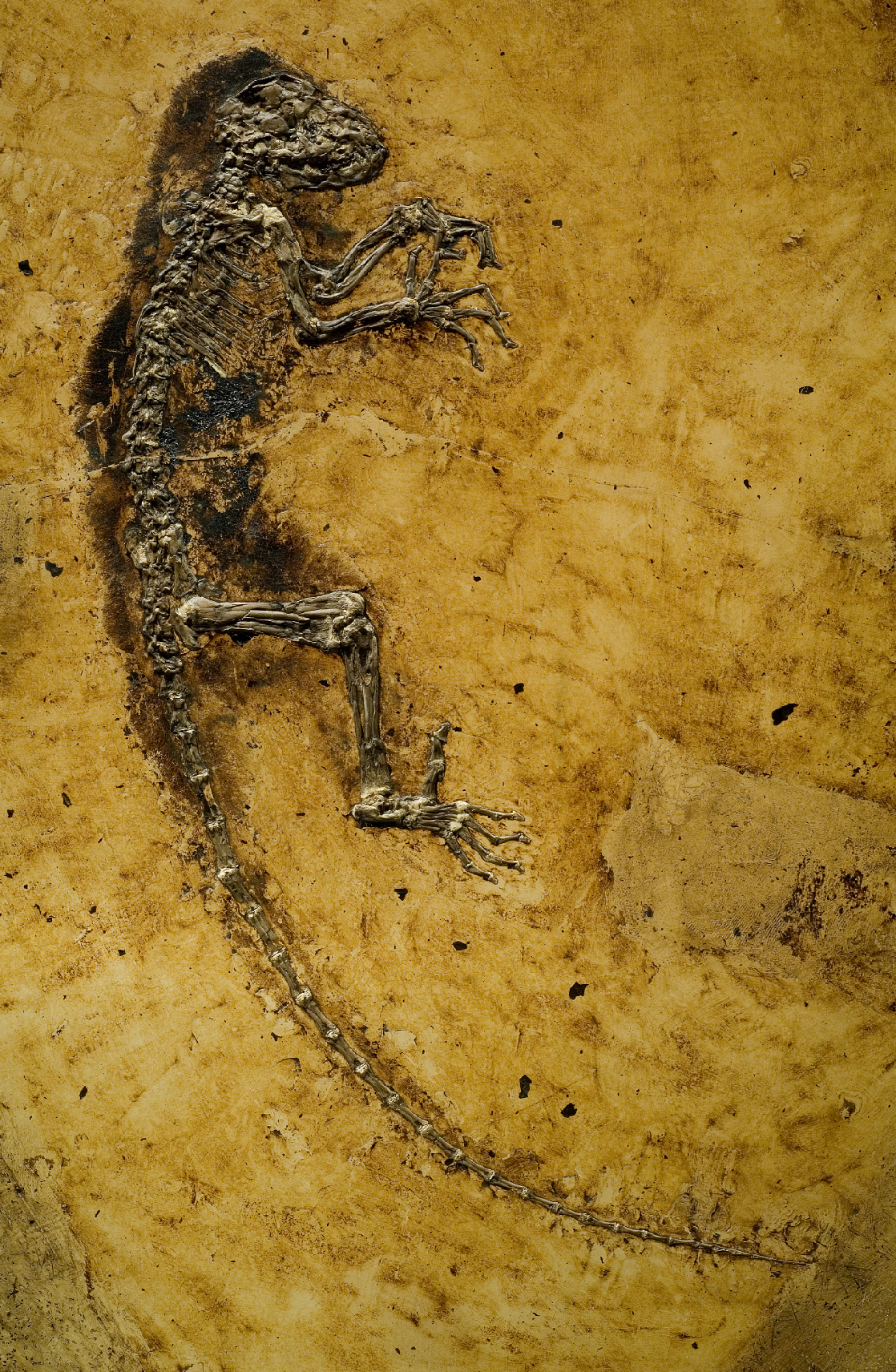


Anatomy and preservation
Ida preserves a nearly articulated skeleton including a skull, teeth, limbs and much of the vertebral column. The specimen also retains impressions of fur and, as reported by researchers, remains of gut contents—features that make it one of the most informative primate fossils from the Eocene. Morphologically, Darwinius shows a mix of primitive and derived characters: a relatively elongated snout, forward-facing orbits, grasping hands with nails rather than claws, and limb proportions indicating a combination of arboreal locomotion and climbing ability. Superficially, some traits resemble those of modern lemurs, but more detailed analysis is required to place the animal precisely within early primate evolutionary branches.
Discovery and naming
The fossil was discovered in 1983 at the Messel Pit, a disused shale site near the village of Messel, Germany. Messel is renowned as a fossil lagerstätte because the anoxic lake sediments preserved delicate tissues and fine skeletal detail. After excavation the specimen was split into a slab and a partial counterslab and, for a time, these parts were separated and sold independently before being reunited years later. Because the specimen is the only one assigned to the genus, it also functions as the type specimen for Darwinius.
Scientific debate and significance
When Ida was publicly revealed, the find attracted intense attention. Initial publicity emphasized the specimen's completeness and discussed its potential relevance to the early evolution of higher primates, including possible links to anthropoid lineages. These broad claims sparked substantial scientific discussion. Subsequent peer-reviewed analyses questioned whether Darwinius represents a direct ancestor of modern monkeys and apes or instead belongs to a separate branch of early primates. The consensus among many specialists is cautious: while Ida is an exceptionally informative specimen for understanding Eocene primate anatomy and ecology, it does not by itself resolve major questions about primate ancestry.
Notable features and context
- Age and locality: from the Eocene deposits of Messel, a window into early Cenozoic ecosystems.
- Completeness: nearly whole skeleton with soft-tissue impressions and stomach contents, rare for primate fossils.
- Public impact: high media profile that spurred interest in fossil research and discussion about scientific communication.
- Comparative importance: serves as a critical data point for reconstructing anatomy and behaviour of early primates.
Access, study, and further reading
The specimen has been studied by multiple research teams and featured in scientific publications and public exhibitions. Because the original fossil was divided after excavation and later reassembled, its curation history is often discussed alongside its scientific importance. For introductory summaries and museum pages see resources connected to the find; for deeper taxonomic and phylogenetic analysis consult specialized literature and databases that treat Eocene primates and the Messel fauna. For general context about the single-specimen nature of the discovery see a short note on the single fossil specimen status and how that shapes interpretation. Background on the Messel site as a former quarry and its role in paleontology is available through geological and conservation summaries.
Darwinius remains an important fossil for teaching about Eocene biodiversity, fossil preservation, and how scientific claims are evaluated and debated. It highlights both the value of exceptionally preserved specimens and the need for careful phylogenetic work before asserting broad evolutionary conclusions.
Questions and answers
Q: What is Darwinius?
A: Darwinius is a genus of primates known from only one fossil.
Q: Where was Darwinius discovered?
A: Darwinius was discovered at the Messel Pit, a disused shale quarry near the village of Messel in Germany.
Q: When was Darwinius discovered?
A: Darwinius was discovered in 1983.
Q: How old is the Darwinius fossil?
A: The Darwinius fossil dates from the Eocene epoch, 47 million years ago.
Q: What is the significance of the name Darwinius?
A: The genus Darwinius was named to celebrate Charles Darwin on his bicentenary.
Q: What is the significance of the name masillae?
A: The species name masillae honors Messel, where the specimen was found.
Q: How was the Darwinius fossil discovered?
A: The fossil was discovered by an amateur at the Messel Pit and was divided into two parts (slab and partial counterslab) after excavation. It was not reassembled until 2007.
Related articles
Author
AlegsaOnline.com Darwinius — the Eocene primate known from the 'Ida' fossil Leandro Alegsa
URL: https://en.alegsaonline.com/art/25593
Sources
- journals.plos.org : journals.plos.org/plosone/article?id=10.1371/journal.pone.0005723