
Alhazen (Ibn al‑Haytham): Life, Work, and Influence on Optics and Science
Ibn al‑Haytham (Alhazen, 965–1039) was a mathematician, physicist and polymath whose experimental and mathematical work on optics, vision and scientific method shaped medieval and early modern science.
Alhazen (Ibn al‑Haytham, 965–1039) was a scholar born in Basra and active chiefly in Cairo. He is best known for transforming the study of light and vision into a rigorous mix of observation, experiment and mathematical analysis. Rather than accepting inherited authorities uncritically, Alhazen tested optical ideas against experiments, described phenomena such as reflection and refraction in quantitative terms, and developed clear arguments that influenced later scholars in both the Islamic world and Europe.
Image gallery
10 Images






Major contributions and themes
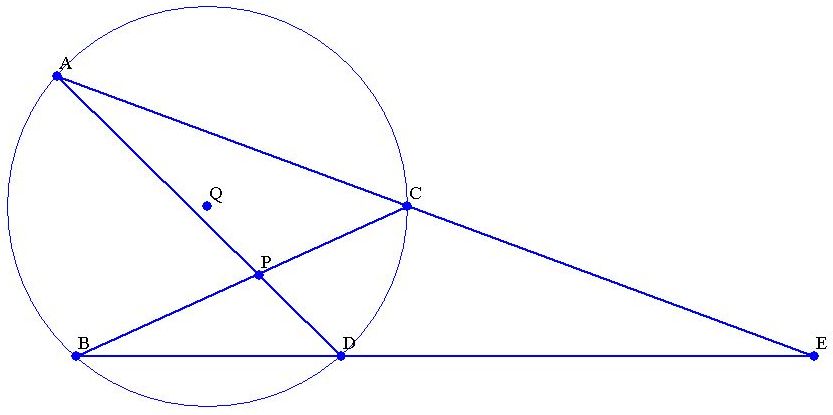
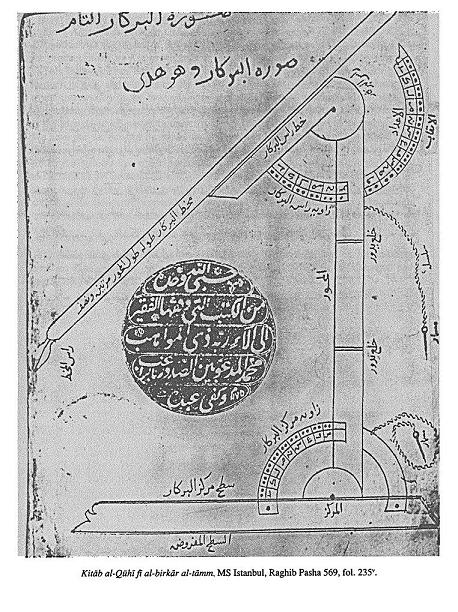
His most famous work, the Kitab al‑Manazir (Book of Optics), presents systematic studies of light, color, the formation of images and visual perception. Alhazen argued that vision results from light rays entering the eye from objects (an intromission model) and used experiments, including variations of the camera obscura, to show how images form and how apparent size and distance are perceived. He investigated the laws of reflection and refraction, described properties of mirrors and lenses, and discussed optical instruments that foreshadowed practical telescopic ideas.
Method and scientific approach
Alhazen combined geometric analysis with controlled observations. He emphasized testing hypotheses with experiment, careful measurement where possible, and logical demonstration. This methodological stance led some later writers to call him a forerunner of modern experimental science, though historians caution against simplifying his role into a single label. Nonetheless, his emphasis on experiment and critique of earlier authorities became a model for subsequent thinkers.
Other fields and notable works
Alhazen was a polymath: he wrote on mathematics, astronomy, mechanics, physiology of vision and medicine. His Risala fi'l‑makan (Treatise on Place) examined problems of motion and position and contained ideas about persistent motion unless changed by external influence — an idea that anticipates later developments in dynamics. He also studied aspects of human perception and psychology linked to vision, and produced practical and theoretical writings on engineering and optics used in instrument design.
Life, career and legacy
Born in Basra, Alhazen spent much of his career in Egypt. A well‑known episode recounts his involvement in a government attempt to regulate Nile floods; when he recognized the limits of his capacity to carry out large hydraulic works he withdrew from engineering and, according to some sources, feigned madness to avoid royal displeasure and was confined, during which time he composed many of his scientific writings. His works were translated into Latin and influenced medieval European scholars such as Roger Bacon and Kepler; his experimental tone contributed to longer intellectual shifts toward observation and mathematical description.
Importance and distinctions
Alhazen is widely regarded as one of the most important premodern writers on optics. While terms like "first scientist" overstate any single person's role in a long historical process, his careful blending of experiment and mathematics made his work a turning point. He clarified optical phenomena, improved instrument concepts, and left detailed discussions that later readers could test and extend. His legacy is visible in both Islamic and European scientific traditions.
Selected topics and further reading
- Optics and light
- Scientific method and experiments
- Historical assessments
- Early telescopic ideas
- Astronomy connections
- Anatomy and the eye
- Engineering projects
- Mathematical works
- Medical writings
- Ophthalmology influence
- Philosophical context
- Physical theories
- Psychology of perception
- Theological background
- Basra and regional origins
- Iraq (Mesopotamia) context
- Mesopotamian scholarly tradition
- Cairo as a scholarly center
- Egyptian intellectual life
- Nile and hydraulic work
- Fatimid political era
- House arrest and later writings
For readers seeking primary sources and modern analyses, the Book of Optics and translations or commentaries offer direct access to Alhazen's experimental descriptions and diagrams. His blend of geometry, experiment and theoretical reflection makes him a central figure when tracing the gradual emergence of methods that later developed into modern science.
Questions and answers
Q: Who was Alhazen?
A: Alhazen (also known as Alhacen or ibn al-Haytham) was a pioneer of modern optics and is sometimes referred to as the "pioneer of the modern scientific method" and "first scientist". He was an Arab Muslim polymath who made contributions to many fields, including optics, anatomy, engineering, mathematics, medicine, ophthalmology, philosophy, physics, psychology, Muslim theology and visual perception.
Q: Where did Alhazen live?
A: Alhazen mainly lived in Cairo, Egypt. He died there at age 74.
Q: What did Alhazen's Risala fi’l-makan discuss?
A: Alhazen's Risala fi’l-makan discussed theories on the motion of a body. He maintained that a body moves perpetually unless an external force stops it or changes its direction of motion.
Q: What did Alhazen attempt to do for the Fatimid caliphate?
A: At one point he was ordered by the sixth ruler of the Fatimid caliphate (Al-Hakim bi-Amr Allah) to regulate the floods of the Nile but he realized he could not do it and retired from engineering.
Q: How did Alhazen respond when he realized he couldn't complete his task for the Fatimid caliphate?
A: Fearing for his life due to his inability to complete his task for the Fatimid caliphate, he pretended to be mad and was placed under house arrest. For the rest of his life he devoted himself entirely to scientific work.
Q: What city was Alhazen born in?
A: He was born in Basra in Iraq (Mesopotamia), which is why he is sometimes called al-Basri (Arabic البصري).
Related articles
Author
AlegsaOnline.com Alhazen (Ibn al‑Haytham): Life, Work, and Influence on Optics and Science Leandro Alegsa
URL: https://en.alegsaonline.com/art/2559
Sources
- encyclopedia.com : Columbia Encyclopedia
- education.yahoo.com : Columbia Encyclopedia
- cartage.org.lb : "Alhazen, Ibn al-Haytham (c. 965-1038)"
- worldcat.org : 22109949 221646817 22181827 225287258
- harvardmagazine.com : Harvard Magazine
- encarta.msn.com : [[Encarta]] Online Encyclopedia