
Dark Souls — overview, mechanics, history and legacy
Dark Souls is a 2011 action role‑playing game by FromSoftware and Hidetaka Miyazaki, noted for challenging combat, interconnected world design, and an influential “soulslike” legacy.
Dark Souls is an action role‑playing game developed by FromSoftware under the direction of Hidetaka Miyazaki. First released in 2011, it built on ideas introduced in Demon's Souls and presented a distinctive blend of deliberate, stamina‑based combat, scarce resources, and a world that encourages careful exploration. Dark Souls became widely discussed for its difficulty curve and design philosophy, and it helped establish a family of related titles and imitators.
Image gallery
5 Images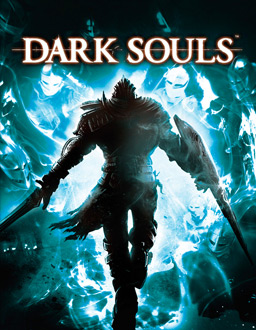


Core mechanics
The game centers on a single playable character who advances by defeating enemies, earning experience (souls) and improving attributes. Key mechanics and systems include:
- Combat and stamina: Every action—attacking, blocking, rolling, sprinting—consumes stamina. Players must balance offense and defense rather than simply spamming attacks.
- Health recovery and Estus Flasks: Healing is managed through limited Estus Flasks which can be replenished at rest points. This creates tension between exploration and returning to safety.
- Bonfires and checkpoints: Bonfires act as checkpoints where health and Estus refills occur, experience is banked, and fast travel or level progress is recorded. Resting also respawns most enemies.
- Humanity and Hollowing: A special resource called humanity affects character state and online features. Dying can put a character into a hollowed state that changes appearance and restricts certain multiplayer interactions until humanity is restored.
- Permadeath risk and recovery: When a player dies they drop their accumulated souls at the place of death and must return to retrieve them; dying again can forfeit them, creating meaningful risk.
World design and atmosphere
Unlike many linear role‑playing games, Dark Souls emphasizes an interconnected world. Distant regions discovered early can later be linked to previously explored areas via shortcuts, keys, and opened passages, rewarding attention to geography and memory. The tone of the game is deliberately bleak and mysterious; story elements are often implied through environmental details, item descriptions, and sparse dialogue rather than lengthy cutscenes. This oblique storytelling contributed to a strong community impulse to share discoveries and theories.
Multiplayer and online features
Dark Souls introduced asynchronous and synchronous online elements that affect single‑player sessions. Players can leave messages to warn or mislead others, view ghostly echoes of other players’ deaths, or summon cooperative phantoms for assistance. Conversely, the game allows hostile invasions in which other players can enter a world to hunt the host. These systems deepen tension by blending solitary exploration with unpredictable interactions.
Development, relationship to Demon's Souls, and release
The game evolved from the lessons of Demon's Souls, retaining many core ideas while making changes to world structure, some item systems, and how certain penalties worked. Development under Miyazaki emphasized player discovery and challenge rather than overt hand‑holding. After release the title was expanded in later versions and experienced renewed attention through reissues and ports.
Reception, sequels and influence
Dark Souls was both a commercial and critical success and inspired direct sequels and a number of spiritual successors. FromSoftware followed it with subsequent entries and related projects that explored similar design goals. Notable successors include Bloodborne, Sekiro and Elden Ring, each adapting the studio’s approach in different directions. The game also gave rise to the term “soulslike,” used by other developers to describe titles that borrow its emphasis on precise combat, meaningful death penalties, and environmental storytelling.
Notable distinctions and lasting impact
Dark Souls is often cited for its distinctive balance of challenge and reward, its interconnected environments, and its integration of online and single‑player systems. Players and designers alike point to its influence on modern action RPG design, from how difficulty can be used as a design tool to how minimal narrative presentation can encourage player engagement. While its higher difficulty is polarizing, many regard its systems and world design as a turning point in game development and community interaction.
For those new to the series, it is commonly recommended to learn enemy patterns, conserve resources, make use of bonfires strategically, and engage with the online features cautiously: cooperation can make difficult encounters manageable, while invasions can turn quiet moments into sudden threats. Dark Souls remains a touchstone in contemporary game design for players and creators interested in challenge, atmosphere, and tightly integrated gameplay systems.
Further reading and community resources are available through the developer and fan discussions: see FromSoftware developer information, interviews with Hidetaka Miyazaki, and dedicated retrospectives on Demon's Souls and related titles.
Questions and answers
Q: What is Dark Souls?
A: Dark Souls is an action RPG made by Hidetaka Miyazaki and FromSoftware. It is the sequel to Demon's Souls.
Q: How does health work in Dark Souls compared to Demon's Souls?
A: In Dark Souls, the player's health bar does not become smaller whenever the player dies like in Demon's Souls. There are also no enemies that can lower the player's stat level. In Demon's Souls, the player must find health items throughout the game world, but they can carry as many of those items as they like. However, in Dark Souls, the player can only carry a limited amount of Estus Flasks at a time (the game's main health items), but they will be refilled whenever the player rests at Bonfires. Also, "Humanities", which are items that completely refill the player's health, are hard to find.
Q: How does exploration work in Dark Souls compared to Demon’s souls?
A: In Dark Souls, the game world is more open than in Demon’s souls. Some of the areas that seem far away can later become connected to each other after the player finds shortcuts and keys. However, in Demon’s souls while certain areas can be played out of order many of them must be explored in a stricter order.
Q: What are Bonfires?
A: Bonfires are important locations found throughout Dark Soul’s game world where players may rest and refill their health bar and Estus Flasks however most enemies will also come back to life when resting at one of these bonfires and if a players dies they come back to last bonfire visited upon death.
Q: What forms do players have access to within dark souls?
A: Players have access two forms within dark souls “Humanity” form and “Hollow” form with Humanity being their normal form while Hollow being zombie-like version of themselves if they die while playing as Humanity form .
Q:What features do you lose when you go into Hollow Form ?
A: When going into Hollow Form , players cannot get let other players join their own game , join other games or attack other players however they also cannot be attacked by other players .
Related articles
Author
AlegsaOnline.com Dark Souls — overview, mechanics, history and legacy Leandro Alegsa
URL: https://en.alegsaonline.com/art/25534