
Algonquin Provincial Park
Large, historic provincial park in Ontario, Canada, noted for mixed forests, thousands of lakes and rivers, extensive canoe routes, wildlife, research programs and year‑round recreation.
Overview
Algonquin Provincial Park is a vast protected area in central Canada, within the province of Ontario. Established in 1893, it is one of the oldest and largest provincial parks in the province, covering about 7,653 square kilometres (roughly 2,955 square miles). The park combines extensive freshwater systems with forested uplands and has long been a destination for visitors seeking wilderness experiences near major urban centres such as Toronto and Ottawa.
Image gallery
10 Images




Landscape and ecology
The park is defined by a mosaic of lakes, rivers and wetlands carved by glaciation and running through rolling bedrock and mixed forests. Numerous streams, large lakes and substantial rivers create a dense network of waterways popular with paddlers and anglers. Forest cover is a mix of deciduous and coniferous species, producing diverse habitats that support a wide range of plants and animals.
Characteristic wildlife includes large mammals such as moose and black bear, smaller mammals like beaver and otter, and notable birdlife including common loons and migratory songbirds. The park’s habitats and long-term ecological monitoring make it important for scientific research into forest dynamics, climate effects and freshwater ecology.
History and cultural context
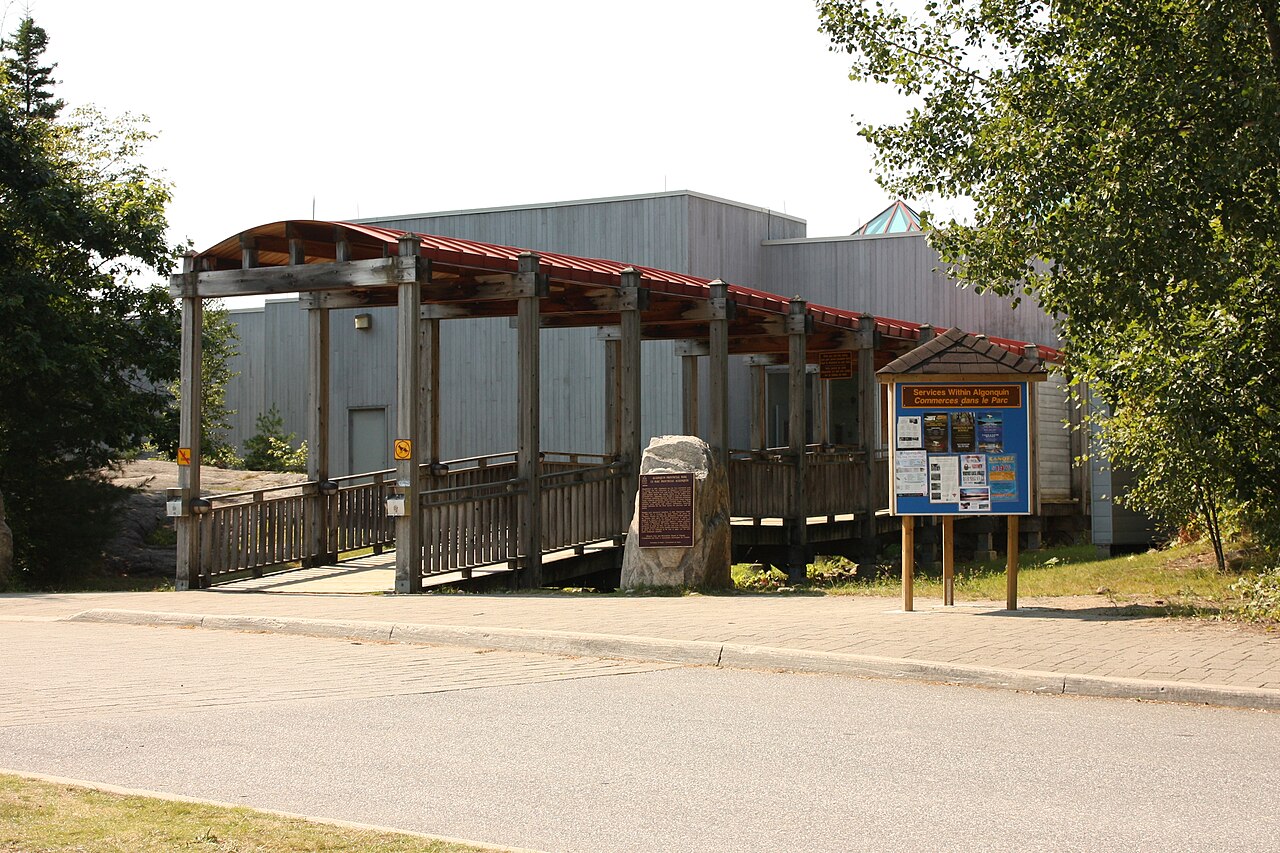
Algonquin Park takes its name from the Algonquin peoples whose traditional territories overlap the region; Indigenous use of the area predates the park’s creation. Since its founding in the late 19th century, the park has seen waves of use: early timber harvesting and transportation corridors, the arrival of roads and railways, and later development of recreation infrastructure. In recognition of its cultural and natural significance, Algonquin was designated a National Historic Site of Canada in 1992 (designation details).
Recreation, research and management
The park is a year‑round recreational hub. Popular activities include canoeing and multi‑day paddling on established routes, backcountry and frontcountry camping, hiking on maintained trails, wildlife viewing, fishing, and winter sports such as cross‑country skiing and snowshoeing. Visitor centres and interpretive programs help newcomers plan trips and learn about safety, species identification and low‑impact camping techniques.
- Canoe routes and portages for multi‑day trips
- Frontcountry campgrounds and backcountry campsites
- Marked hiking trails and scenic lookouts
- Educational programs and seasonal interpretive events
Notable facts and conservation
Algonquin remains an important case study in balancing conservation, recreation and traditional land uses. It supports long‑term ecological studies and hosts ongoing management efforts to protect water quality, wildlife habitat and archaeological sites while accommodating high visitor numbers. The park’s accessibility from urban centres and its reputation for canoeing, fall foliage and natural history make it one of Ontario’s best‑known wilderness parks.
For practical information—access points, permits, trail maps and seasonal advisories—visitors are encouraged to consult official park resources and local visitor centres before planning a trip.
Canada | Ontario | Streams | Lakes | Rivers | Forest types | Toronto | Ottawa | Historic site
Questions and answers
Q: What is Algonquin Provincial Park?
A: Algonquin Provincial Park is a large provincial park in Canada, located in the province of Ontario.
Q: When was Algonquin Provincial Park opened?
A: Algonquin Provincial Park was opened in 1893.
Q: How large is Algonquin Provincial Park?
A: Algonquin Provincial Park is very large, covering an area of 7,653 square kilometres (2,955 square miles), making it the third largest provincial park in Ontario after Polar Bear and Wabakimi.
Q: What types of water sources are found in Algonquin Provincial Park?
A: Algonquin Provincial Park contains many streams, lakes, and rivers.
Q: What type of forests are found in Algonquin Provincial Park?
A: The forests in Algonquin Provincial Park are a mixture of deciduous and coniferous.
Q: Why is Algonquin Provincial Park important for wildlife research?
A: The variety of environments in Algonquin Provincial Park makes it home to many species of plants and animals, and it is therefore an important park for wildlife research.
Q: Why is Algonquin Provincial Park popular with campers?
A: Algonquin Provincial Park is popular with campers because of its very large size and how close it is to large cities such as Toronto and Ottawa.
Related articles
Author
AlegsaOnline.com Algonquin Provincial Park Leandro Alegsa
URL: https://en.alegsaonline.com/art/2553
Sources
- algonquinpark.on.ca : "Cultural History of Algonquin Park"
- algonquinpark.on.ca : "Algonquin Park FAQs"
- historicplaces.ca : "Algonquin Provincial Park"
- algonquinpark.on.ca : "Recreational Activities"
- algonquinpark.on.ca : "Winter in Algonquin"
- algonquinpark.on.ca : "Algonquin Logging Museum"