
Dario Fo: Italian playwright, performer and satirist
Overview of Dario Fo (1926–2016), his dramatic style, major works, political satire, use of commedia dell'arte and grammelot, collaborations with Franca Rame, controversies and legacy.
Overview
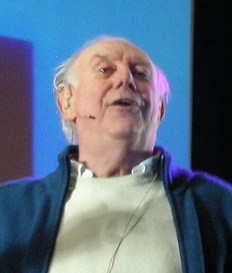
Dario Fo (born Sangiano, 3 March 1926 – 13 October 2016) was an Italian dramatist, actor and public intellectual whose work blended popular theatre traditions with sharp political satire. Trained as an actor and active for decades on stage and in touring ensembles, Fo became internationally known after he received the Nobel Prize in Literature in 1997 for writings that, in the committee's words, emulated the medieval jesters of the Middle Ages and attacked abuses of power while defending the dignity of ordinary people. His career combined acting, writing, directing and occasional composition, and he often performed with his wife, the actress Franca Rame.
Image gallery
10 Images


Style and dramatic techniques
Fo's plays frequently draw on traditional Italian forms—especially Commedia dell'arte—and on improvisation (improvisation) as a creative engine. He made extensive use of monologue, physical comedy, and grotesque exaggeration to expose corruption and hypocrisy in institutions. One notable technique associated with Fo is "grammelot," a theatrical gibberish that mimics the rhythm and sound of speech to convey meaning without a literal language, allowing performers to transcend dialect and national boundaries.
Major works and examples
Fo wrote dozens of pieces for stage and screen; among the most frequently cited are:
- Mistero Buffo – a cycle of solo pieces based on medieval mystery plays reworked into contemporary satire.
- Accidental Death of an Anarchist – a farcical investigation of police abuses inspired by a real scandal; it remains one of his best-known political satires.
- Can't Pay? Won't Pay! (Non si paga! Non si paga!) – a popular comedy that examines class tensions and everyday resistance.
These works combine didactic aims with comic performance; Fo often acted in his own plays and toured them through factories, squares and small theatres as a form of popular education.
Career, collaborations and politics
Throughout his life, Fo was not only a theatre maker but also a social commentator and activist. He and Franca Rame ran a company that brought politically charged theatre to broad audiences and supported grassroots cultural initiatives. Fo's writing addressed labour, class, state power and the church; as an actor and occasional composer for the stage, he fused music, mimicry and verbal invention to keep audiences engaged while delivering sharp critiques.
Reception, controversies and legacy
Fo's works won admiration for their theatrical inventiveness and their commitment to social issues but also provoked controversy. Several productions encountered legal challenges, political pressure, or public debate because they satirised powerful figures and institutions. Despite disputes, his influence on post-war European theatre is widely acknowledged: he helped revive popular performance modes, inspired socially engaged playwrights, and demonstrated how theatre can address contemporary crises with humour and moral force.
Later life and death
Dario Fo continued to write and perform into his later years. He lived and worked primarily in Italy, performing in theatres and public spaces and remaining an outspoken cultural figure. Fo died in Milan on 13 October 2016 after a period of illness; his death was widely reported and his work continues to be studied and staged internationally. For further reading and archival materials about his life and plays, see theatrical archives and dedicated resources linked below.
Further resources: biographical summary, theatre archives, performance recordings, musical contributions, medieval jester tradition, historical context, human dignity, improvisation techniques, commedia dell'arte influences, Milan cultural institutions.
Questions and answers
Q: Who was Dario Fo?
A: Dario Fo was an Italian playwright, theatre actor, and composer.
Q: What award did Dario Fo receive in 1997?
A: Dario Fo was awarded the Nobel Prize in Literature in 1997.
Q: Why did Dario Fo receive the Nobel Prize in Literature?
A: Dario Fo received the Nobel Prize in Literature for being a writer "who emulates the jesters of the Middle Ages in scourging authority and upholding the dignity of the downtrodden".
Q: What is Commedia dell'arte style?
A: Commedia dell'arte style is a type of theatre in which most of the performances are improvised.
Q: Did Dario Fo operate a theatre company?
A: Yes, Dario Fo owned and operated a theatre company with his wife, actress Franca Rame.
Q: What are Dario Fo's most famous works?
A: Dario Fo's most famous works are Mistero buffo and Accidental Death of an Anarchist.
Q: When and where did Dario Fo die?
A: Dario Fo died on 13 October 2016 at a hospital in Milan, Italy from a serious lung disease, aged 90.
Related articles
Author
AlegsaOnline.com Dario Fo: Italian playwright, performer and satirist Leandro Alegsa
URL: https://en.alegsaonline.com/art/25515
Sources
- nobelprize.org : "Dari Fo - Biography"
- latimes.com : "Nobel-winning playwright Dario Fo dies at 90; mocked Italian politics and religion"
- ilgiorno.it : "Dario Fo è morto, aveva 90 anni. Milano dà l'addio al premio Nobel per la Letteratura"