
Algol — the eclipsing triple star of Perseus
Algol (Beta Persei) is a well-known eclipsing binary and triple star system in Perseus, historically called the Demon Star. Its periodic dimming made it a key target for stellar astronomy and studies of mass transfer.
Overview
Algol, catalogued as Beta Persei, is a prominent naked-eye star in the northern sky and one of the best-known examples of an eclipsing binary. Located in the Perseus region of the sky and part of the constellation bearing that name, Algol is often called the "Demon Star" because its Arabic-derived name refers to a ghoul. Its visible brightness varies in a regular pattern, which made it historically important as an early recognized variable star.
Image gallery
10 Images




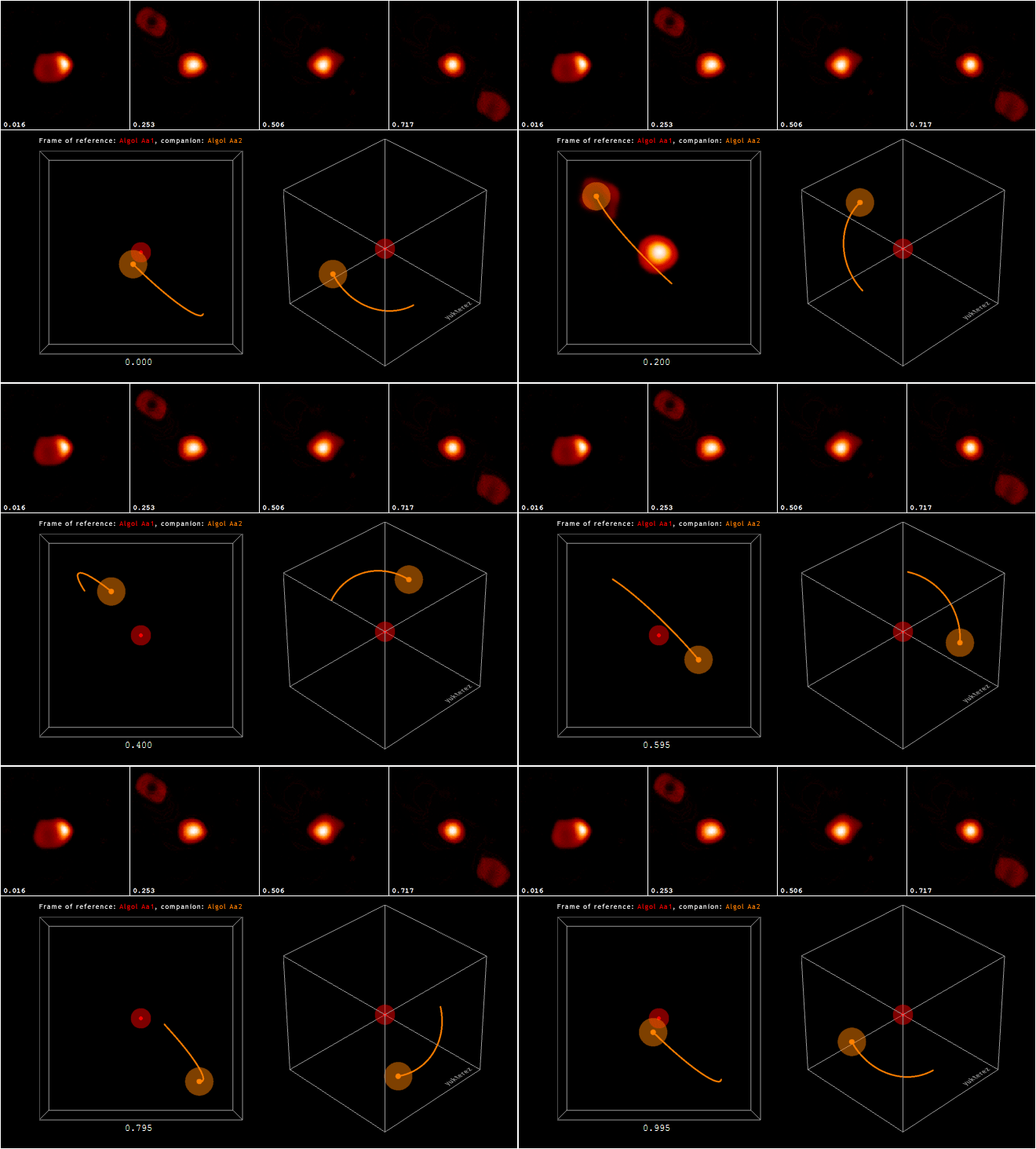


System components and behavior
Algol is a hierarchical triple system. The core is an eclipsing pair that orbit each other closely; when one star passes in front of the other as seen from Earth, the system's brightness drops for several hours. A third star orbits this close pair at a greater distance. The primary member of the close pair is hot and blue-white, while its companion is cooler and has a larger radius, producing the deep, periodic dimmings. The orbital cycle of the close binary is roughly 2 days, 20 hours and 49 minutes, and the principal eclipse lasts on the order of ten hours.
Historical discovery and study
Algol's variability was noted by observers in the 17th and 18th centuries and received a decisive explanation in the late 18th century when the eclipsing-binary model was proposed. Systematic photometry and later spectroscopy revealed the triple nature of the system and enabled astronomers to measure orbital periods, relative sizes, and motions. Algol became a touchstone for developing methods to determine stellar masses and radii from binary systems.
Scientific importance
Because eclipses give direct information about sizes and inclination, Algol-type systems are fundamental for testing theories of stellar structure and evolution. Algol itself illustrates the so-called "Algol paradox": the less massive star in the close pair appears more evolved, a situation explained by past mass transfer between the components. Studies of Algol have informed models of Roche-lobe overflow, accretion, and angular-momentum exchange in interacting binaries.
Observing Algol and notable facts
To the unaided eye Algol alternates between noticeably brighter and dimmer states (the maximum and minimum magnitudes differ by about a magnitude), so it has long been an object of amateur monitoring. Professional observations now combine light curves, radial velocities and interferometry to refine parameters. Algol also appears in cultural references and folklore because of its striking variability.
Quick facts
- Designation: Beta Persei (Algol)
- Type: Eclipsing binary within a triple-star system
- Typical cycle: ~2.87 days between primary minima
- Primary uses: calibrating stellar masses and studying mass transfer
For further reading, introductory resources can be found via general catalogs and outreach pages: eclipse explanations, additional historical overviews at star pages, and catalog entries and technical data at regional surveys and constellation guides. More specialized literature is summarized in dedicated reviews and databases covering variable stars.
Questions and answers
Q: What is Algol?
A: Algol is a bright star in the Perseus constellation, also known as the Demon Star.
Q: Can Algol be seen with the naked eye?
A: Yes, Algol can be seen with the naked eye.
Q: What is a double star?
A: A double star is a star system composed of two stars that are gravitationally bound to each other.
Q: Can Algol be seen in spectroscopes?
A: Yes, Algol can only be seen in spectroscopes.
Q: How many stars is Algol made of?
A: Algol is made of three stars: Beta Persei A, B, and C, with Persei A being the brightest.
Q: Does Algol have any unique characteristics?
A: Yes, Algol is one of the first variable stars to be discovered before it explodes, and it partly eclipses its star system every 2 days, 20 hours, and 49 minutes for 10 hours.
Q: What is the significance of Algol's eclipsing feature?
A: Algol's eclipsing feature makes it an important object for the study of stellar evolution and allows astronomers to measure the sizes, masses, and temperatures of the stars in the system.
Related articles
Author
AlegsaOnline.com Algol — the eclipsing triple star of Perseus Leandro Alegsa
URL: https://en.alegsaonline.com/art/2547
Sources
- aavso.org : aavso.org