
Algarve — the southernmost region of mainland Portugal
The Algarve is Portugal’s southernmost region, known for its Mediterranean climate, limestone coastline and beaches, Moorish heritage, strong tourism industry, and the city of Faro as its administrative center.
Overview
The Algarve occupies the southern tip of continental Portugal and serves as a popular year‑round destination. Its administrative center is the city of Faro, which hosts regional services and links the region internationally. The region's location is commonly annotated with its coordinates. The name Algarve derives from the Arabic al‑Gharb, meaning "the West," a reminder of the long period of Islamic influence in the area.
Image gallery
10 Images


Geography and climate
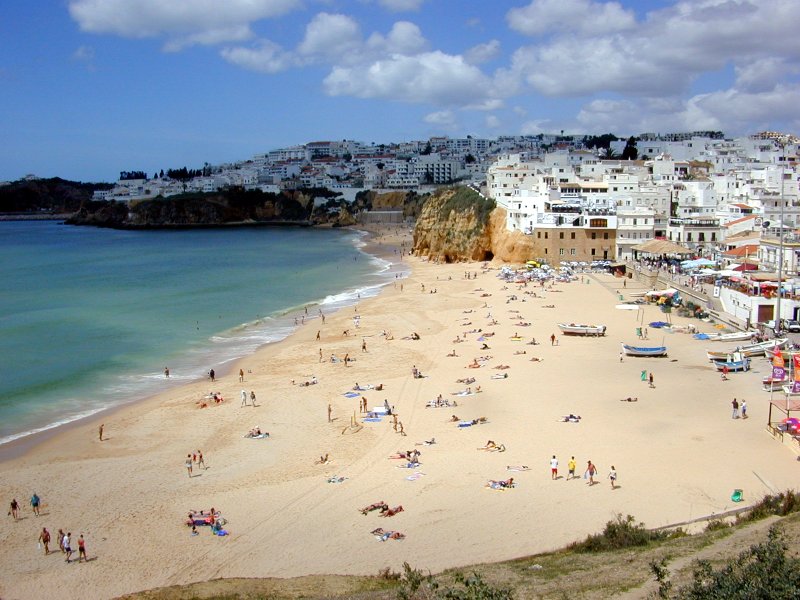
The Algarve features a varied coastline of sandy coves, high limestone cliffs and sheltered estuaries, with a mild Mediterranean climate that attracts visitors seeking sun and sea. Its shoreline contains extensive beaches and natural reserves such as the Ria Formosa barrier island system. Inland terrain ranges from low hills to agricultural plains that support fruit and olive cultivation.
History and development
Human presence in the Algarve stretches back to prehistoric times and includes Phoenician, Roman and later Moorish settlements. After the medieval Christian reconquest the area was organized as a distinct administrative territory: the present region largely coincides with the former historic province and the modern district centered on Faro. Architectural traces of successive cultures remain visible across towns and rural landscapes.
Economy and tourism
Tourism is the main economic driver in the Algarve, and much of the region’s infrastructure and employment patterns reflect that focus. The predominance of economic activity linked to leisure, hospitality and services owes itself to decades of seaside development. Modern offerings include beaches, golf courses, marinas and cultural tourism; the sector is commonly referred to simply as tourism in regional plans.
Culture, education and transport
The Algarve combines traditional fishing and agricultural practices with contemporary amenities. Higher education and research are represented by the University of Algarve, while air connections are concentrated at the region’s international airport in the Faro area. Local festivals, cuisine based on seafood and citrus, and artisanal crafts contribute to a distinctive regional identity.
Notable places and heritage
Key urban centers include Faro, Lagos, Albufeira, Portimão and Tavira. Visitors and scholars often highlight the area’s historic buildings—churches, fortifications and traditional houses—and consult historical guides and records to trace changes over time. Beyond leisure, the Algarve remains important for coastal ecosystems and as a crossroads of Iberian cultural history.
- Major towns: Faro, Lagos, Albufeira, Portimão, Tavira.
- Main draws: beaches, cliffs, Ria Formosa, cultural sites.
- Seasonality: winter mildness and summer tourist peaks.
Questions and answers
Q: What are the coordinates of the Algarve?
A: The coordinates of the Algarve are 37°0′52″N 7°56′7″W / 37.01444°N 7.93528°W / 37.01444; -7.93528.
Q: What is the capital of the Algarve?
A: The capital of the Algarve is Faro.
Q: Does the region have an international airport?
A: Yes, there is an international airport in the region.
Q: Is there a public university in Algarve?
A: Yes, there is a public university called University of Algarve located in this region.
Q: What is the main economic activity in this region?
A: Tourism is the main economic activity in this region due to its beaches and historical buildings.
Q: Where does present day's Algarve coincide with?
A: Present day's Algarve coincides with old province of same name and Faro district.
Tags
Related articles
Author
AlegsaOnline.com Algarve — the southernmost region of mainland Portugal Leandro Alegsa
URL: https://en.alegsaonline.com/art/2528
Sources
- ine.pt : "Portal de Estatísticas Oficiais"
- ec.europa.eu : "EU Regions"
- referenceworks.brillonline.com : "G̲h̲arb al-Andalus"
- voyages.michelin.fr : "Mont Fóia"
- linternaute.com : "Cabo de São Vicente"