
Damascus University
Damascus University is Syria’s oldest and largest public university, based in the capital and serving as a national center for higher education, research and professional training.
Overview
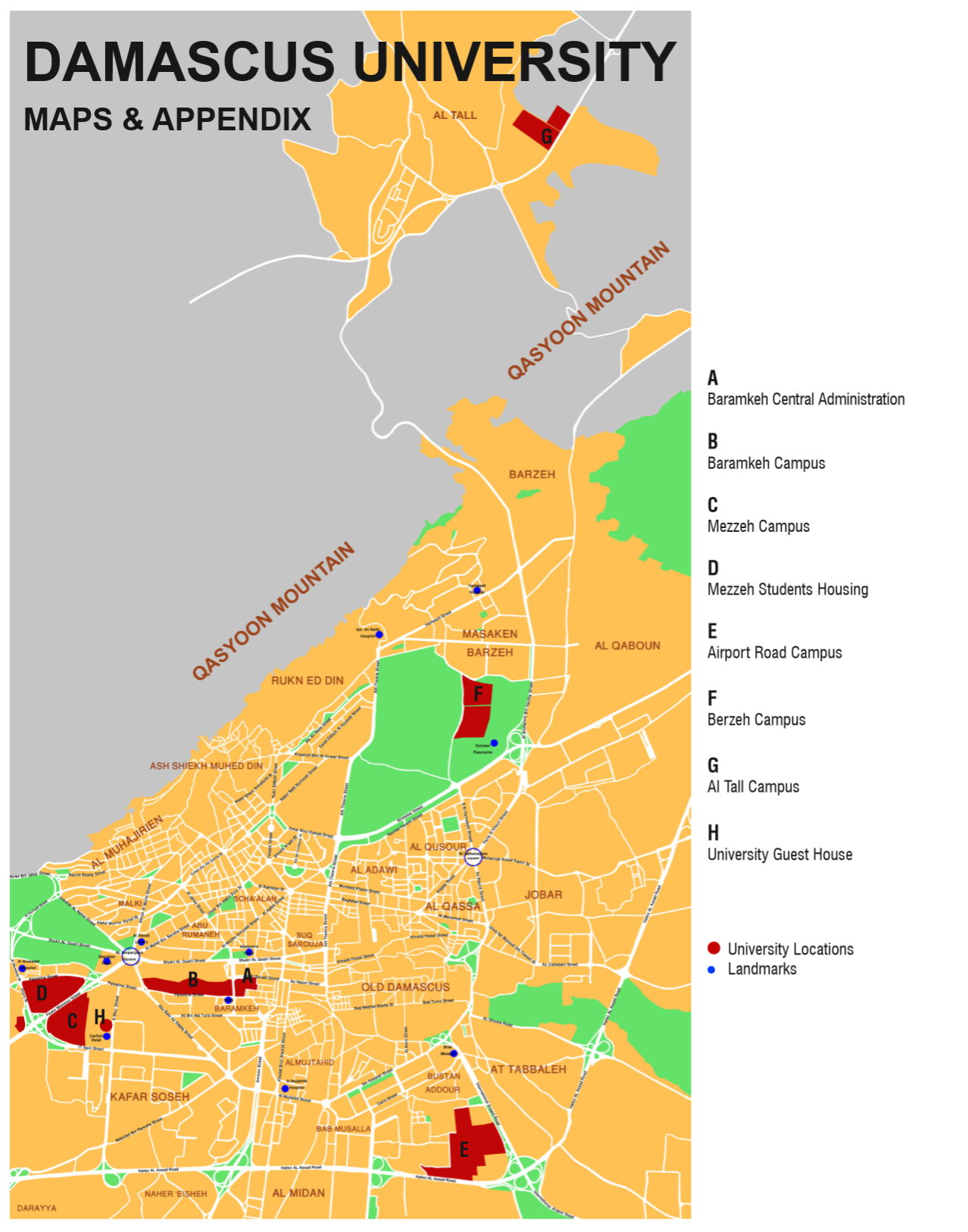
Damascus University (Arabic: جامعة دمشق) is the oldest and largest institution of higher learning in Syria. Located primarily in the capital city of Damascus, it functions as a comprehensive public university offering degrees across the humanities, sciences, professional schools and applied disciplines. The university has a central campus in the city and additional facilities that extend its reach to other regions.
Image gallery
10 Images




History
The university traces its origins to the early 20th century and was established in the 1920s as a national university serving the modernizing Syrian state. Over time it expanded from a handful of faculties into a large multi-faculty institution. Throughout its history the university has played a role in training professionals for public service, medicine, education and the legal system.
Organization and faculties
Damascus University comprises a variety of faculties and institutes. Typical academic divisions include:
- Medicine and allied health sciences
- Engineering and applied sciences
- Natural sciences and mathematics
- Humanities, arts and social sciences
- Law, business and teacher education
Campus life and research
The main campus houses teaching hospitals, research laboratories and libraries that support both undergraduate and graduate programs. Student life includes academic societies, cultural activities and vocational training programs. The university also participates in national research projects and professional accreditation efforts.
Role and significance
As a leading public university, Damascus University has been central to Syria’s higher education system, producing many of the country’s professionals, scholars and public figures. It serves as a cultural and scientific hub and contributes to curriculum development, teacher training and applied research relevant to national needs.
Notable points
Damascus University is distinguished by its long history, breadth of disciplines and role as a state institution. Like many national universities, it has had to adapt to political and social changes over time while maintaining core functions in teaching and research.
Questions and answers
Q: Where is the University of Damascus located?
A: The University of Damascus is located in the capital city, Damascus.
Q: What is the University of Damascus?
A: The University of Damascus is the largest and oldest university in Syria.
Q: What is the name of the university in Arabic?
A: The name of the university in Arabic is "جامعة دمشق" (Jāmi‘atu Dimashq).
Q: Does the University of Damascus have campuses in other Syrian cities?
A: Yes, the University of Damascus has campuses in other Syrian cities.
Q: What is the significance of the University of Damascus?
A: The University of Damascus is significant as it is the largest and oldest university in Syria.
Q: What is the language of instruction at the University of Damascus?
A: The language of instruction at the University of Damascus is primarily Arabic.
Q: How does the University of Damascus contribute to Syrian education?
A: The University of Damascus contributes to Syrian education by providing education and training to students in a variety of fields and by drawing top scholars and researchers to its campus.
Related articles
Author
AlegsaOnline.com Damascus University Leandro Alegsa
URL: https://en.alegsaonline.com/art/25261
Sources
- damasuniv.edu.sy : "President of Damascus University"
- mohe.gov.sy : "جامعة دمشق"
- mohe.gov.sy : mohe.gov.sy/SD08/msf/ALLStudentsSta2012.xls · web.archive.org
- csmonitor.com : "A new 'Mecca of Arabic studies'?"