
Dakini (sky-goer): female spirit in Tibetan Buddhism and Hindu Tantra
Dakini: a female figure in Tantric Hinduism and Vajrayana Buddhism known as a 'sky-goer' or 'sky dancer' who embodies wisdom, inspires practice, and appears in diverse iconography from nude dancers to wrathful deities.
The dakini is a distinctive figure in South Asian and Himalayan Tantric traditions. Revered most prominently within Tibetan Buddhism, but also appearing in Hindu Tantric literature, a dakini is commonly described as a female being who embodies or mediates enlightened energy. In religious discourse dakinis can be understood simultaneously as visionary guides, meditational deities, symbolic principles, and, in popular accounts, as semi‑divine spirits that appear to practitioners. Many overviews introduce the topic with references to Hinduism and Buddhism, and particularly the Vajrayana school of Tibetan Buddhism.
Image gallery
10 Images




Etymology and names
The Sanskrit term ḍākinī is often translated literally as "she who moves in the sky" or poetically as "sky‑dancer". This image conjures motion, freedom, and the open space of awareness. Across East Asia and the Himalayan cultural sphere the dakini appears under a variety of names and local forms; Chinese traditions use names such as 空行母 (often rendered with pinyin) and other vernacular labels. For discussion of Chinese renderings and their pronunciations, see Chinese terms and transliterations.
Appearance and iconography
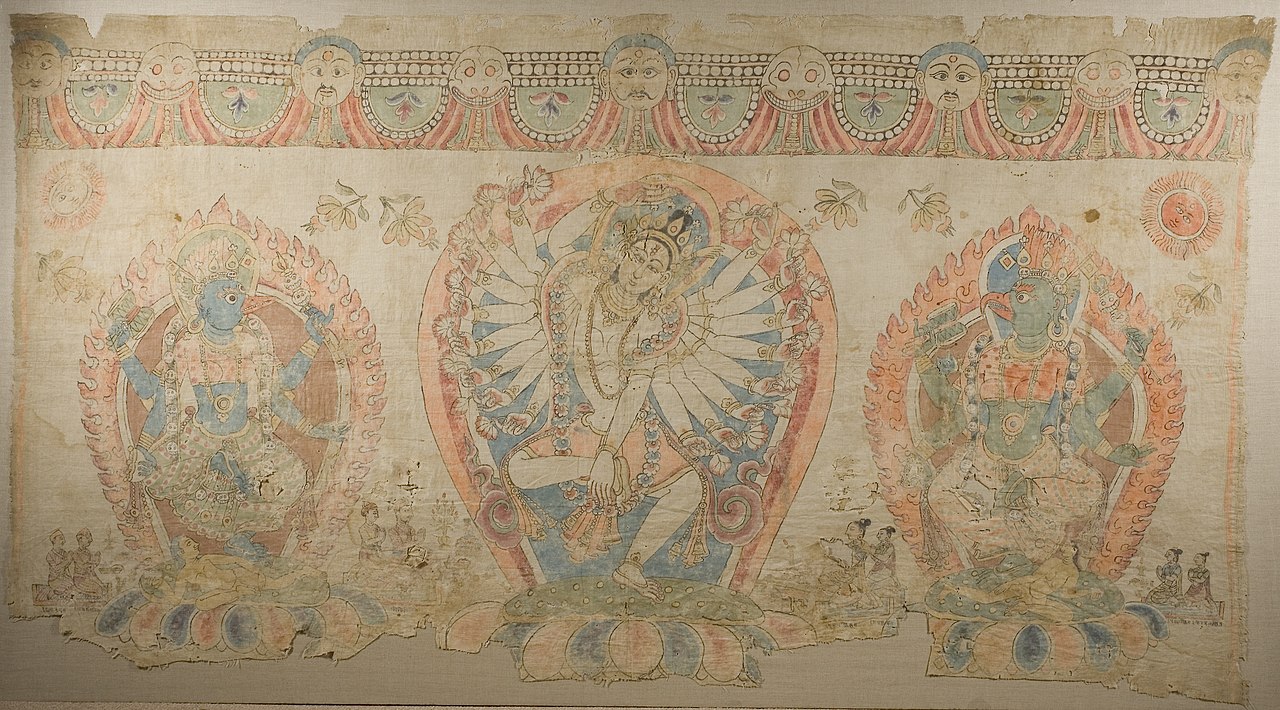
Dakini representations vary widely from serene protectors to fierce, wrathful figures. Common visual themes include an animated, dancing posture and a sense of movement. In many depictions the dakini appears unclothed; this nakedness is traditionally interpreted as symbolic of the naked, unobstructed nature of mind rather than a literal attribute. In tantric iconography some dakinis carry ritual objects (for example a skull‑cup or curved knife) or wear symbolic ornaments that identify them as part of a ritual pantheon.
- Pose and movement: flowing, dancing postures that suggest liberated energy.
- Nakedness: often emblematic of openness, transparency, and the absence of ego coverings.
- Ritual implements: in later tantric art, objects that signify cutting through ignorance and transforming emotion.
- Variability: forms range from gentle and compassionate to fierce and wrathful depending on their role.
Function and symbolic role
Dakinis function on several levels. In meditative practice some are invoked as yidams or meditational deities who assist the practitioner's inner transformation. In ritual and visionary accounts dakinis may appear to reveal teachings, protect secret transmissions, or test and guide students. They are often associated with the revelation and embodiment of wisdom (prajña) and with the transformation of negative states into liberated understanding. Modern descriptions commonly say that dakinis help transmute afflictive emotions and mental obscurations into awakened awareness; for summaries of this transformative role see explanatory resources.
History and cultural development
The figure of the dakini develops within the broader milieu of Indian and Himalayan tantra. In early tantric texts and hagiographies they appear as attendants of great tantric yoginis and as inhabitants of liminal spaces associated with ritual power. When tantric Buddhism spread and adapted across the Himalayas, dakinis were integrated into Tibetan ritual, monastic, and lay practice, and they acquired both cultic and symbolic importance. Over centuries they have been the subject of art, poetry, and visionary literature, and they continue to be discussed both as mythic beings and as active elements of living spiritual lineages.
Distinctions and notable facts
- Dakini vs. yogini: the term "yogini" can designate a female practitioner or a class of deities; "dakini" emphasizes mobile, sky‑going quality and is often more explicitly linked to secrecy and visionary activity.
- Multiple meanings: an individual may encounter dakinis as inner experiences in meditation, as iconographic images in temples, or as narrative figures in stories and biographies.
- Cross‑tradition presence: while especially prominent in Tibetan Vajrayana, dakinis also appear in Hindu Tantra and in regional folklore.
Because the dakini functions as both symbol and agent in tantric contexts, careful study distinguishes poetic or mythic descriptions from doctrinal roles within specific lineages. Contemporary interest in dakinis spans academic scholarship, practicioner commentaries, and popular culture, each interpreting the figure through different emphases—artistic, spiritual, or anthropological. For introductions in each tradition and further reading, consult resources that focus separately on Hindu tantric literature and on Tibetan Vajrayana practice.
Questions and answers
Q: What is a Dakini?
A: A Dakini is a female being like a goddess found in Hinduism and Buddhism, mostly in Tibetan Buddhism.
Q: What is the meaning of the Chinese and Tibetan terms for Dakini?
A: The Chinese and Tibetan terms for Dakini literally mean "she who travels in the sky," which is sometimes written poetically as "sky dancer."
Q: How are Dakinis often depicted in art?
A: Dakinis are often depicted as beautiful and naked, with their bodies in sinuous dance poses which represent the freedom of the mind.
Q: What is the role of Dakinis in spiritual practice?
A: Dakinis are believed to inspire spiritual practice and are associated with energy. They help people to transform their negative emotions into enlightened awareness.
Q: What do the Chinese terms 空行母 and 狐仙 refer to?
A: The Chinese terms 空行母 and 狐仙 refer to the concept of Dakini in Chinese Buddhism.
Q: What is the meaning of the term "Ming Fei"?
A: The term "Ming Fei" is Chinese for "bright consort" and is sometimes used as a term for Dakini.
Q: What is the significance of the curved dance poses in which Dakinis are depicted?
A: The curved dance poses depicted in Dakini art represent the energy and fluidity of change, which is central to the transformation that Dakinis are associated with.
Related articles
Author
AlegsaOnline.com Dakini (sky-goer): female spirit in Tibetan Buddhism and Hindu Tantra Leandro Alegsa
URL: https://en.alegsaonline.com/art/25156