
Daintree Rainforest: ancient tropical forest of Queensland, Australia
A detailed overview of the Daintree Rainforest: its ecology, ancient plants, remarkable biodiversity, World Heritage status, conservation importance and location in far north Queensland.
Overview
The Daintree Rainforest occupies a largely contiguous band of tropical rainforest on the coastal plain of far north Queensland, Australia. Covering roughly 1,200 square kilometres, it is the largest remaining area of continuous tropical rainforest on the Australian mainland. The name comes from Richard Daintree, a 19th‑century geologist and photographer who worked in the region. Much of the Daintree lies within protected reserves and national parkland; it forms a core component of the broader Wet Tropics region.
Image gallery
5 Images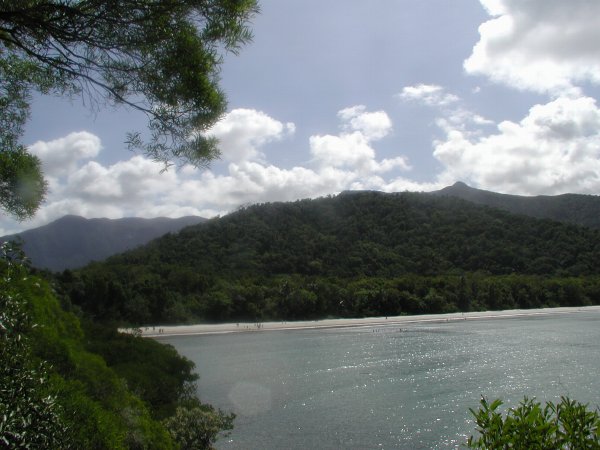


Key characteristics
The Daintree is notable for its extreme species richness relative to its size. The rainforest supports high concentrations of plants and animals that are rare or absent elsewhere in Australia. In proportion to the national fauna, the Daintree contains a substantial share of several groups: many species of frogs, marsupials and reptiles, large portions of the country's bats and butterflies, and a significant number of bird species. Entomological diversity is also high, with thousands of insect species recorded. This concentration of life is often referred to as the area's remarkable biological diversity.
Flora and ancient lineages
One of the defining features of the Daintree is the persistence of ancient plant lineages that date back to deep geological time. Living representatives of early land plant groups occur alongside primitive flowering plants that have fossil records extending to the Cretaceous. Noteworthy plant types include primitive vascular plants, multiple families of ferns and a range of cycads and conifers. Several plant taxa found in the Daintree are endemic and have extremely restricted distributions, such as species that occur only within this rainforest region.
- Primitive ferns and fern allies, including groups sometimes described as true ferns and whisk ferns;
- Specialized cycads such as Bowenia spectabilis and members of the genus Cycas;
- Ancient conifers in genera like Araucaria and Agathis that have links to much older floras;
- Relict angiosperm families long known to science from fossils, including Proteaceae, Myrtaceae, Rutaceae, Sapindaceae and smaller families such as Chloranthaceae and others referenced in botanical literature (ancient families).
Animals and notable species
The animal community includes both widespread tropical species and several that are conservation priorities. Iconic inhabitants of the forest include the flightless southern cassowary, a large bird that plays a major role in seed dispersal, and the rare Bennett's tree‑kangaroo. Other vertebrates recorded are the saltwater crocodile in coastal waterways, tiny endemic mammals such as the musky rat‑kangaroo, and a wide array of frogs and reptiles. The combination of ground‑dwelling and canopy species, combined with many invertebrates, creates complex ecological networks rarely seen elsewhere in Australia.
History, age and geological context
Geologically and biologically, the Daintree is among the most ancient tropical rainforests in the world. Parts of the flora are thought to represent lineages that have persisted since the era when the southern continents were joined as Gondwana, and the area preserves elements that elsewhere became extinct. The living conifers, cycads and primitive flowering plants in the Daintree are often compared to fossil relatives from the Jurassic and the Cretaceous, offering a window onto deep evolutionary history.
Conservation status and significance
The Daintree forms part of a UNESCO‑listed set of protected places. It lies within the Wet Tropics, inscribed as a UNESCO World Heritage Site for its outstanding biological values. The region meets multiple natural criteria used by UNESCO for outstanding universal value. A notable geographic fact is that the Daintree area sits adjacent to the marine World Heritage area of the Great Barrier Reef, creating one of the few places on Earth where two separate natural World Heritage areas are in immediate proximity. Conservation efforts focus on protecting habitat, managing invasive species and balancing tourism with long‑term ecological integrity.
Location, access and human context
The Daintree lies north of Mossman and the city of Cairns, extending from near the coastal plain to the Bloomfield River in the north and drained in part by the Daintree River. Road access to the forest is limited in places, with ferry crossings and routes designed to reduce ecological impact while permitting visitors to experience key sites such as Mossman Gorge and other reserves. Traditional owners have strong cultural ties to the land and are active partners in management, interpretation and conservation of the forest. Tourism, scientific research and Indigenous knowledge all contribute to ongoing stewardship of this globally significant rainforest.
Related terms and references: Queensland, Australia, Wet Tropics, UNESCO, World Heritage, ancient families, true ferns, Bowenia spectabilis, Cycas, Araucaria, Agathis, Jurassic, Cretaceous, Proteaceae, Myrtaceae, Rutaceae, Sapindaceae, Chloranthaceae, Great Barrier Reef, frogs, marsupials, reptiles, bats, butterflies, birds, diversity, endemic, Mossman, southern cassowary, Bennett's tree‑kangaroo, saltwater crocodile, musky rat‑kangaroo, Gondwana, Gondwana.
Questions and answers
Q: What is the Daintree Rainforest?
A: The Daintree Rainforest is a tropical rainforest in Queensland, Australia. It is the largest continuous area of tropical rainforest on the Australian mainland and it was named after Richard Daintree, an Australian geologist and photographer.
Q: When was the Daintree Rainforest listed as a UNESCO World Heritage Site?
A: The Daintree Rainforest was listed as a UNESCO World Heritage Site in 1988.
Q: What are some of its ancient flora?
A: Some of its ancient flora include whisk ferns, club mosses, seven ancient families of true ferns, cycad Bowenia spectabilis (zamia fern), other cycads, giant Lepidozamia hopei (zamia palm), primitive angiosperm (flowering plant) families such as Cunoniaceae, Proteaceae (banksia and macadamia family), Winteraceae, Myrtaceae (eucalypt and lilly pilly), Monimiaceae, Rutaceae, Sapindaceae, Aquifoliaceae (holly family), Chloranthaceae, Trimeniaceae, Epacridaceae (heath family), Olacacea and more.
Q: How old is the Daintree Rainforest?
A: The Daintree Rainforest is thought to be over one hundred and thirty-five million years old.
Q: What animals can be found in the forest?
A: Animals that can be found in the forest include frogs, marsupials reptiles bats butterflies birds insects saltwater crocodiles musky rat-kangaroos southern cassowary Bennett's tree-kangaroo and more.
Q: Where is the forest located?
A: The forest is located north of Mossman Queensland on the coast north of Cairns in the tropical far north of Australia. Part of it is protected by the Daintree National Park which drains into the Daintree River.
Q: What makes this area unique compared to other World Heritage Sites?
A: This area stands out from other World Heritage Sites because it meets all four natural criteria for selection to be a World Heritage Site while also being next to another World Heritage site -the Great Barrier Reef- making it one of only twelve natural sites in world where two natural World Heritage Sites meet.
Related articles
Author
AlegsaOnline.com Daintree Rainforest: ancient tropical forest of Queensland, Australia Leandro Alegsa
URL: https://en.alegsaonline.com/art/25124
Sources
- commons.wikimedia.org : Daintree National Park
- wilderness.org.au : wilderness.org.au/regions/queensland/daintree
- derm.qld.gov.au : derm.qld.gov.au
- whc.unesco.org : whc.unesco.org/en/list/486
- whc.unesco.org : whc.unesco.org/en/list/368