
Dohuk Governorate (Duhok) — Kurdistan Region of Iraq
Dohuk Governorate in northern Iraq is a mountainous Kurdish region bordering Turkey and Syria, known for historic towns, cross-border trade, and a diverse population shaped by recent refugee flows.
Overview
The Dohuk Governorate (also spelled Duhok or Dahuk) is an administrative province within the Kurdistan Region of Iraq. Located in the far north of the country, it occupies a zone of rugged mountains, fertile river valleys and important border crossings. The governorate’s administrative seat is the city of Dohuk, which functions as the region’s political and commercial center.
Image gallery
3 Images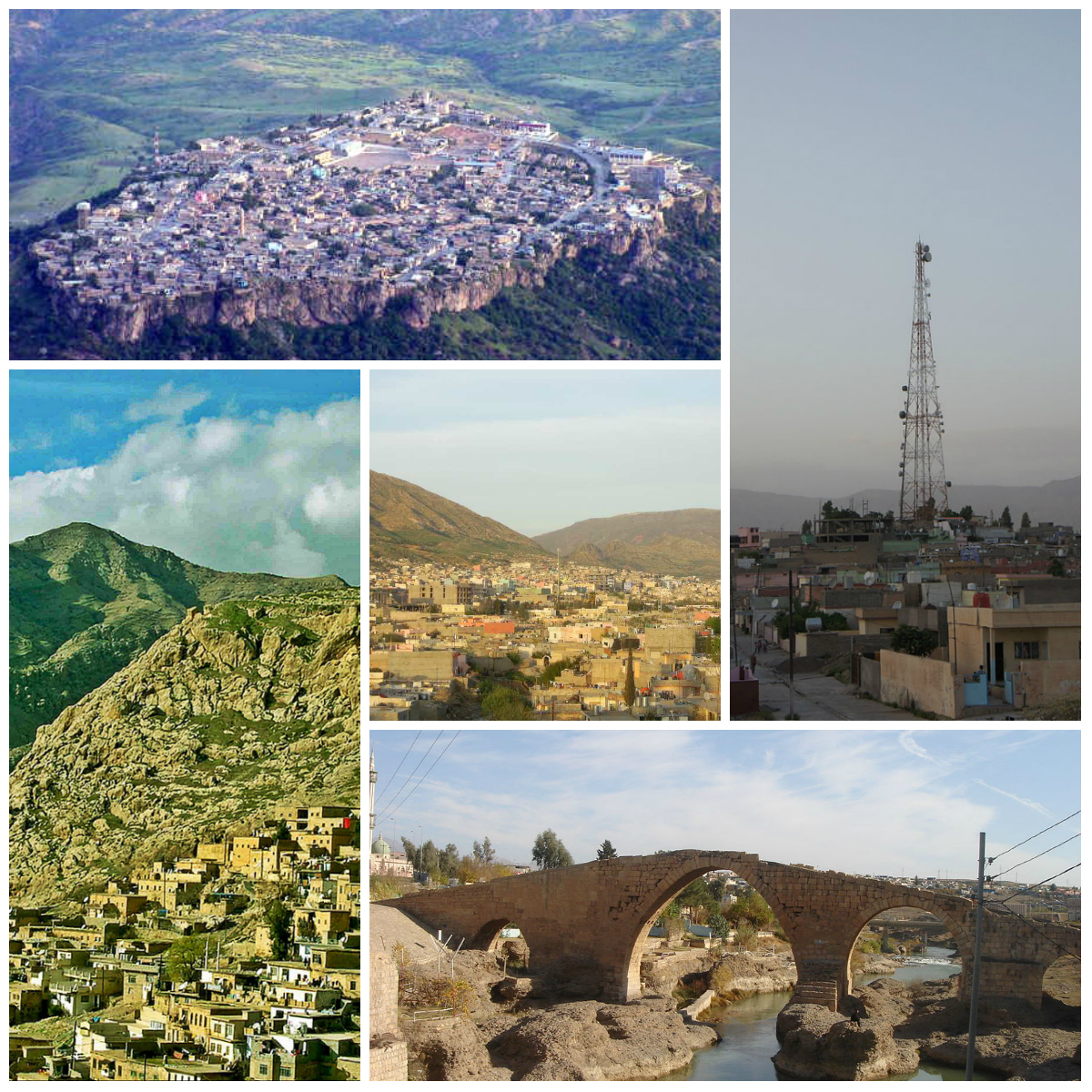


Geography and districts
Dohuk lies between the Zagros foothills and the Anatolian highlands. Its landscape includes steep highlands, narrow valleys and several reservoirs and dams that support irrigation. The province borders Turkey to the north and north-west and shares a short frontier with Syria to the west. Cross-border routes and mountain passes have long shaped local economies and movement.
The governorate is subdivided into several districts; principal ones are listed below:
- Amediye (Amedi) — an ancient hilltop town and administrative district
- Dohuk — the central district containing the provincial capital
- Semile (Simele) — encompassing agricultural plains and small towns
- Zaxo (Zakho) — a major border district and trading hub, with nearby crossings into Turkey

History and identity
The area now administered as Dohuk has a long history of settlement, with layers of Assyrian, Kurdish and Ottoman-era influence. From medieval times into the 19th century much of the territory fell within the Kurdish principality of Badinan, whose capital was Amedi. In the modern era the province’s administrative status changed several times; until the mid-20th century it was administered as part of the larger Mosul (Nineveh) province before becoming recognized as a separate governorate.
Population and society
The population is predominantly Kurdish and primarily speaks the Kurmanji dialect, alongside smaller communities of Arabs, Assyrians, Armenians and others in some towns and villages. In the 2010s the governorate’s population rose substantially as people fled the Syrian civil war and the fighting that followed the rise of Islamic State in Iraq. These refugee and internally displaced populations have affected urban growth, housing and public services.
Economy, infrastructure and culture
Dohuk’s economy combines agriculture (fruit, grains, livestock), local manufacturing, services and trade. The proximity to Turkey and the presence of an international border crossing near Zakho make cross-border commerce and transport important livelihoods. Infrastructure projects such as dams, roads and urban rebuilding have shaped economic recovery since the conflicts of the 1990s and 2000s.
Culturally the governorate preserves Kurdish language, music and festivals, and is home to historical towns, ancient archaeological sites and scenic highland landscapes that attract regional tourism. Local governance falls under the Kurdistan Regional Government framework, with elected councils and a governor overseeing provincial administration and public services.
Notable facts and distinctions
- Dohuk is one of the three governorates that form the autonomous Kurdistan Region of Iraq.
- The province has been affected by major population movements in the 21st century, including refugees and internally displaced people.
- Its border crossings serve as key conduits for trade between northern Iraq and southeastern Turkey.
Related articles
Author
AlegsaOnline.com Dohuk Governorate (Duhok) — Kurdistan Region of Iraq Leandro Alegsa
URL: https://en.alegsaonline.com/art/25088
Sources
- krso.net : "Map of area of Kurdistan Region & its Governorates"
- hdi.globaldatalab.org : "Sub-national HDI - Area Database - Global Data Lab"