
Cylinder (firearms): design, function, history, and variations
The cylinder is the rotating, multi-chamber component of a revolver that indexes cartridges into alignment with the barrel. This article explains its parts, operation, types, history, maintenance, and notable variants.
Overview
A cylinder is the rotating, typically cylindrical component of a revolver that contains multiple chambers to hold individual cartridges. As the action is cocked or the trigger is pulled, the cylinder turns to bring each chamber into line with the barrel and firing pin. The device is central to the revolver concept and is responsible for storing, positioning, and, in many designs, ejecting spent cases.
Image gallery
4 Images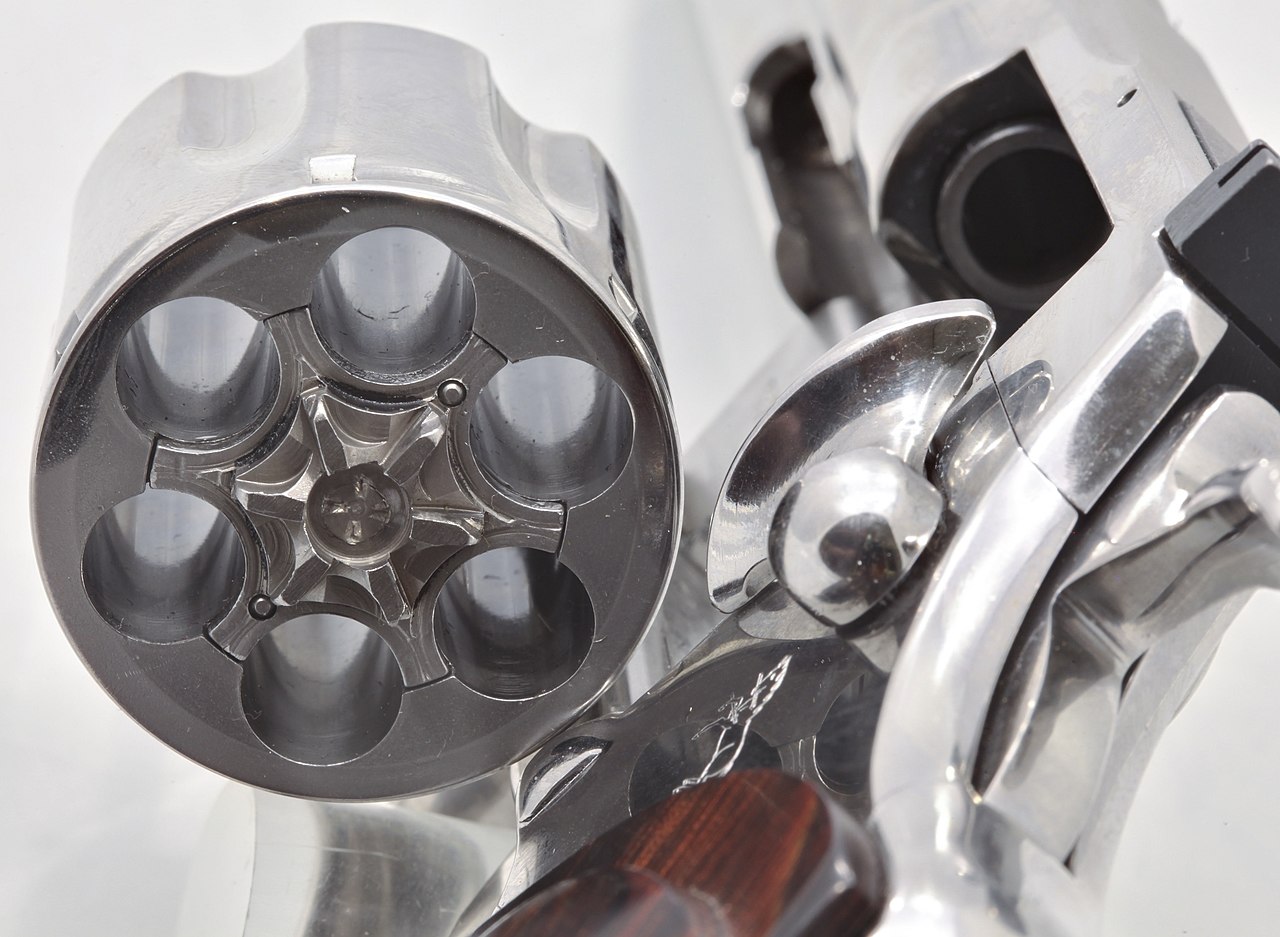


Design and main parts
Although configurations vary, most cylinders share a number of common features. A typical cylinder includes the chambers themselves, a central bore or arbor that allows rotation about the revolver’s axis, a ratchet on the rear face for indexing, and notches that engage the cylinder stop. The cylinder may also include flutes (cut grooves) to reduce weight and alter the appearance.
- Chambers: Individual holes bored into the cylinder to accept a cartridge.
- Arbor and pivot: The central support around which the cylinder revolves.
- Ratchet and hand: Mechanisms that rotate and index the cylinder as the action cycles.
- Extractor or star: In swing-out or top-break designs, an extractor ejects spent cases; solid-frame revolvers may use an ejector rod for single-case removal.
Types and operation
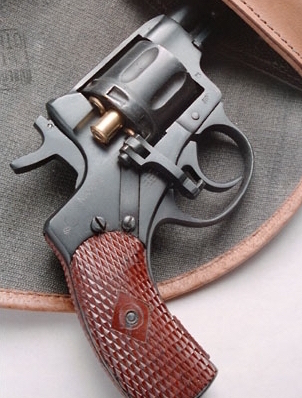
Revolver cylinders come in several operational types. Swing-out cylinders pivot away from the frame to allow loading and use a star extractor to eject cases. Top-break revolvers hinge open to expose chambers and often extract automatically. Solid-frame revolvers usually load through a side loading gate and eject cases one at a time. Cylinder capacities commonly range from five to six rounds in centerfire pistols, while many small rimfire designs accept nine or ten chambers. The common phrase "six-shooter" comes from the prevalence of six-chamber cylinders.
History and development
The rotating-cylinder concept predates modern metallic cartridges and evolved through percussion cap revolvers of the 19th century into the cartridge-fed designs familiar today. Engineers refined indexing systems, metallurgy, and locking mechanisms to improve strength, reliability, and safety. Various manufacturers and designs introduced innovations such as swing-out cylinders and moon clips to speed reloading and accommodate different cartridge shapes.
Use, maintenance, and safety
Cylinders are designed to align a chamber precisely with the barrel for safe firing; a misaligned or loose cylinder can cause malfunctions or hazardous gas leakage. Routine maintenance includes cleaning the chambers, checking the cylinder lockup, inspecting the extractor, and ensuring the ratchet and hand function smoothly. For quicker reloading, users may employ speedloaders or moon clips where compatible. Some cylinders are removable for cleaning, while others are held in place by the firearm's frame and only serviced by a gunsmith.
Notable variations and considerations
Materials range from forged steel and stainless alloys to lightweight aluminum in small-frame designs. Cylinders may be fluted or smooth, blued or stainless finished. Special considerations include the cylinder gap, a small clearance between cylinder and barrel that allows some combustion gases to escape but is normal in revolver design, and the need to use cartridges appropriate to the cylinder’s chamber dimensions. For further reading on the revolver and its components see a general article on the revolver, on cartridge types at cartridges, and on individual chamber safety at chambers.
Questions and answers
Q: What is a cylinder in firearms terminology?
A: A cylinder is the cylindrical, rotating part of a revolver.
Q: How many cartridges chambers does the cylinder have?
A: The cylinder has multiple cartridges chambers.
Q: What is the function of the central shaft in the revolver cylinder?
A: The central shaft in the revolver cylinder enables the cylinder to revolve, bringing each individual chamber into alignment with the barrel for firing.
Q: How many cartridges do cylinders typically hold and why are revolvers sometimes called "six shooters"?
A: Cylinders typically hold six cartridges which is why revolvers are sometimes called "six shooters".
Q: Do all revolvers have cylinders that hold six cartridges?
A: No, some small frame revolvers hold only five cartridges, while several models of .22 rimfire caliber revolvers have cylinders holding nine or ten rounds.
Q: Are cylinders designed to be removed from the firearm other than for cleaning?
A: As a general rule, cylinders are not designed to be removed from the firearm except for cleaning.
Q: What can be used with some revolvers for rapid reloading?
A: A speedloader or moon clip can be used with some revolvers for rapid reloading.
Related articles
Author
AlegsaOnline.com Cylinder (firearms): design, function, history, and variations Leandro Alegsa
URL: https://en.alegsaonline.com/art/24892