
Cyclopropane: structure, properties, history and uses
Cyclopropane (C3H6) is the simplest cycloalkane: a three-membered, highly strained ring with distinctive bonding and reactivity; historically used as an anesthetic and valued in organic synthesis.
Overview
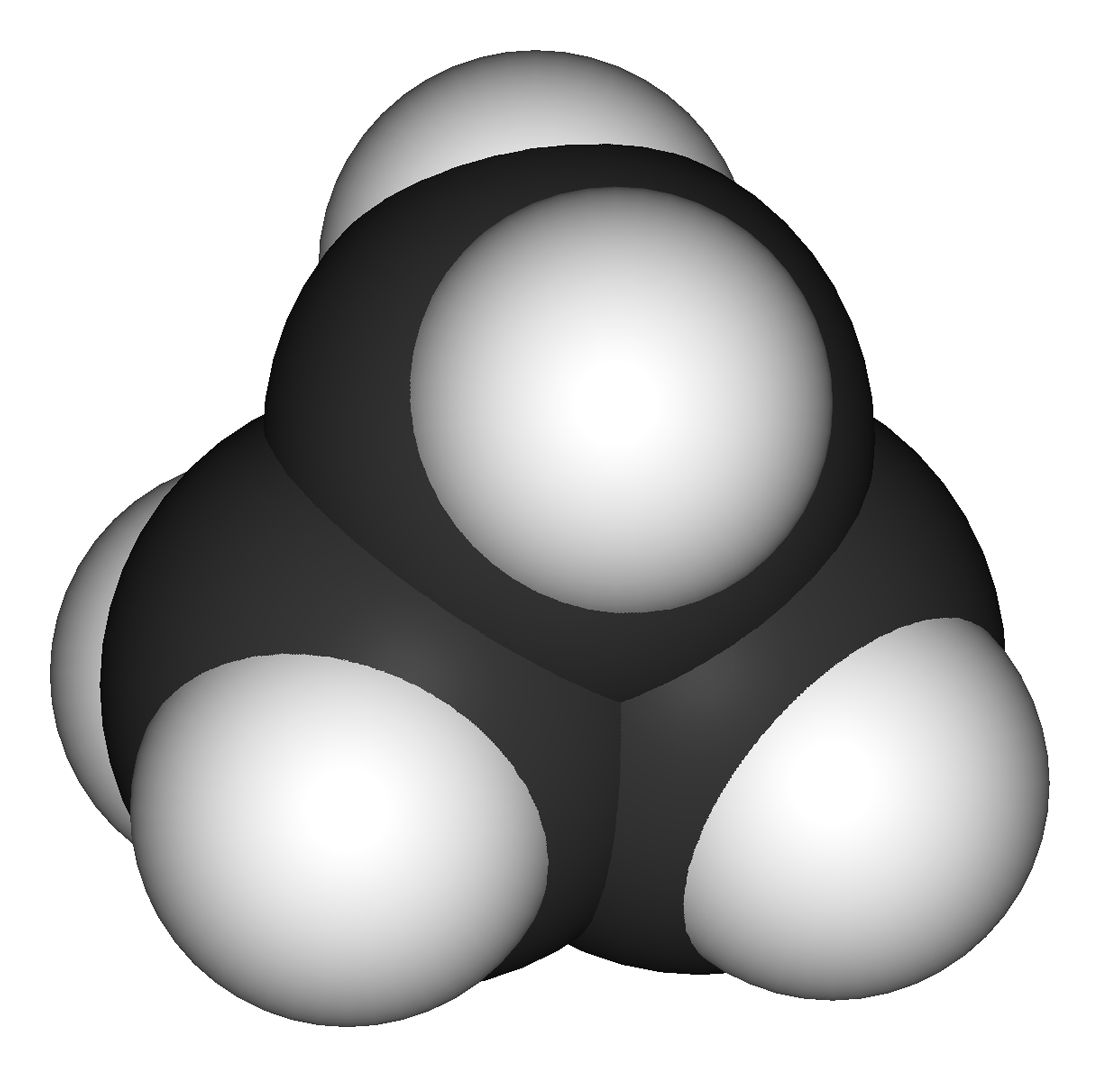
Cyclopropane is the smallest saturated cyclic hydrocarbon with the molecular formula C3H6. Its three carbon atoms form a closed triangular ring, each bearing two hydrogen atoms. Because the ring forces bond angles far from the tetrahedral ideal, cyclopropane shows unusually high ring strain and reactivity compared with larger cycloalkanes.
Image gallery
4 Images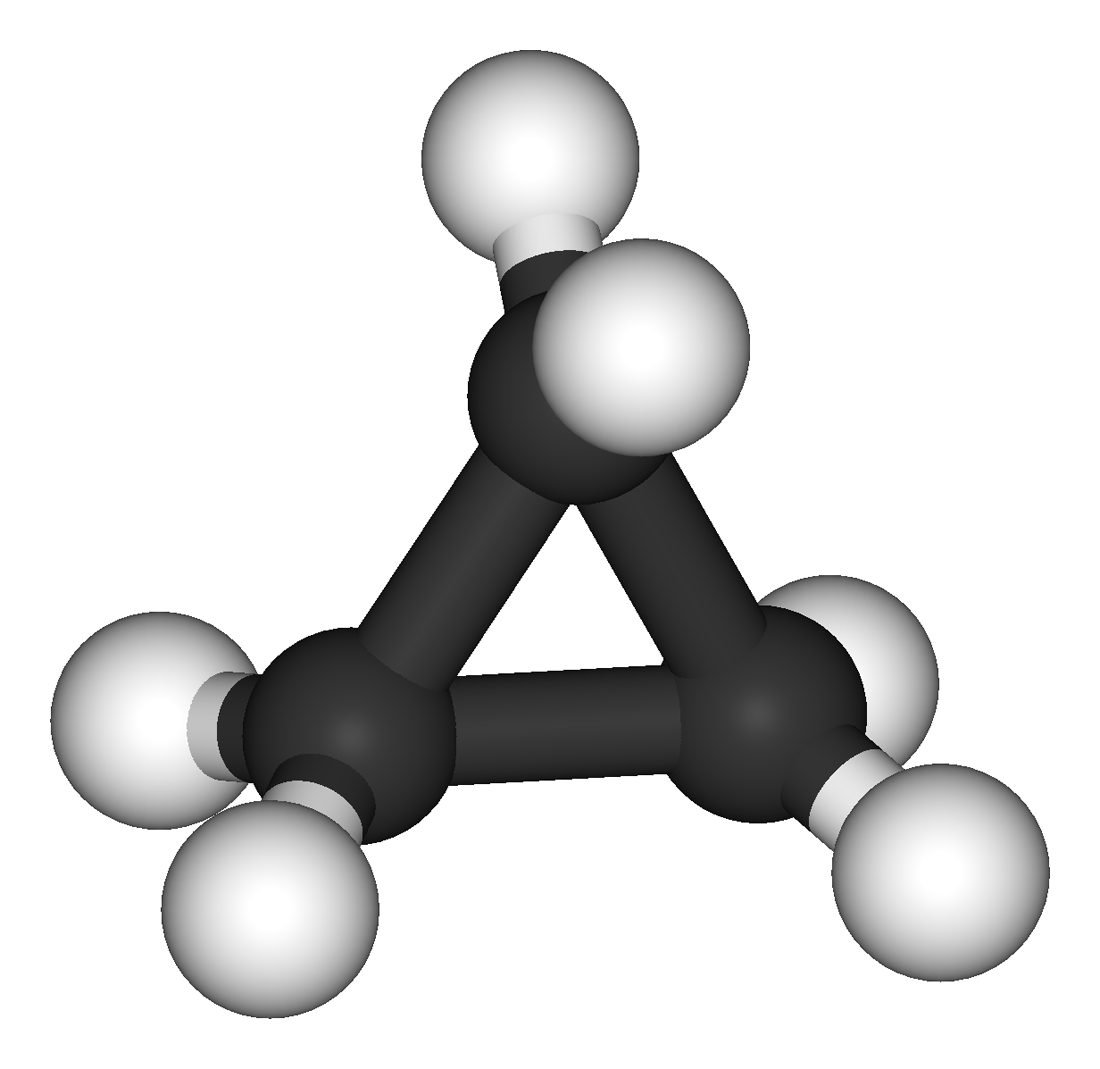


Structure and bonding
The internal C–C–C angle in cyclopropane is close to 60°, far below the ideal 109.5° of sp3-hybridized carbons. To accommodate this geometry the C–C bonds are often described as "bent" or "banana" bonds: the overlap differs from a normal sigma bond and the orbitals have increased p-character. The ring is essentially planar, and the strain stored in the framework influences both physical properties and chemical behavior.
Synthesis and typical reactions
In laboratory practice, cyclopropane rings are commonly created by cyclopropanation of alkenes (for example by carbenoid reagents such as in the Simmons–Smith reaction) to give substituted cyclopropanes; methods to prepare the unsubstituted parent hydrocarbon are more specialized. The high ring strain makes cyclopropane susceptible to ring-opening reactions, hydrogenation, and addition processes. Under suitable conditions the ring can open to give more stable acyclic or larger-ring products, a feature exploited in synthetic strategies.
History, uses and significance
Cyclopropane was investigated and used in the early 20th century as an inhalation anesthetic because it produces anesthesia at moderate concentrations. Its clinical use declined due to several drawbacks: it is highly flammable, can form explosive mixtures with oxygen or air, and safer, more controllable anesthetic agents were developed. Chemically, the cyclopropane motif is important in organic chemistry and medicinal chemistry because it confers distinctive steric and electronic effects in molecules.
Occurrence, applications and notable facts
Cyclopropane units occur in some natural products and in certain bacterial membrane lipids (cyclopropane fatty acids), where they affect membrane properties. In modern chemistry the cyclopropyl group is used as a structural element to modify biological activity, metabolic stability, or conformational preferences. Because of its strain and reactivity, cyclopropane and its derivatives are handled primarily as laboratory reagents rather than bulk industrial feedstocks.
Safety and handling
Cyclopropane is flammable and can form explosive mixtures with oxygen. It is an asphyxiant at high concentrations and was phased out of routine clinical anesthesia in favor of less hazardous alternatives. Proper ventilation, explosion-proof equipment, and standard gas-handling precautions are essential when working with the vapor or compressed gas.
Further information
- Cycloalkane family overview
- Molecular and physical data
- Chemical formula and composition
- Hydrogen bonding and substituents
- Carbon framework and ring geometry
- Historical anesthetic use
- Gas phase behavior and inhalation risks
- Evaporation and volatility notes
- Clinical effects of inhaled anesthetics
- Reactivity and ring-opening chemistry
- Flammability and explosion hazards
- Oxidation and safety interactions with oxygen
Questions and answers
Q: What is cyclopropane?
A: Cyclopropane is a cycloalkane molecule with the formula C3H6, consisting of three carbon atoms connected to each other in a ring structure, and each carbon atom being connected to two hydrogen atoms.
Q: What is ring strain?
A: Ring strain is a type of strain energy that arises from the deformation of a cyclic molecular structure due to angle strain, torsional strain, or steric strain.
Q: Is cyclopropane an anesthetic?
A: Yes, cyclopropane is an anesthetic, which means inhaling large quantities of the gas form that evaporates can send somebody to sleep.
Q: What do medical professionals use instead of cyclopropane?
A: Today, medical professionals use other chemicals instead of cyclopropane.
Q: Is cyclopropane a reactive substance?
A: Yes, cyclopropane is very reactive, and it can explode when mixed with oxygen.
Q: What can happen when cyclopropane is mixed with oxygen?
A: Cyclopropane can explode when mixed with oxygen.
Q: How many hydrogen atoms are attached to each carbon atom in cyclopropane?
A: Each carbon atom in cyclopropane is connected to two hydrogen atoms.
Related articles
Author
AlegsaOnline.com Cyclopropane: structure, properties, history and uses Leandro Alegsa
URL: https://en.alegsaonline.com/art/24880
Sources
- doi.org : 10.1039/9781849733069-FP001