
Cyclone Dirk — December 2013 European windstorm
Cyclone Dirk was a deep extratropical storm that crossed the North Atlantic and struck Western Europe from Iberia to Iceland in late December 2013, causing widespread disruption and six fatalities.
Overview
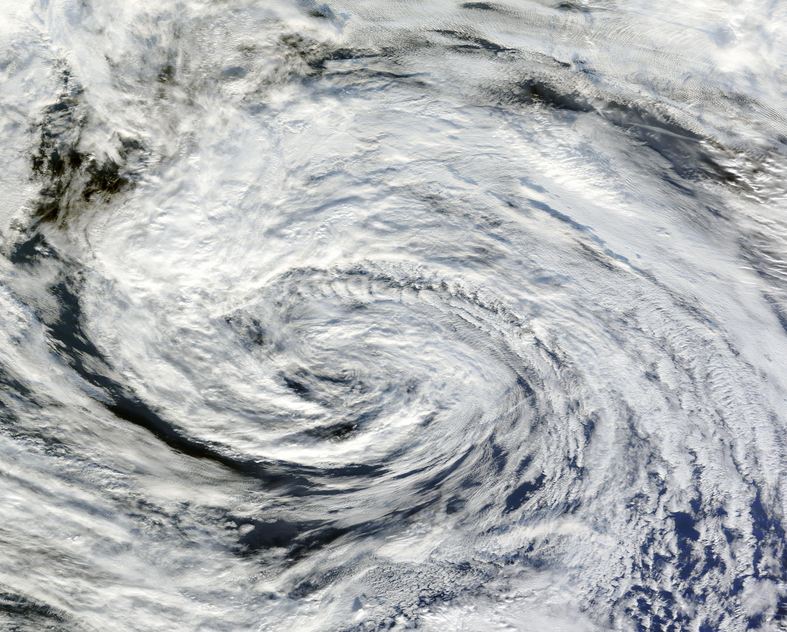
Cyclone Dirk was a large and intense European windstorm that developed over the North Atlantic in late December 2013. It formed on 21 December and dissipated on 27 December 2013. The system tracked northeastward and affected a broad swathe of Western Europe, from the Iberian Peninsula to Iceland, producing strong winds, high seas and difficult travel conditions. Reported fatalities associated with the event numbered six.
Image gallery
4 Images


Meteorological characteristics
Dirk was an extratropical cyclone that underwent rapid deepening while embedded in a strong mid-latitude flow. Observations recorded a very low central pressure of 936.8 hectopascals (27.66 inHg) at Stornoway on the Isle of Lewis, off Scotland's northwest coast, on 24 December. The storm produced extensive areas of gale-force winds and large ocean waves as it moved across the North Atlantic and approached the coasts of several countries.
Development and track
The cyclone formed over relatively warm North Atlantic waters and amplified through baroclinic processes typical of winter extratropical storms. Its rapid intensification was associated with strong temperature contrasts and an active polar jet stream. Synoptic charts and post-storm analyses provide detailed accounts of its deepening and track in contemporary meteorological summaries: detailed analysis and later status reports of its dissipation can be found at dissipation notice.
Impacts and consequences
Across affected regions, Dirk produced hazardous coastal conditions, heavy surf, and storm-driven flooding in exposed areas. Transport was widely disrupted: flights and ferry services were cancelled or delayed, and some roads were closed due to debris, flooding or fallen trees. Power outages and localized structural damage occurred where the strongest gusts hit. Emergency services and local authorities issued warnings and managed responses throughout the event.
Records and notable observations
The measured low pressure at Stornoway (936.8 hPa on 24 December) was one of the most notable single readings associated with the storm and is often cited in post-event summaries: see the observation report Stornoway pressure report. While not the most extreme European windstorm on record, Dirk stands out for its geographic extent, depth and the late-December timing that disrupted holiday travel for many.
Context and significance
Cyclone Dirk illustrates the typical behaviour of powerful winter extratropical cyclones in the North Atlantic: formation in a baroclinic zone, rapid intensification under a strong jet stream, and impacts that extend across multiple countries. Such storms are a recurrent hazard for the region and are monitored closely by national weather services and maritime authorities to reduce risk to life and property.
- Formation: 21 December 2013
- Dissipation: 27 December 2013
- Reported fatalities: 6
- Notable observation: 936.8 hPa at Stornoway (24 December)
Questions and answers
Q: What is Cyclone Dirk?
A: Cyclone Dirk was a large and deep European windstorm.
Q: Where did the cyclone affect?
A: The cyclone affected Western Europe from Iberia to Iceland.
Q: When did Cyclone Dirk form?
A: Cyclone Dirk formed on December 21, 2013.
Q: When did Cyclone Dirk dissipate?
A: Cyclone Dirk dissipated on December 27, 2013.
Q: How many deaths did the storm cause?
A: The storm caused 6 deaths.
Q: What was the lowest pressure recorded during the storm?
A: On land, the lowest pressure during the storm was measured at 936.8 hectopascals (27.66 inHg) on December 24 at Stornoway, Isle of Lewis off the north west coast of Scotland.
Q: Which country experienced the lowest pressure during the storm?
A: The Isle of Lewis, which is part of Scotland, experienced the lowest pressure during the storm.
Related articles
Author
AlegsaOnline.com Cyclone Dirk — December 2013 European windstorm Leandro Alegsa
URL: https://en.alegsaonline.com/art/24871
Sources
- stornowaygazette.co.uk : "Christmas Eve weather warning- lowest pressure in over 100 years"