
Cyclone Amphan
Super Cyclonic Storm Amphan was a powerful tropical cyclone in May 2020 that struck the Bay of Bengal coasts of India and Bangladesh, causing widespread damage, loss of life, and large-scale evacuations.
Overview
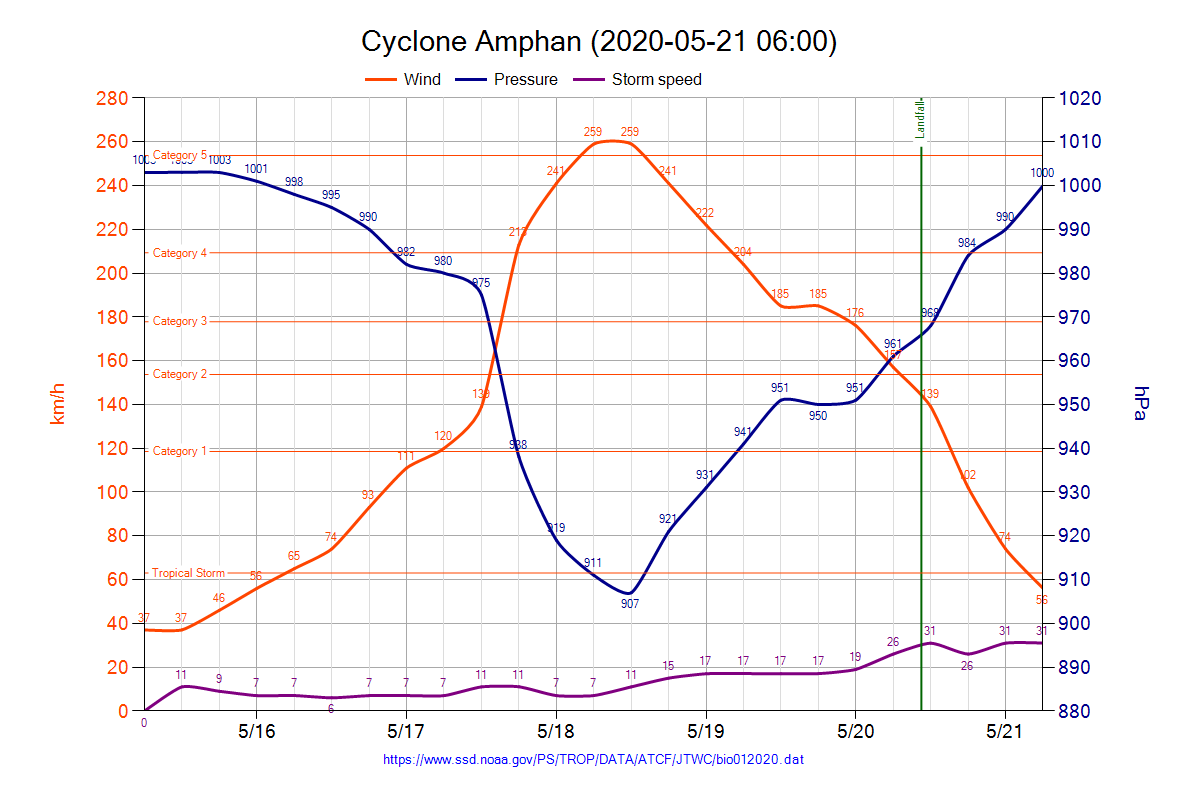
Super Cyclonic Storm Amphan was a very powerful tropical cyclone that developed over the Bay of Bengal in mid‑May 2020. It moved north‑northeast and made landfall on the coastal areas of the Ganges Delta on 20 May 2020 before weakening and dissipating a few days later. Amphan caused extensive wind damage, flooding from storm surge and rain, and widespread power outages across East India and Bangladesh.
Image gallery
10 Images


Meteorological characteristics
The system formed in the central Bay of Bengal on 16 May and underwent rapid intensification as it approached the coast. Regional meteorological agencies classified it as a major storm and — at its peak — a "Super Cyclonic Storm," a category reserved for the most intense tropical systems in the North Indian Ocean basin. Amphan brought a destructive combination of high sustained winds, torrential rainfall, and a storm surge that inundated low‑lying coastal areas of the Ganges Delta.
Impacts and damage
Amphan caused significant human and economic losses. Official tallies and widely reported figures put the death toll in the low hundreds and economic losses at over US$13 billion, though exact totals vary by source. The cyclone damaged homes, infrastructure and crops, felled trees, and disrupted electricity and communications across urban and rural districts. Low‑lying islands and protected mangrove areas, including parts of the Sundarbans, experienced severe flooding and ecological stress.
Response and recovery
Authorities in India and Bangladesh carried out large‑scale evacuations and sheltering efforts; millions of people were moved out of the most vulnerable coastal zones ahead of landfall. Emergency services, military units and humanitarian organizations undertook search, rescue and relief operations after the storm passed. Recovery focused on restoring power, clearing roads, repairing homes and restoring services while managing public health challenges during the concurrent COVID‑19 pandemic.
Historical context and notable facts
Amphan was the strongest cyclone to strike the Ganges Delta region since Cyclone Sidr in 2007 and one of the most destructive North Indian Ocean storms of the early 21st century. Scientists noted that rising sea surface temperatures can influence cyclone intensity, though attributing any single event to long‑term climate change requires careful analysis. Amphan highlighted both improvements and ongoing challenges in regional preparedness and disaster response.
Further reading
- Synoptic overviews and advisories from regional meteorological services: weather agency reports.
- Country and regional impact assessments: reports on India and reports on Bangladesh.
- Meteorological background on Bay of Bengal cyclones: environmental summaries and historical comparisons to the Ganges Delta cyclone record.
Questions and answers
Q: When did Cyclone Amphan occur?
A: Cyclone Amphan occurred in May 2020.
Q: What kind of storm was Cyclone Amphan?
A: Cyclone Amphan was a super cyclonic storm.
Q: Where did Cyclone Amphan cause damage?
A: Cyclone Amphan caused damage in East India and Bangladesh.
Q: How much damage did Cyclone Amphan cause?
A: Cyclone Amphan caused over US$13 billion dollars of damage.
Q: How many people did Cyclone Amphan kill?
A: Cyclone Amphan killed a total of 118 people.
Q: Was Cyclone Amphan the strongest cyclone to hit the Ganges Delta?
A: Yes, Cyclone Amphan was the strongest cyclone to hit the Ganges Delta since Cyclone Sidr in 2007.
Q: When did Cyclone Amphan dissipate?
A: Cyclone Amphan dissipated on the 21 May after tracking into the Ganges Delta.
Related articles
Author
AlegsaOnline.com Cyclone Amphan Leandro Alegsa
URL: https://en.alegsaonline.com/art/24870