
Cuban Missile Crisis
A tense thirteen-day standoff in October 1962 between the United States and the Soviet Union over Soviet ballistic missiles placed in Cuba that brought the world closest to nuclear war and reshaped Cold War policy.
The Cuban Missile Crisis was a thirteen-day confrontation in October 1962 between the United States and the Soviet Union over the deployment of Soviet medium- and intermediate-range ballistic missiles on the island of Cuba. The discovery of the missile sites and the subsequent political and military responses produced the closest moment the Cold War reached to direct nuclear exchange. The crisis combined intelligence gathering, public posturing, secret diplomacy and urgent decision-making by national leaders.
Image gallery
10 Images


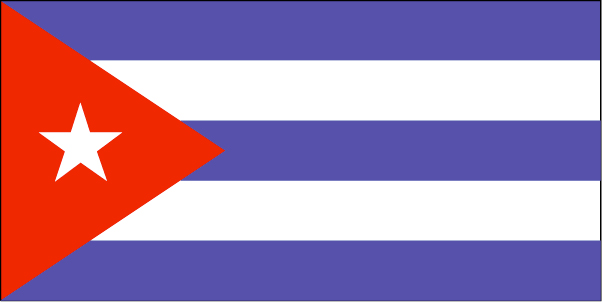


Historical background
Following the 1959 Cuban Revolution, a revolutionary government led by Fidel Castro aligned itself closely with the Soviet Union. The United States cut diplomatic and most economic ties and supported attempts to remove or undermine the Cuban leadership, including a failed invasion at the Bay of Pigs in 1961. Cuba’s proximity to the North American mainland, and its adoption of policies hostile to U.S. interests, made the island a focal point in superpower rivalry.
Strategic motives and Soviet decision
The Soviet leadership under Nikita Khrushchev decided to place offensive nuclear missiles in Cuba for several reasons that were publicly and privately discussed at the time. The missiles would deter another invasion of Cuba, alter the strategic nuclear balance by placing warheads within striking distance of many U.S. targets, and address the perceived imbalance created by U.S. ballistic missiles stationed in allied countries. The presence of Soviet forces and missile installations in Cuba therefore reflected a mix of regional defense, global bargaining and Cold War signaling.
Discovery and U.S. response
U.S. aerial reconnaissance flights produced photographic evidence of missile sites and associated infrastructure being emplaced in Cuba. When the photographs were presented to the U.S. president, the government debated options ranging from air strikes to a full invasion. The option chosen was a naval quarantine, intended to stop further shipments of offensive weapons to the island while avoiding the legal and rhetorical implications of a formal blockade. Public announcements, military movements and intense diplomatic exchanges followed.
Diplomacy and crisis management
Confrontation on sea, air and in public statements was paralleled by a series of private communications and back-channel negotiations. Leaders in Washington and Moscow exchanged letters and messages; advisers and intermediaries conveyed offers and assurances. The crisis featured a mix of public brinkmanship and private concessions. Ultimately, Soviet leader Khrushchev agreed to remove the missile installations in Cuba in return for a public U.S. pledge not to invade the island. At the same time, the United States agreed privately to remove selected missiles from sites in allied countries at a later date.
Resolution and immediate consequences
The negotiated settlement defused the immediate danger of direct superpower military clash. Soviet missile sites were dismantled and the last offensive weapons were withdrawn from Cuba under international observation. The U.S. pledge not to invade offered an important security assurance to Havana. The crisis exposed gaps in crisis communication and control and prompted both sides to seek mechanisms to reduce the risk of accidental escalation.
Long-term impact and legacy
Outcomes of the crisis included the establishment of more reliable direct communications between Washington and Moscow, commonly known as the "hotline," and a renewed interest in arms-control measures. Less than a year later, negotiators concluded agreements that limited certain forms of nuclear testing and began a more sustained dialogue on strategic stability. The Cuban Missile Crisis has remained a central case study in international relations, illustrating the dangers of nuclear brinkmanship, the role of intelligence and the value of diplomacy under pressure.
Key actors and topics
- Soviet Union — the state that deployed the missiles to Cuba.
- United States — the state that discovered the sites and enforced the quarantine.
- Cuba — the island nation where missiles were placed and which feared invasion.
- Cold War — the wider geopolitical context for the standoff.
- Russia — the successor state to the Soviet Union often referenced in later accounts.
- Karibskiy krizis — the Russian-language name for the Caribbean Crisis.
- Proxy — a term describing indirect competition typical of the era.
- Conflict — the crisis exemplified near-direct conflict between superpowers.
- Missiles — the ballistic weapons that were central to the dispute.
- Berlin Blockade — an earlier Cold War confrontation often compared with the Cuban episode.
- Coup — a word sometimes used in descriptions of the upheavals that preceded Castro’s rule.
- Fidel Castro — the Cuban leader whose government allied with the Soviet Union.
- Cuban Revolution — the 1959 movement that transformed Cuba’s political alignment.
- New government — the revolutionary authorities who negotiated with external powers.
- Embargo — economic restrictions imposed by the United States that heightened tensions.
- City — the geographic proximity of Cuba made many U.S. cities vulnerable to short-range strike.
For scholars and students the Cuban Missile Crisis remains a defining episode in 20th-century history: a moment when strategic calculation, intelligence, military posture and political will intersected with profound consequences for global security policy. Further study emphasizes both the contingency of events and the institutional lessons that policymakers drew from the near-catastrophe.
Questions and answers
Q: What is the Cuban Missile Crisis?
A: The Cuban Missile Crisis was an event that occurred during the 1960s, when there was a serious confrontation between the Soviet Union, the United States, and Cuba during the Cold War. It began when the Soviet Union (USSR) began building missile sites in Cuba in 1962.
Q: What caused this crisis?
A: This crisis was caused by the Soviet Union's building of sites for ballistic missiles so that they could target the United States. As a result, this had caused the United States and the Soviet Union to create a proxy conflict directed at Cuba, causing them to indirectly attack each other because of Cuba.
Q: What happened before this crisis?
A: Before this crisis occurred, there was a coup in Cuba in 1959 where a small group led by Fidel Castro took power in what is known as the Cuban Revolution. After this revolution, The American government refused to import anything from Cuba and thus began an embargo against it on February 7th 1962.
Q: How did America respond to these events?
A: In October 1962, American ships blocked Soviet ships carrying missiles from going into Cuba due to their fear that USSR would attack America from Cuba with those missiles.
Q: How did Russia and Cuba react?
A: The Soviets and Cubans agreed to take away all of their nuclear weapons from Cuba if America promised not to attack them.
Q: What agreement did Kennedy make during this time?
A: During the Cuban Missile Crisis, President Kennedy secretly agreed to remove Jupiter missiles from Turkey in exchange for withdrawal of all Russian nuclear weapons from Cuba.
Related articles
Author
AlegsaOnline.com Cuban Missile Crisis Leandro Alegsa
URL: https://en.alegsaonline.com/art/24514
Sources
- history.state.gov : "Milestones: 1961–1968 - The Cuban Missile Crisis, October 1962"
- strategicstudiesinstitute.army.mil : "Mind-Sets and Missiles: A First Hand Account of the Cuban Missile Crisis"
- andromeda.rutgers.edu : [excerpts from] The Cuban Missile Crisis - An In-Depth Chronology
- presidency.ucsb.edu : "Proclamation 3447–Embargo on all trade with Cuba"
- loc.gov : "Revelations from the Russian Archives"
- gwu.edu : "Interview with Syndey Graybeal -29. Jan 1998"
- hpol.org : The Cuban Missile Crisis, October 18-29, 1962, audio recordings
- armscontrol.org : Cuban Missile Crisis documents on Arms Control Association