
Crypsis (biological concealment and detection avoidance)
Crypsis describes the strategies and traits organisms use to avoid detection or recognition by other organisms, including visual, chemical and auditory methods such as camouflage, mimicry, nocturnality and transparency.
Crypsis is the collection of biological strategies that help an organism avoid being detected, identified, or recognised by others. It is a central concept in ecology and evolutionary biology because it mediates interactions between predators and prey, parasites and hosts, and competitors. Crypsis can serve defensive purposes or allow predators and parasites to approach undetected.
Image gallery
6 Images


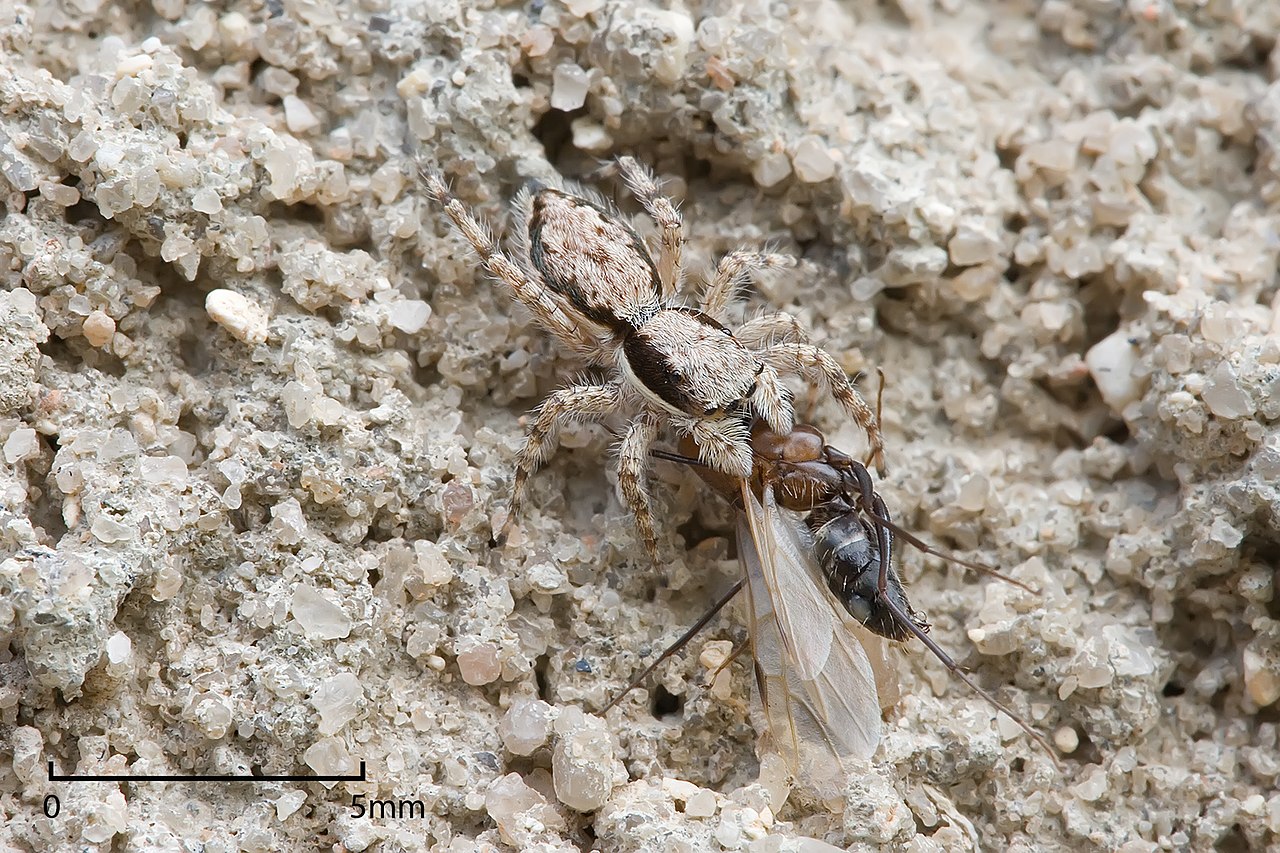
Common mechanisms
- Camouflage — coloration, patterning and posture that reduce visual contrast with the environment; see camouflage.
- Mimicry — resembling another species or object so that observers misidentify the organism rather than simply fail to see it.
- Nocturnality — being active at night to avoid diurnal observers; related behavioural timing is discussed under nocturnality and subterranean lifestyles.
- Subterranean and concealed living — occupying burrows, leaf litter or inside tissues where detection is unlikely; see subterranean lifestyle.
- Transparency and reduced silhouette — common in many aquatic and aerial planktonic organisms; examples appear under transparency.
- Chemical and olfactory crypsis — reducing or masking scent cues so predators or prey cannot smell the organism; further reading at chemical signalling.
- Acoustic concealment — minimizing, altering or masking sounds to avoid auditory detection; see auditory crypsis.
The same trait can sometimes serve multiple functions. For example, a cryptic coat may hide an animal from predators while also allowing an ambush predator to approach prey. Crypsis acts at different scales, from individual behaviour and physiology to seasonal or developmental changes in appearance.
History and usage
The term has roots in the idea of "hiding" and entered scientific use as researchers categorized survival strategies. It has since broadened from strictly visual concealment to include chemical and acoustic forms. Scientists study crypsis to understand natural selection, species interactions and adaptive trade-offs.
Importance, examples and distinctions
Crypsis is widespread: moths and ground-nesting birds use plumage that matches substrates, many fish and invertebrates display transparency, and some mammals adopt nocturnal habits. Eggs and nests are often cryptic to reduce predation on offspring (egg crypsis). Crypsis differs from warning coloration (aposematism) and some forms of mimicry: it aims to prevent detection or recognition rather than advertise unpalatability. Both predators and prey exploit crypsis; its ecological role extends to conservation, pest management and biomimetic applications (predator–prey dynamics).
For further introductions and technical reviews consult general ecology sources and specialist literature on camouflage, mimicry and sensory ecology (ecology overview, transparency studies, auditory concealment). Practical examples and case studies can be found in species accounts and behavioural ecology texts (camouflage, chemical signalling, nocturnality).
Questions and answers
Q: What does the term "crypsis" mean in ecology?
A: Crypsis means "hiding" in ecology and refers to the ways animals avoid being seen or otherwise detected.
Q: What are some methods of crypsis?
A: Some methods of crypsis include camouflage, nocturnality (night-time activity), subterranean lifestyle, transparency, and mimicry.
Q: What is crypsis used for?
A: Crypsis can be used as a defence against predators or as a device for predators to get near prey.
Q: Can crypsis apply to eggs?
A: Yes, crypsis can apply to eggs.
Q: What is olfactory camouflage?
A: Olfactory camouflage is a type of crypsis that involves disguising or hiding one's scent.
Q: What is auditory camouflage?
A: Auditory camouflage is a type of crypsis that involves disguising or hiding one's sound.
Q: What is pheromone production?
A: Pheromone production is a type of crypsis that involves producing chemicals that affect the behaviour of other animals of the same species.
Related articles
Author
AlegsaOnline.com Crypsis (biological concealment and detection avoidance) Leandro Alegsa
URL: https://en.alegsaonline.com/art/24449
Sources
- doi.org : 10.1590/S1679-62252006000100012
- doi.org : 10.2193/2006-471
- doi.org : 10.1007/s00442-007-0786-z
- pubmed.ncbi.nlm.nih.gov : 17618465
- amentsoc.org : "Definition of Crypsis"