
Execution by elephant (crushing as a form of capital punishment)
A historical form of execution in which trained elephants were used to crush, trample, or mutilate condemned people; practiced in parts of Asia and occasionally recorded in the classical Mediterranean.
Overview
Execution by elephant refers to a set of capital punishment practices in which a trained elephant was used to kill or maim a condemned person. These methods were best known from parts of South Asia and Southeast Asia, though accounts also appear for the Romans and Carthaginians in the classical world. Use, form and frequency varied by time and place. In many societies the spectacle served both punitive and deterrent social functions.
Image gallery
5 Images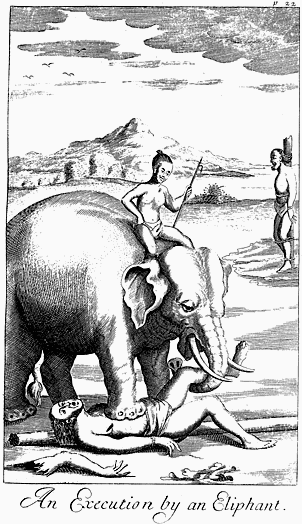
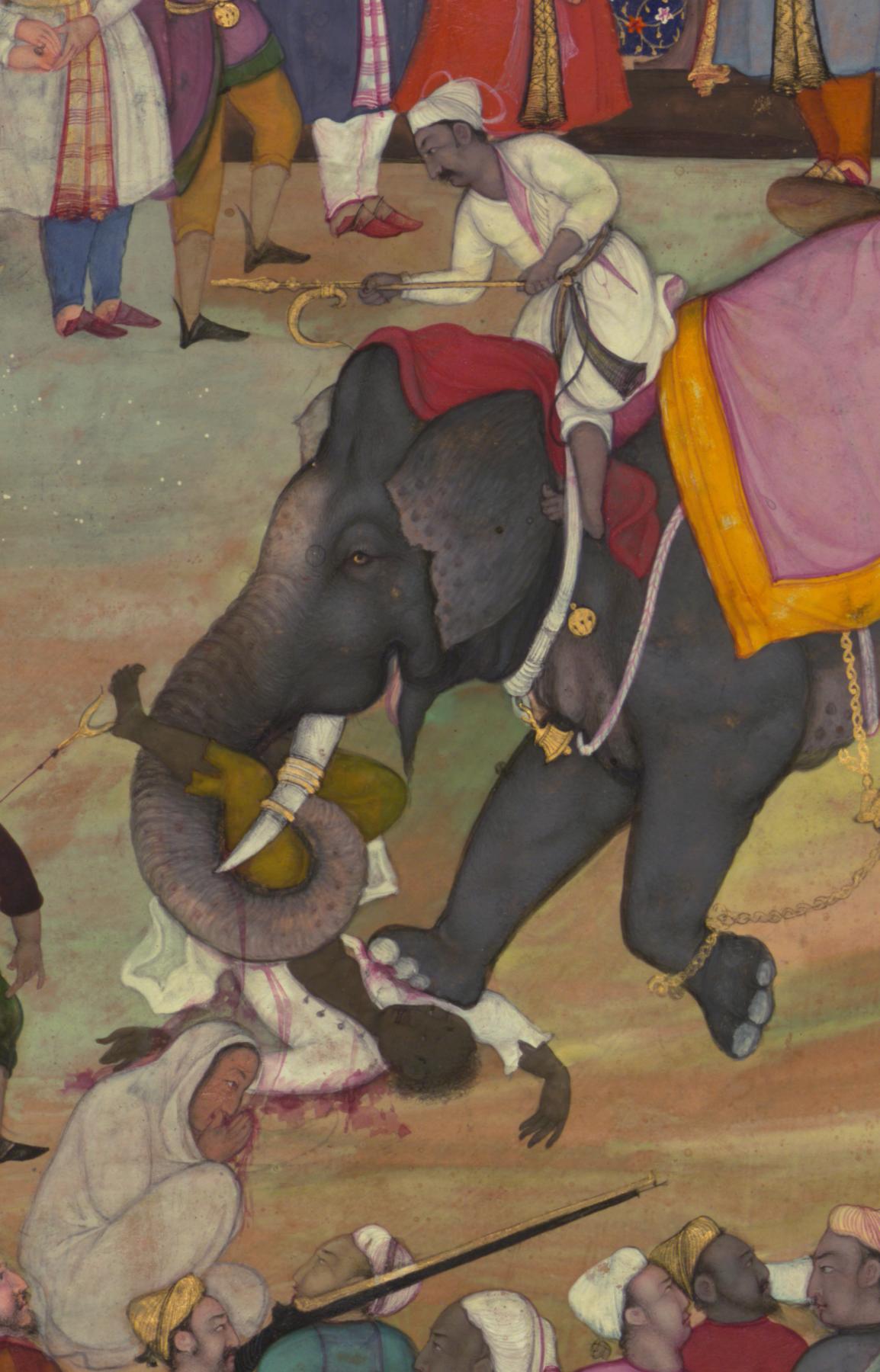


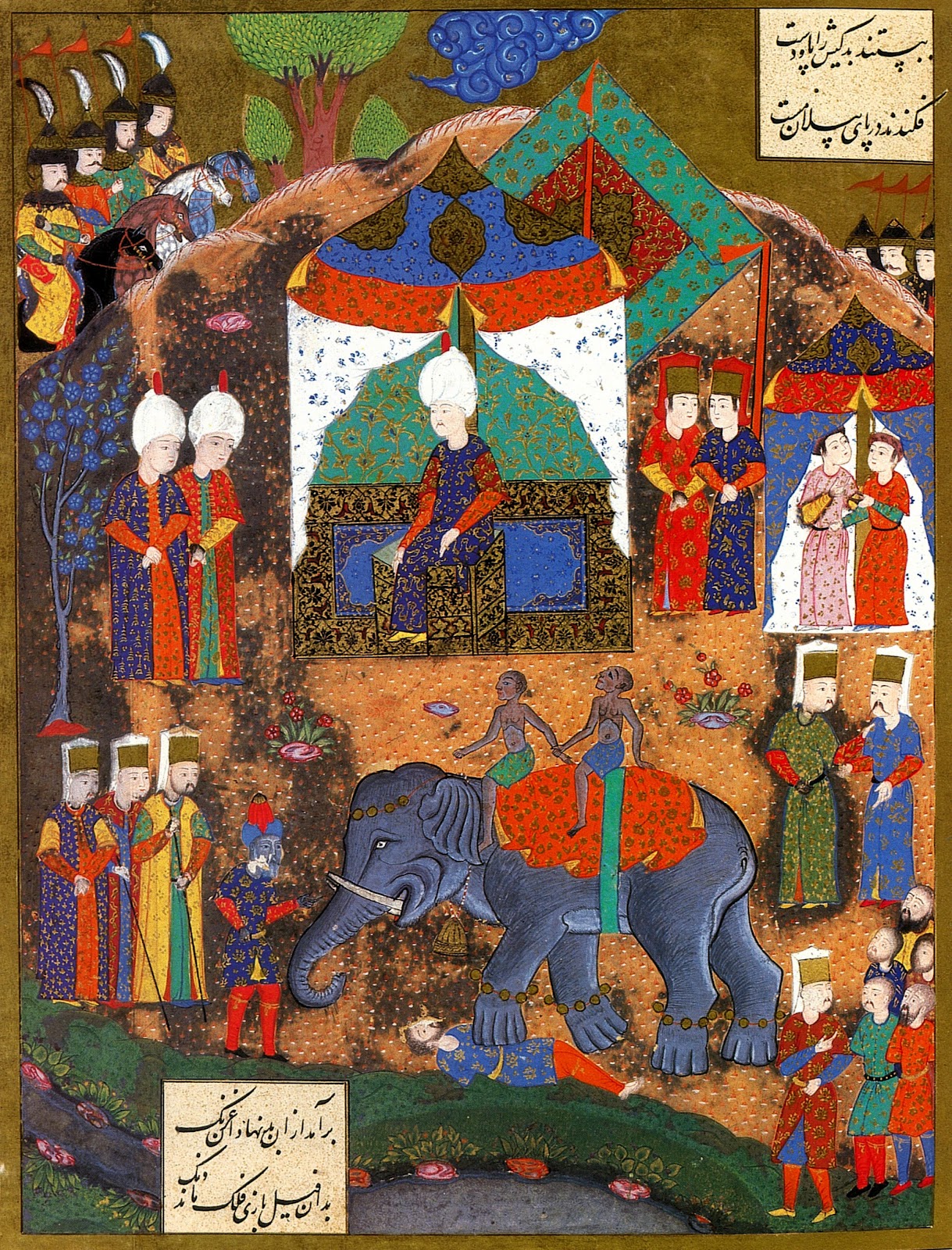
Method and typical procedure
There was no single universal technique. A common pattern involved training the animal to place a forefoot on the victim's head and then apply pressure until death; handlers could be instructed to be gentle at first so witnesses could confirm identity. In other versions the elephant trampled or dragged the condemned through public streets, or crushed limbs first to prolong suffering. The person ordering the execution could direct the elephant's behaviour through the mahout, the animal's keeper.
Common steps and variations
- Apprehension, sentencing and public display of the condemned.
- Positioning the elephant and the prisoner so spectators could see the act.
- The mahout or handler gave commands that controlled whether the animal pressed, trampled, or dragged.
- Witnesses sometimes were asked to identify the condemned beneath the animal's foot before the final pressure was applied, intertwining the spectacle with questions of accountability and testimony.
Historical context and decline
Practices involving elephants emerged where these animals were integrated into political, military, and ceremonial life. In several Asian polities they appear as an instrument of severe punishment for crimes viewed as especially grave. European observers and classical authors recorded occasional use by Mediterranean powers as well, but those occurrences were far less central to local legal systems. Over time the practice declined for a mix of reasons: changes in legal norms, the influence of colonial administrations that introduced different penal codes, and evolving humanitarian sensibilities that reduced public corporal spectacle.
Legal, social and symbolic aspects
Execution by elephant combined practical and symbolic elements. It capitalized on the animal's great strength while also creating a public demonstration of sovereign authority. Trials, witness statements and punishments for false testimony could be entangled with the execution: for example, witnesses faced social pressure and legal risk if they contradicted official accounts, since authorities sometimes punished perjury severely. The spectacle reinforced hierarchy and the ruler's capacity to command both human and animal agents, and was therefore as much about politics as about retribution or deterrence. For readers interested in the broader category of state punishment, see entries on the death penalty.
Notable points and legacy
- Elephant executions were culturally specific: the practice reflects regional human–animal relations rather than a universal method.
- The role of the trainer or mahout was pivotal: the outcome depended on human control as much as animal action.
- Descriptions in travelogues and chronicles vary in reliability; historians treat individual accounts cautiously and situate them within wider legal and social history.
As a subject of study, execution by elephant illustrates how punishment, performance and power intersected in societies that kept and trained large animals. It remains a striking example of how legal practice and symbolic display could be combined to enforce authority and communicate consequences.
Questions and answers
Q: What was the death penalty in south and southeast Asia for many rulers in the past?
A: The death penalty was people being crushed by elephants.
Q: How long was crushing people with elephants practiced?
A: It was practiced for more than 4000 years.
Q: Which other civilizations also used elephant crushing as a form of execution?
A: The Romans and Carthaginians also sometimes used elephant crushing as a form of execution.
Q: How did the elephant step on the head of the condemned person?
A: Usually, handlers trained the elephant to put its large foot gently on the person's head.
Q: What did witnesses do when the elephant stepped on the person's head?
A: Witnesses looked under the elephant's foot to make sure the prisoner was the one who committed the crime.
Q: What happens if a witness denied the condemned person as the criminal?
A: If a witness denied the condemned person as the criminal, they would be considered committing perjury, which means lying at a trial.
Q: What was the consequence of perjury in those days?
A: In those days, rulers could punish perjury with death.
Q: Why did few witnesses deny the condemned person as the criminal?
A: Few witnesses denied the condemned person as the criminal because then the elephant may crush them instead.
Related articles
Author
AlegsaOnline.com Execution by elephant (crushing as a form of capital punishment) Leandro Alegsa
URL: https://en.alegsaonline.com/art/24429