
Crurotarsi: the ankled archosaurs and the crocodile-line assemblage
Crurotarsi is a historical name for the archosaur group defined by a distinctive crurotarsal ankle. The term covers crocodile-line relatives, many Triassic fossils, and reflects changing taxonomy in archosaur studies.
Overview
Crurotarsi is a name that has been used to describe a group of archosaurs united by a characteristic form of the ankle. The term comes from elements meaning the leg/shin and the ankle, and it has been applied to a broad set of reptiles that first became plentiful in the early Triassic period and diversified in the Triassic and early Mesozoic eras. In practice the label highlights anatomy rather than a single modern biological clade.
Image gallery
10 Images

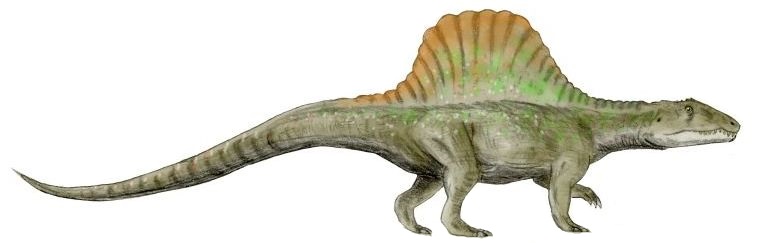


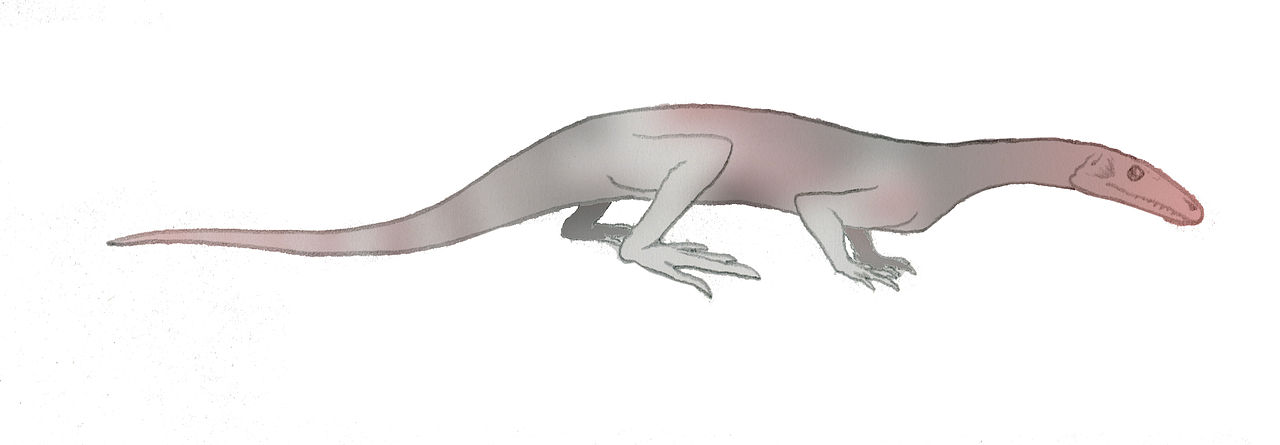
Key characteristics
The defining feature is a crurotarsal ankle joint that permits rotation between the shin bones and the foot. Unlike the simpler hinge-like (mesotarsal) ankle of bird-line archosaurs, crurotarsal ankles typically involve a complex contact between the astragalus and calcaneum, often with a peg or socket allowing twisting—an arrangement sometimes described as a specialized joint. This difference in ankle structure is central to how paleontologists separate major archosaur lineages.
Members and historical usage
The name Crurotarsi has been used in different ways. Older classifications grouped a wide range of archosaurs under this umbrella, while later work refined boundaries. Historically included or associated taxa (variously in lists or comparisons) have been:
- Avemetatarsalia — the bird-line archosaurs (in contrast to crurotarsal types)
- Pterosauria — extinct flying archosaurs
- Dinosauria — the diverse group that produced birds
- Aves — modern birds (bird-line descendants)
- Pseudosuchia — the crocodile-line archosaurs most closely associated with Crurotarsi
- Phytosauria — semi-aquatic, long-snouted Triassic reptiles
- Aetosauria — quadrupedal, armoured herbivores of the Triassic
- Ornithosuchidae — superficially dinosaur-like Triassic predators
- Crocodylomorpha, including modern Crocodylia and their ancestors
- Rauisuchians — a group of large-bodied predatory forms (status and relationships remain debated)
History and fossil record
During the Triassic, crurotarsal forms were diverse and ecologically important, occupying freshwater, terrestrial and semi-aquatic niches. Many groups went extinct at the end-Triassic or later, while the crocodile-line survivors gave rise to crocodylomorphs and ultimately to the living crocodilians. Fossils of phytosaurs, aetosaurs, ornithosuchids and rauisuchians provide much of our understanding of Triassic ecosystems and of how different ankle morphologies related to locomotion and lifestyle.
Modern interpretation and significance
Recent phylogenetic work has refined archosaur relationships and led to differing uses of the name Crurotarsi. Some researchers prefer more narrowly defined clade names such as Pseudosuchia for the crocodile-line group, while others retain Crurotarsi in a broader or historical sense. The study of these animals illuminates major evolutionary transitions, including the divergence between crocodile-line and bird-line archosaurs and the anatomical innovations tied to movement, feeding and ecology.
Crurotarsan anatomy therefore remains a focal point in paleontology: it links living crocodilians to a rich fossil heritage and helps explain why archosaurs radiated so successfully in Mesozoic ecosystems.
Questions and answers
Q: What are the Crurotarsi?
A: The Crurotarsi is one of the two main groups of archosaurs.
Q: Which animals are included in the Crurotarsi?
A: The Crurotarsi includes the archosaurs (living today are crocodiles and birds), and all their ancestors and relatives right back to the early Triassic period, including the Pseudosuchia.
Q: What are the subgroups of Crurotarsi?
A: The subgroups of Crurotarsi are Avemetatarsalia, †Pterosauria, †Dinosauria, Aves (birds), the crocodile line, Pseudosuchia, †Phytosauria, †Aetosauria, †Ornithosuchidae, Crocodylomorpha (Crocodilia and their ancestors), and †Rauisuchia.
Q: What are the Phytosauria?
A: The Phytosauria are semi-aquatic long-snouted types.
Q: What are the Aetosauria?
A: The Aetosauria are quadrupedal armored herbivores.
Q: What are the Ornithosuchidae?
A: The Ornithosuchidae look rather like dinosaurs.
Q: Why are the main groups of archosaurs defined by features of their ankle joints?
A: The main groups of archosaurs are defined by features of their ankle joints because they are considered to be key features that distinguish the groups from each other.
Related articles
Author
AlegsaOnline.com Crurotarsi: the ankled archosaurs and the crocodile-line assemblage Leandro Alegsa
URL: https://en.alegsaonline.com/art/24424
Sources
- bioone.org : bioone.org/doi/abs/10.1206/352.1