
Crook County, Wyoming: overview, geography, history and communities
Crook County is a rural county in northeastern Wyoming, formed in 1875 and centered on Sundance. It is low in population and notable for Devils Tower, ranching, and Black Hills foothills recreation.
Crook County lies in the extreme northeastern corner of Wyoming and has long been one of the state’s most sparsely populated counties. Its county seat is Sundance. According to the 2010 census, the county had 7,083 residents, making it the third‑least populous county in Wyoming. Large areas of open range, rolling prairie and forested foothills define its low‑density settlement pattern.
Image gallery
4 Images


Geography and notable features
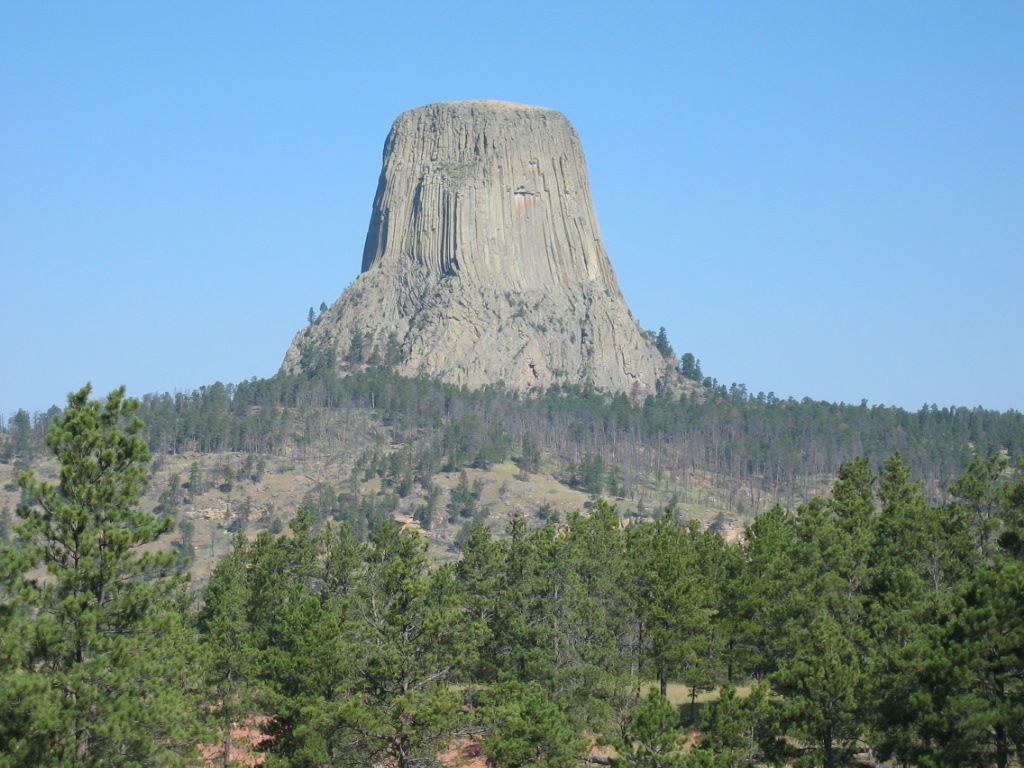
The county occupies a transitional zone between the Great Plains and the Black Hills. It borders Montana to the north and South Dakota to the east. Landscapes range from broad grasslands and ranch country to the wooded slopes and outcrops associated with the Black Hills. One of the county’s best‑known landmarks, Devils Tower, rises dramatically from the plains and draws visitors for climbing, hiking and scenic viewing.
History and origins
Crook County was organized on December 8, 1875, during the era of the Wyoming Territory. It was named for Brigadier General George Crook, a U.S. Army officer active in the region during the Indian Wars. Before Euro‑American settlement, the area was part of the traditional territories and travel routes of Plains Indigenous peoples.
Economy, communities and recreation
The local economy centers on ranching, small‑scale agriculture, and services for rural residents, supplemented by tourism and outdoor recreation. Besides the county seat of Sundance, smaller towns and unincorporated communities include Hulett and Moorcroft among others. Recreational opportunities such as hunting, fishing, rock climbing and scenic drives attract visitors seasonally.
Further information
- County government and services: Crook County official
- State context and resources: Wyoming state information
- Regional geography and tourism: Black Hills and local attractions
- Population and census details: 2010 census data
- Devils Tower National Monument: monument overview
Questions and answers
Q: Where is Crook County located?
A: Crook County is located in the northeastern part of the U.S. state of Wyoming.
Q: What was the population of Crook County according to the 2010 census?
A: According to the 2010 census, the population of Crook County was 7,083 people.
Q: How does the population of Crook County compare to other counties in Wyoming?
A: Crook County has the third-least populous county in Wyoming.
Q: When was Crook County formed?
A: Crook County was formed on December 8, 1875.
Q: What is the county seat of Crook County?
A: The county seat of Crook County is Sundance.
Q: How many people live in Sundance?
A: The text does not provide information on the population of Sundance.
Q: What is the significance of the name Crook County?
A: The text does not provide information on the significance of the name Crook County.
Related articles
Author
AlegsaOnline.com Crook County, Wyoming: overview, geography, history and communities Leandro Alegsa
URL: https://en.alegsaonline.com/art/24292
Sources
- quickfacts.census.gov : "State & County QuickFacts"
- naco.org : "Find a County" · web.archive.org
- publications.newberry.org : "Wyoming: Individual County Chronologies"