
Alexandre Étienne Choron: French Chef Known for Choron Sauce and Siege Menus
Biography of Alexandre Étienne Choron (1837–1924), chef of Voisin in Paris, inventor of Choron sauce and noted for inventive menus using zoo and exotic meats during the 1870–1871 Siege of Paris.
Overview
Alexandre Étienne Choron (1837–1924) was a French culinary professional born in Caen. He rose to prominence as the chef de cuisine at the celebrated restaurant Voisin on the rue Saint-Honoré in Paris. Choron is chiefly remembered for creating a tomato-enriched variation of béarnaise that became known as Choron sauce, and for the extraordinary menus he served during the hardship of the 1870–1871 Siege of Paris.
Image gallery
1 Image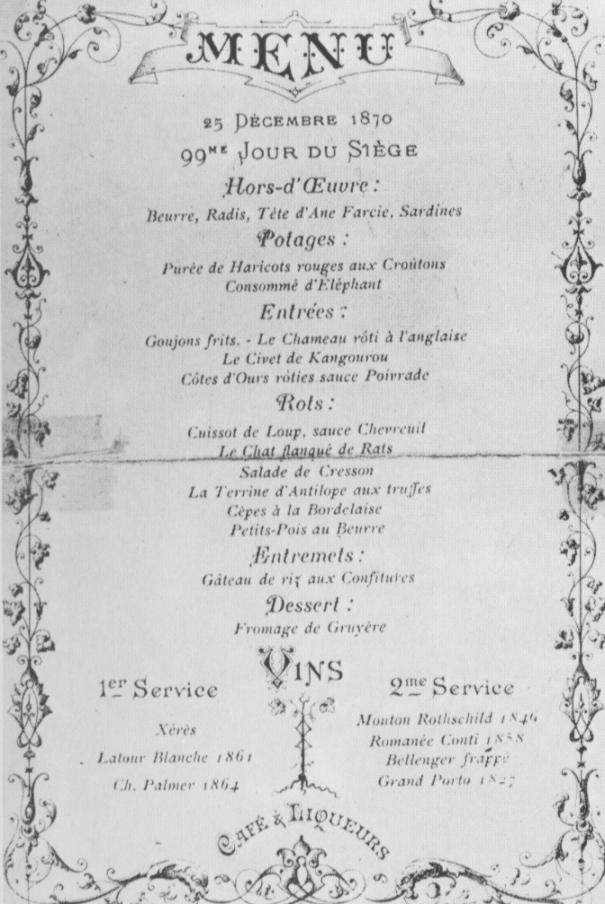
Choron sauce and culinary style
Choron sauce is a derivative of béarnaise, altered by adding concentrated tomato elements to the classic emulsified butter-and-egg base. The result is a richer, slightly sweeter and more reddish sauce commonly paired with grilled meats and steaks. Choron’s approach exemplified the French haute-cuisine tradition of small, precise modifications to established sauces, and he worked within that professional milieu as a respected chef.
Context: the Siege of Paris and food shortages
During the Franco-Prussian War, the Prussians besieged Paris beginning on 19 September 1870. As the siege tightened, conventional supplies ran short and the city’s residents faced severe food scarcity. Elite restaurants, which relied on supply networks and private stocks, had customers but faced dwindling conventional game and livestock. Some restaurateurs, including Choron at Voisin, turned to unconventional sources to sustain fine dining for their clientele.
The legendary Christmas 1870 menu and exotic dishes
Choron’s menus from the blockade years became notorious for employing animals from city zoological collections and other unusual ingredients. A celebrated midnight Christmas menu of 1870 included a sequence of exotic and game dishes that have since entered gastronomic lore. Items reported on that menu included:
- Stuffed head of donkey and an elephant consommé
- Roasted camel
- Kangaroo stew
- Bear shanks roasted in pepper sauce
- Wolf in deer sauce
- Cat served with rat
- Antelope in truffle sauce
The celebratory wines that accompanied these extravagant courses were reputedly old vintages from prestigious estates. While the precise guest list and quantities are matters of period reporting and later retelling, the menu underscored how haute cuisine adapted when conventional supplies collapsed.
Elephants, zoos and the end of the blockade
Choron gained particular notoriety for preparations of éléphant (the French word often cited in contemporary accounts). Two famous zoo elephants named Castor and Pollux that had been kept in Paris collections were consumed in late December 1870, and further animals were acquired from institutions such as the Jardin des Plantes and the Jardin d'Acclimatation to supply Voisin’s kitchens. Contemporary reports record that Choron purchased elephant meat at a set price per pound for his restaurant; by mid-January the supply of elephant had run out and other meats, notably horse, were substituted until the siege ended in early 1871.
Legacy and historical perspective
Alexandre Étienne Choron remains a visible figure in culinary history for two linked reasons: the creation of a distinctive sauce that bears his name and the dramatic example his menus provide of how professional kitchens respond to crisis. The story of Voisin during the siege—often recounted with a mixture of fascination and moral unease—illustrates how cuisine, class and scarcity intersect. Choron’s name endures in culinary references to Choron sauce and in the broader cultural memory of Paris during the 1870–1871 blockade.
For further reading on the era, the restaurants and the Parisian collections involved, consult period chronicles and modern studies of Food in wartime and urban provisioning. Specific institutions and terms mentioned in connection with Choron include the French term for elephant and the city gardens such as the Jardin des Plantes, which provided animals that appeared on siege-era menus.
Questions and answers
Q: Who was Alexandre Étienne Choron?
A: Alexandre Étienne Choron was a French chef. He was the chef de cuisine of the celebrated restaurant Voisin on the rue Saint Honoré and is best known for inventing Choron sauce, a béarnaise sauce enriched with tomato concentrate.
Q: What happened during the Siege of Paris by the Prussians in 1870?
A: During the siege, Parisians were reduced to eating cats, dogs, and rats. The bourgeois did not want to eat such low animals, so they went to de luxe restaurants like Voisin which improvised with exotic animal dishes.
Q: What is famous about Choron's menu for Christmas dinner in 1870?
A: Choron served an infamous menu at Voisin for Christmas dinner in 1870 that included stuffed head of donkey, elephant consommé, roasted camel, kangaroo stew, bear shanks roasted in pepper sauce, wolf in deer sauce, cat with rat and antelope in truffle sauce. The wines served were Mouton-Rothschild 1846, Romanée-Conti 1858 and Château Palmer 1864.
Q: What are some examples of dishes that became famous from this meal?
A: Two dishes from this meal became particularly famous - Trompe d’éléphant in sauce chasseur and Éléphant bourguignon. These dishes were made using elephant meat from various zoos around Paris during the siege.
Q: How much did it cost per pound to buy elephant meat for this meal?
A: It cost 15 francs per pound to buy elephant meat for this meal at Voisin restaurant during the Siege of Paris by the Prussians in 1870.
Q: When did Voisin run out of elephant meat?
A: By 13 January Voisin had run out of elephant meat and substituted horse instead.
Q: When was the siege lifted?
A: The siege was lifted two weeks later after 13 January when Voisin ran out of elephant meat.
Related articles
Author
AlegsaOnline.com Alexandre Étienne Choron: French Chef Known for Choron Sauce and Siege Menus Leandro Alegsa
URL: https://en.alegsaonline.com/art/2417
Sources
- foodreference.com : FoodReference.com
- canalacademie.com : Canal Académie - Les expériences gastronomiques du siège de 1870
- jardindacclimatation.fr : Jardin d'acclimatation official website, view histoire
- pagesperso-orange.fr : Menu