
Alexandre Dumas, fils: life, works and legacy
French novelist and dramatist Alexandre Dumas, fils (1824–1895) wrote La Dame aux camélias and shaped 19th-century French theatre; his life reflected themes of illegitimacy, moral purpose in literature, and social influence.
Overview
Alexandre Dumas, fils (fils is French for "son") (27 July 1824 – 27 November 1895) was a French writer and dramatist whose career eclipsed that of his famous father, Alexandre Dumas, père (père is French for "father"). Renowned for novels and especially for stage works that examined social and moral questions, he is best known today for the novel La Dame aux camélias and the dramatic adaptation that inspired Giuseppe Verdi's opera La Traviata. During his life he was widely considered a leading voice of the serious French theatre and a public intellectual who insisted on the ethical responsibilities of writers.
Image gallery
4 Images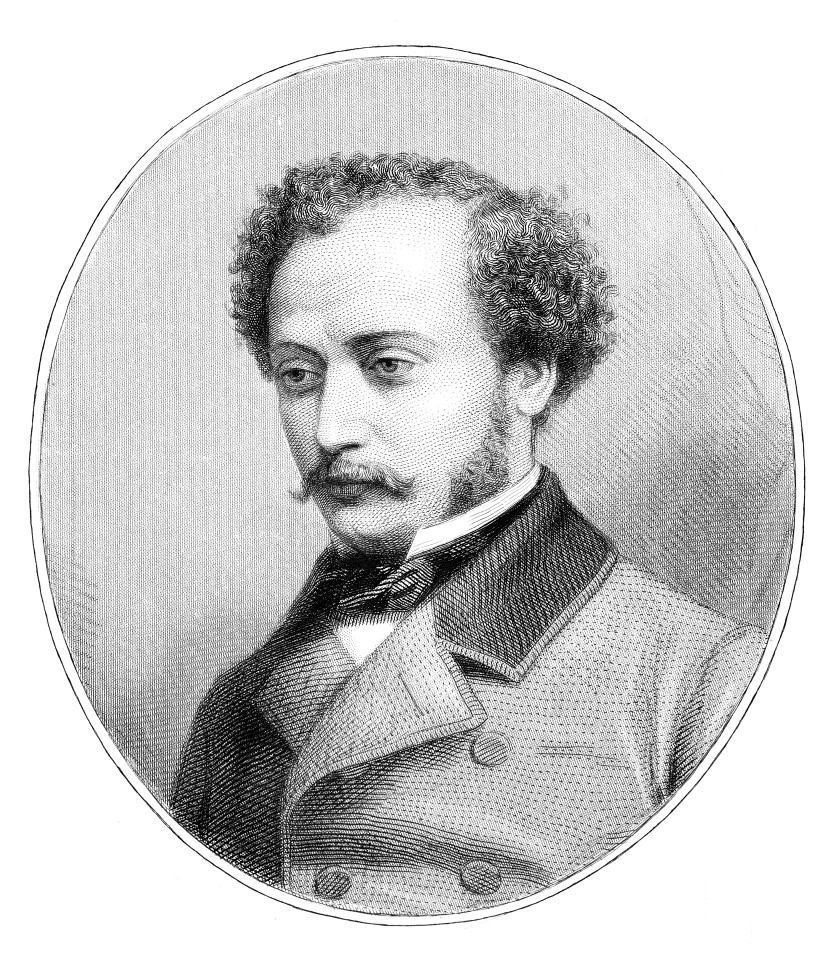


Early life and background
Dumas, fils was born in Paris, France, the illegitimate son of novelist Alexandre Dumas and Marie-Catherine Labay, a dressmaker. The elder Dumas formally recognized and adopted him in 1831, arranging for a formal education that included the Institution Goubaux and the Collège Bourbon. His childhood was shaped by the separation from his mother—an event that left him with a lasting preoccupation with the social position and vulnerability of women—which later appeared as a recurrent subject in his fiction and plays. He also grew up aware of his mixed-race ancestry: his paternal family lineage included both a white French nobleman and a woman of African descent, a fact that exposed him to taunts at school and informed his sensitivity to public reputation and social stigma (Haitian connections are part of this family history).
Career and major works
Dumas began his literary career under his father's roof and moved to Saint-Germain-en-Laye in 1844, where he met Marie Duplessis, a celebrated courtesan who would inspire his most famous work. Her life led him to write the novel La Dame aux camélias (The Lady of the Camellias), which he later adapted for the stage. The theatrical version—sometimes presented in English as Camille—proved an immediate success and launched his prominence as a playwright. The play's emotional realism and moral urgency contributed to its enduring appeal and its transformation into Verdi's opera in 1853.
- Notable dramatic works: Le Fils naturel (The Illegitimate Son, 1858), adapted plays from his own fiction, and numerous social dramas that promoted moral reform.
- Selected prose: La Dame aux camélias (novel and play), and autobiographical pieces such as L'Affaire Clémenceau (1867).
Themes, style and public role
Dumas fils often emphasized a moral purpose in literature: he argued that authors should address the ethical consequences of actions and the duties men owed to women and children. This stance is explicit in Le Fils naturel, where he advanced the view that a man who fathers a child out of wedlock bears responsibility to the mother and child. His plays favored psychological realism, clear moral aims, and social critique rather than the sweeping historical romances associated with his father. Critics and audiences of the period credited him with helping to professionalize the French stage and to turn it toward contemporary social problems.
Personal life, honors and later years
In 1864 Dumas married Nadeja Naryschkine; they had a daughter. After her death he later married Henriette Régnier. His literary achievements were recognized by admission to the Académie française in 1874 and by the award of the Légion d'Honneur in 1894. Although he had begun his career partly from financial need—he once admitted adapting his novel for the stage in part to secure income—his success made him a powerful presence in cultural debates about morality, family, and the duties of artists.
Death and legacy
Dumas died on 27 November 1895 at Marly-le-Roi and was buried in the Cimetière de Montmartre in Paris, not far from the grave of Marie Duplessis. His influence persists in the worlds of theatre and opera: La Dame aux camélias remains a reference point for adaptations about love across social boundaries, and his plays continued to be staged well into the twentieth century. Today, he is studied both for the quality of his dramatic writing and for what his life and work reveal about 19th-century debates over legitimacy, gender, and the public responsibilities of writers. For further reading on his life and works see general bibliographies and specialized studies in French literary history (author, playwright).
Questions and answers
Q: Who was Alexandre Dumas, fils?
A: Alexandre Dumas, fils was the son of Alexandre Dumas, père and a celebrated author and playwright. He was born in Paris, France to Marie-Catherine Labay, a dressmaker, and novelist Alexandre Dumas.
Q: What education did he receive?
A: His father legally recognized him (he adopted him) and ensured the young Dumas received the best education possible at the Institution Goubaux and the College Bourbon.
Q: How did his mother's agony inspire his writing?
A: The law allowed his father to take him away from his mother which caused her great anguish. This experience inspired Dumas fils to write about tragic female characters in almost all of his writings.
Q: What is La dame aux camélias?
A: La dame aux camélias is a romantic novel written by Alexandre Dumas fils which was adapted into a play titled Camille in English (especially in the United States). It is also the basis for Verdi's 1853 opera La Traviata.
Q: Who were his paternal great-grandparents?
A: His paternal great-grandparents were a white French nobleman and a young black Haitian woman.
Q: What influenced his thoughts, behaviour, and writing?
A: The taunting he experienced from classmates while attending boarding school greatly influenced his thoughts, behaviour, and writing.
Q: What awards did he receive during his lifetime?
A: In 1874 he was admitted to the Académie française and in 1894 he was awarded with Légion d'Honneur.
Related articles
Author
AlegsaOnline.com Alexandre Dumas, fils: life, works and legacy Leandro Alegsa
URL: https://en.alegsaonline.com/art/2415