
Crater Lake National Park
Crater Lake National Park in Oregon protects the deep, blue caldera lake formed by the collapse of Mount Mazama. The park is known for its clarity, volcanic features, and recreational opportunities.
Overview
Crater Lake National Park preserves one of North America's most striking volcanic landscapes: a deep, clear lake that fills a volcanic caldera. The park, located in southern Oregon, was established in 1902 to protect the lake, the rim of the caldera and the surrounding forests. Visitors come for the dramatic scenery, geological interest and seasonal outdoor recreation. For official information see the park webpage at Crater Lake National Park and regional resources such as state travel guides.
Image gallery
10 Images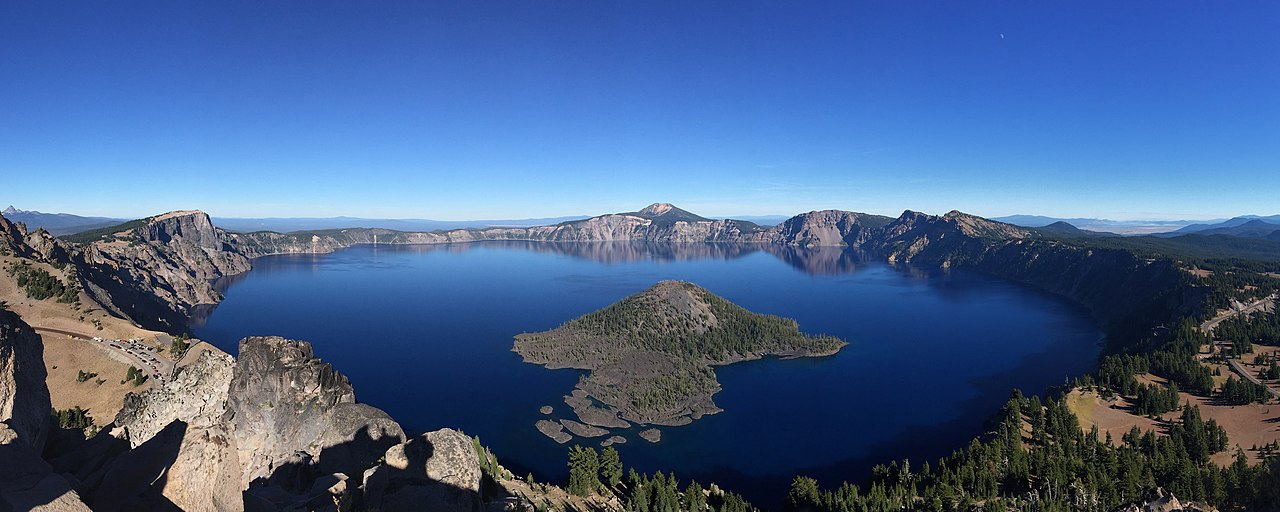






Geology and formation
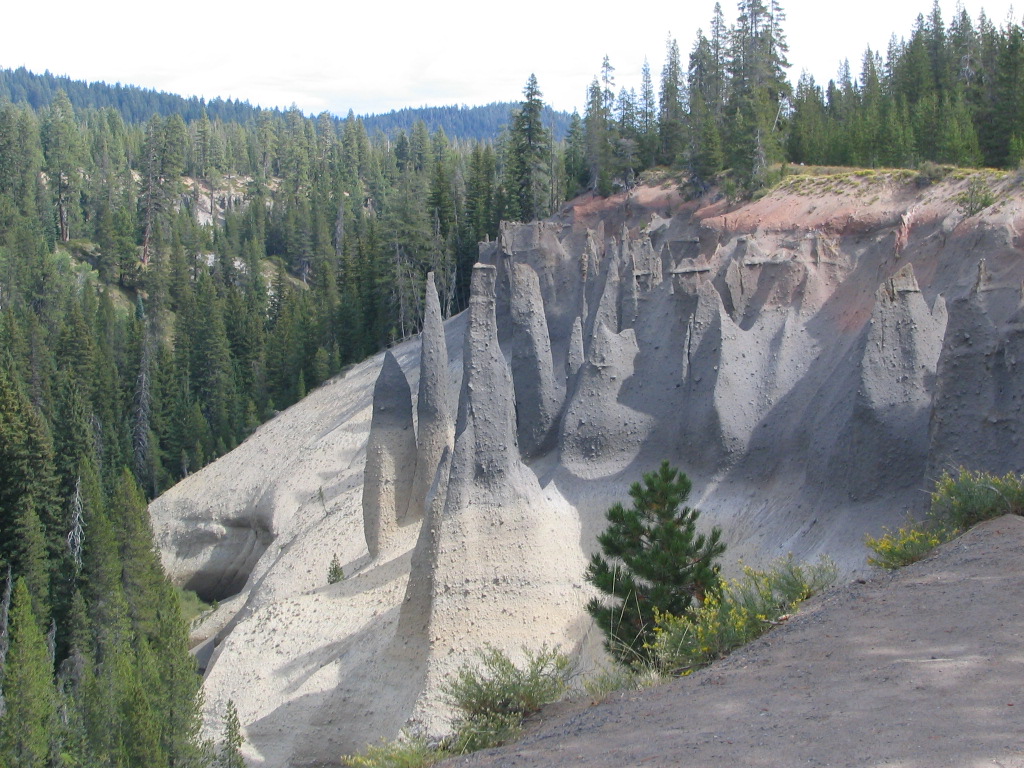
The lake occupies the caldera left when Mount Mazama, a large stratovolcano, erupted and collapsed at the end of the last major eruption phase. That collapse created a deep, bowl-shaped depression which later filled with precipitation and snowmelt. Geological studies indicate the major collapse occurred several thousand years ago, and the remaining rim, islands and rock features record a complex volcanic history. Detailed geologic context and research summaries can be found via educational portals like geology overviews.
Physical characteristics
Crater Lake is famous for its strikingly clear, intensely blue water and unusual hydrology. It has no significant rivers flowing in or out; all water arrives as rain or snow and leaves through evaporation or underground seepage. The lake’s exceptional depth and transparency contribute to its distinctive color and scenic value. Notable in-lake features include a cinder-cone island and eroded rock spires that rise above the surface; for maps and feature descriptions see park maps and interpretive pages at visitor information.
Ecology and climate
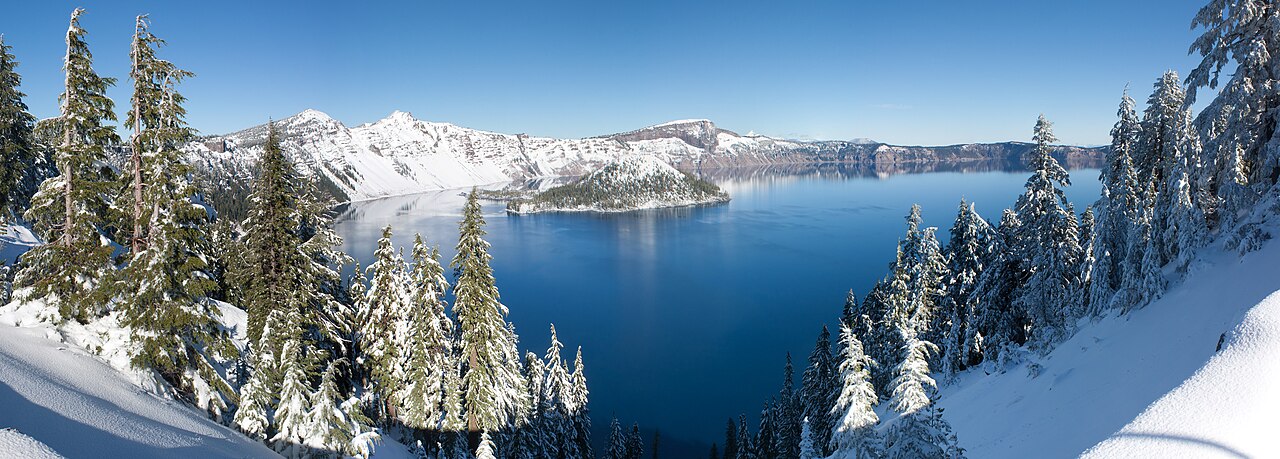
The park’s setting spans montane forests and subalpine zones. Coniferous trees, alpine plants and a range of wildlife occupy different elevations around the caldera rim. Winters are long and snowy, while summers are relatively short and mild, concentrating most visitor use into the warmer months. Interpretive programs and conservation efforts describe how native species adapt to the volcanic soils and high-elevation climate; relevant stewardship details are available through conservation pages.
Human history and park establishment
Indigenous peoples lived in and around the mountain for centuries before European arrival and have cultural connections to the landscape. Scientific interest and public appreciation for the lake’s scenery led to preservation efforts in the late 19th and early 20th centuries, culminating in designation as a national park. The park’s establishment helped protect its unique geological features and provided a foundation for scientific research, recreation and landscape stewardship.
Recreation and management
Visitors to Crater Lake National Park can enjoy scenic drives along the caldera rim, overlook viewpoints, hiking trails, winter sports and guided educational programs. Boat tours to the island are offered seasonally when conditions permit. Park managers balance public access with the conservation of water quality, native habitats and cultural resources. Typical visitor activities include:
- Scenic rim drives and overlooks
- Hiking and backcountry exploration
- Seasonal boat tours and interpretive programs
- Snowshoeing and cross-country skiing in winter
Notable distinctions and importance
Crater Lake is widely recognized for its depth, clarity and volcanic origin. It offers an accessible example of caldera formation and post-eruption landscape evolution. The park continues to be an important site for public education, scientific study and outdoor recreation, drawing visitors who wish to experience one of the western United States’ most visually striking volcanic parks.
Questions and answers
Q: What is Crater Lake National Park?
A: Crater Lake National Park is a national park located in the U.S. state of Oregon.
Q: When was Crater Lake National Park created?
A: Crater Lake National Park was created in 1902.
Q: Is Crater Lake National Park the only national park in Oregon?
A: Yes, Crater Lake National Park is the only national park in Oregon.
Q: What does the park include?
A: The park includes the caldera of Crater Lake, the remains of the destroyed volcano Mount Mazama, and nearby hills and forests.
Q: How deep is Crater Lake?
A: Crater Lake is 1,943 feet (592 m) deep.
Q: Why is Crater Lake so deep?
A: Crater Lake is so deep because of the caldera it is in.
Q: How is Crater Lake re-filled?
A: Crater Lake is re-filled only from snow and rain as it has no streams flowing into or out of it, and all water that enters the lake is eventually lost from evaporation or flowing away underground.
Related articles
Author
AlegsaOnline.com Crater Lake National Park Leandro Alegsa
URL: https://en.alegsaonline.com/art/23998
Sources
- nature.nps.gov : "Listing of acreage as of December 31, 2011"
- nature.nps.gov : "Five Year Annual Recreation Visits Report"
- nps.gov : "Crater Lake"
- nps.gov : "The World's Deepest Lakes"
- wikidata.org : wikidata.org/wiki/Q239304
- d-nb.info : 4563969-3
- id.loc.gov : sh91004651
- catalog.archives.gov : 10046230
- idref.fr : 167776819
- viaf.org : 244285631
- worldcat.org : viaf-244285631