
Crankshaft: function, design, history and applications
The crankshaft converts reciprocating piston motion into rotation for engines and machinery. This article explains parts, balance, materials, manufacturing, common uses, and maintenance considerations.
The crankshaft is the rotating shaft that converts the up-and-down (reciprocating) motion of pistons into rotary motion used to drive wheels, propellers, generators and other driven components. In internal combustion engines the crankshaft links pistons to connecting rods and transmits torque to the transmission or output flange. For a general introduction to its role within an engine, see engine.
Image gallery
8 Images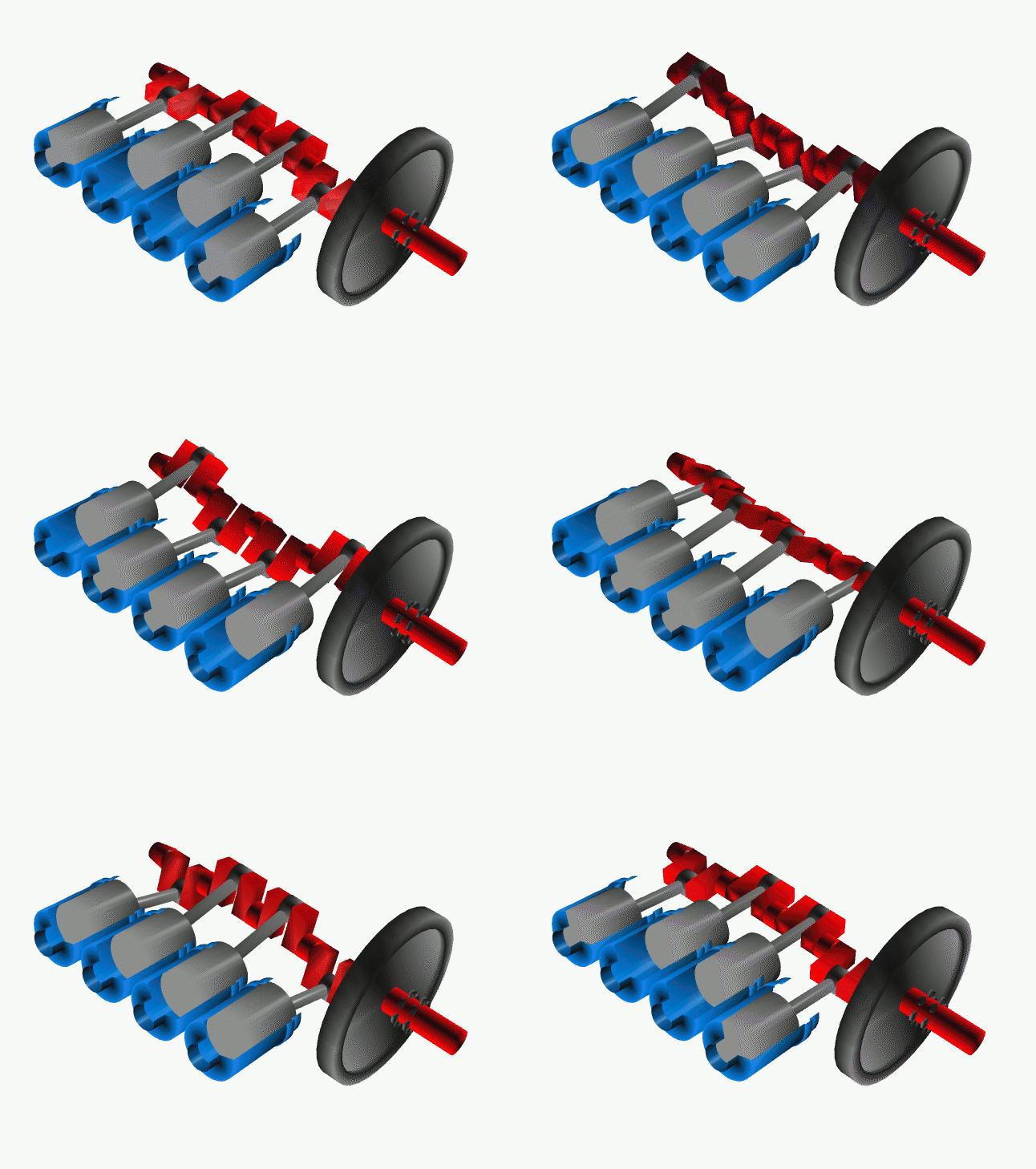




Core parts and how it works
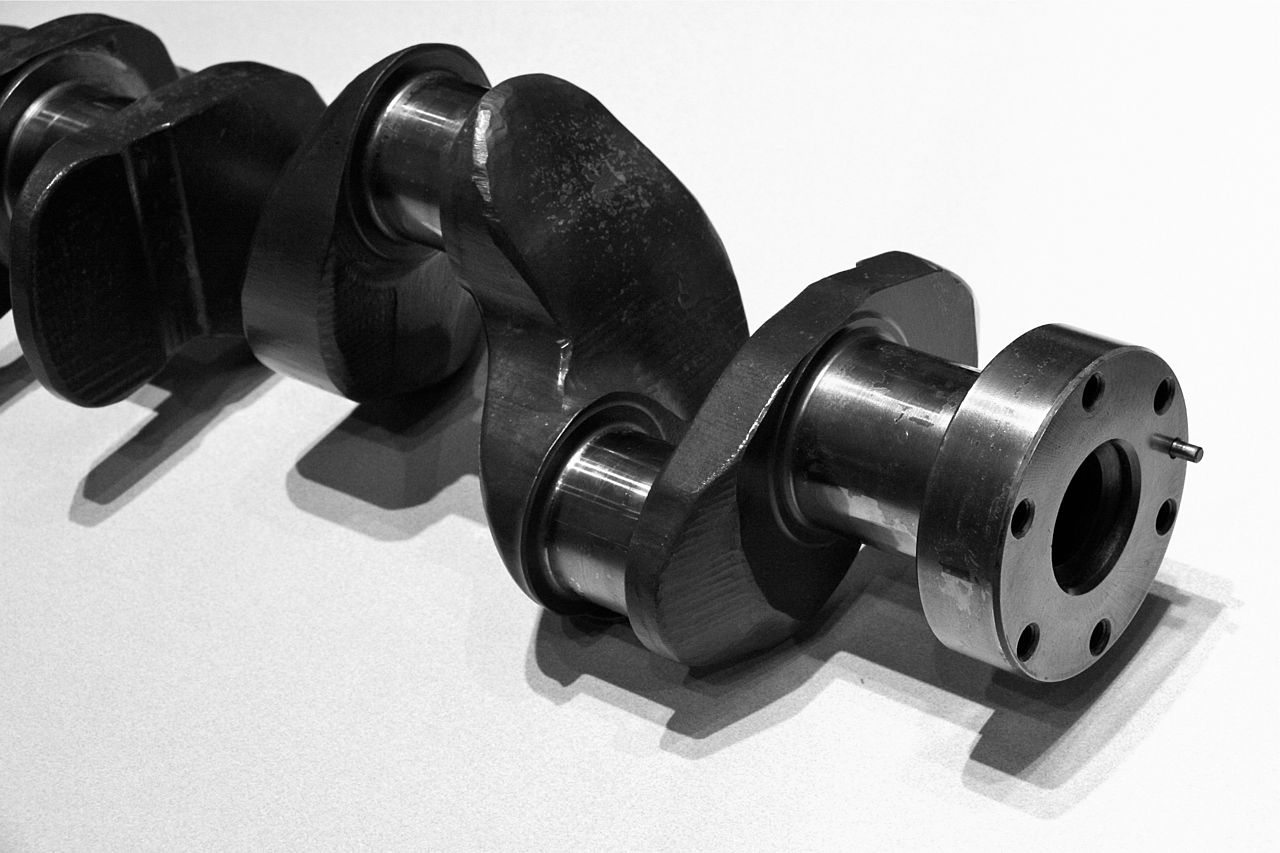
A typical crankshaft consists of main journals that run in the engine block bearings, offset rod journals (also called crankpins) where connecting rods attach, and webs or arms that join the journals. The offsets — often called throws — translate linear piston strokes into rotation. A flywheel or harmonic damper is commonly attached to smooth pulses and control torsional vibration; examples include a flywheel on the rear and a vibration or torsional damper at the front.
Design features and balance
Crankshafts are balanced by adding counterweights to offset the inertia of reciprocating parts. The layout and number of cylinders influence the design: inline, V, flat and radial engines require different journal spacing and counterweight arrangements to minimize vibration. Bearings are usually plain journal bearings lubricated by pressurized oil. Proper balance and lubrication are critical to reduce fatigue and extend service life.
Materials and manufacture
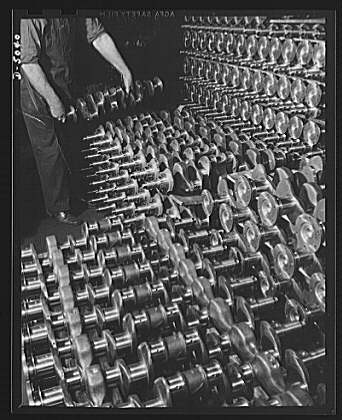
Most crankshafts are made from forged or cast steel, sometimes from cast iron, and often finished by machining, grinding and surface treatments such as nitriding or induction hardening to increase fatigue strength and wear resistance. High-performance or large marine and stationary engines may use multi-piece or built-up crankshafts; small engines and many automotive units are single-piece forgings for strength and economy.
Applications and importance
Crankshafts are central to automotive engines, motorcycles, small gasoline and diesel engines, marine propulsion, and many types of industrial reciprocating machinery. Their configuration affects engine smoothness, maximum rotational speed and power delivery. The connection to the piston and piston assembly and the matching to the rest of the drivetrain determine overall vehicle or machine behavior.
Maintenance, failure modes and testing
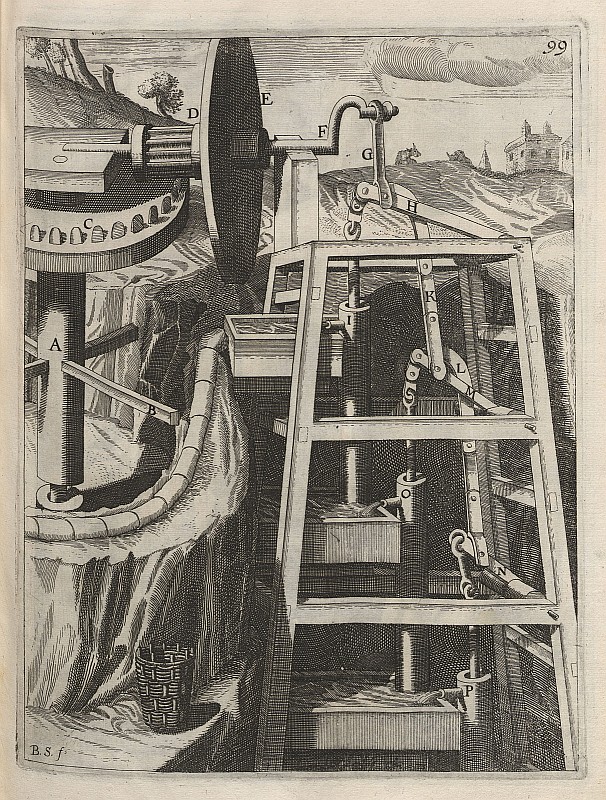
Common problems include bearing wear, journal scoring, fatigue cracks, bending or torsional failures from overload or poor lubrication. Inspection techniques include magnetic particle testing, ultrasonic crack detection and dimensional checks after grinding or repair. Reconditioning may involve reground journals, new bearings and balancing. For more technical background, including historical development of rotating mechanisms, see general histories of mechanical devices and rotation concepts.
- Major components: main journals, rod journals, webs, counterweights.
- Typical treatments: forging, machining, hardening and balancing.
- Key concerns: lubrication, balance, fatigue strength and harmonic damping.
Because it sits at the heart of reciprocating machinery, the crankshaft is a critical component whose design, material selection and precision manufacturing strongly influence reliability, efficiency and noise, vibration and harshness characteristics of engines and machines. Additional resources and engineering guides on crankshaft design and maintenance can be found through technical handbooks and specialist manufacturers (vibration dampers, flywheels, engine systems). For component details and service advice consult industry references or qualified technicians.
Questions and answers
Q: What is a crankshaft?
A: A crankshaft is the part of an engine that converts the up and down motion of the pistons into rotation.
Q: How does a crankshaft convert piston motion into rotation?
A: The crankshaft has one or more offset shafts that connect to the pistons. When the piston moves up and down, it pushes the offset shaft, which in turn rotates the crankshaft.
Q: What is the purpose of a flywheel?
A: A flywheel is usually connected to a crankshaft to smooth out its rotation.
Q: What is a vibration damper on a crankshaft?
A: A vibration damper is a device that is sometimes mounted on the other end of a crankshaft to reduce vibrations of the crankshaft.
Q: Why do large engines usually have several cylinders?
A: Large engines usually have several cylinders to reduce pulsations from individual firing strokes.
Q: What are counterweights on a crankshaft?
A: Counterweights are used to offset the piston and improve balance. This allows higher RPMs to be reached and more power produced, although it adds weight to the crankshaft.
Q: Why are counterweights important on some engines?
A: Counterweights are important on engines to achieve smoother operation at higher RPMs and to produce more power.
Related articles
Author
AlegsaOnline.com Crankshaft: function, design, history and applications Leandro Alegsa
URL: https://en.alegsaonline.com/art/23961