
Cowbird (Molothrus): brood-parasitic New World blackbirds
Cowbirds are brood-parasitic blackbirds (genus Molothrus) of the New World. They lay eggs in other species' nests, associate with grazing mammals, and affect host populations and conservation.
Overview
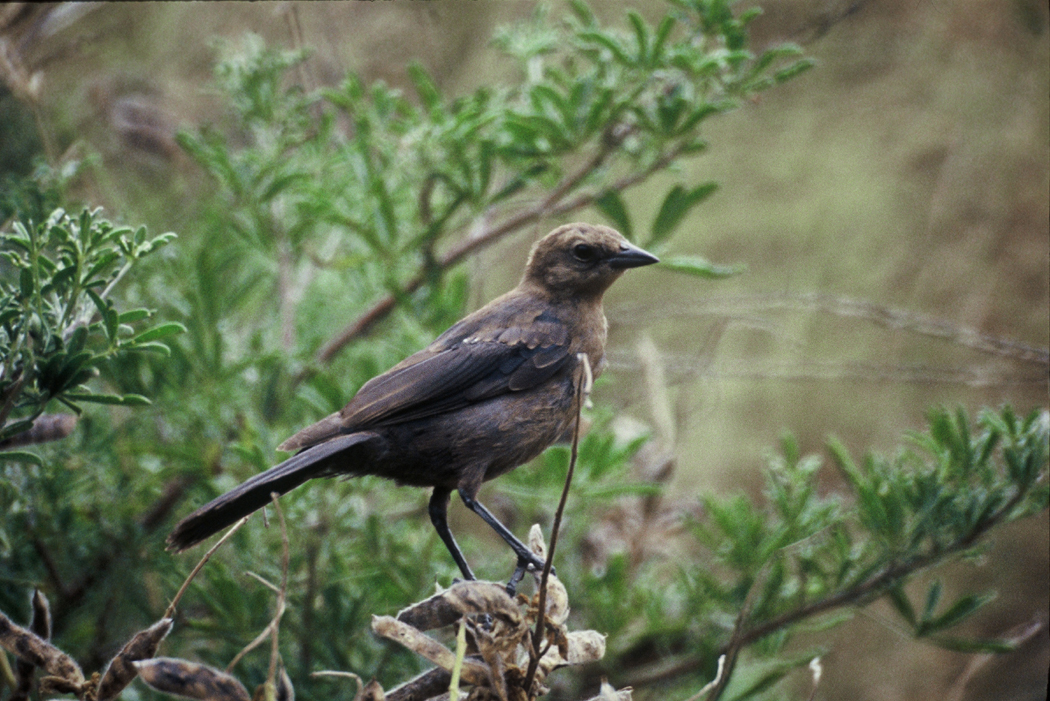
Cowbirds are a group of passerine birds placed in the genus Molothrus. They belong to the blackbird family Icteridae, which is restricted to the New World. Cowbirds are best known for obligate brood parasitism: rather than building their own nests, females lay eggs in the nests of other bird species and rely on those hosts to incubate and rear cowbird young.
Image gallery
10 Images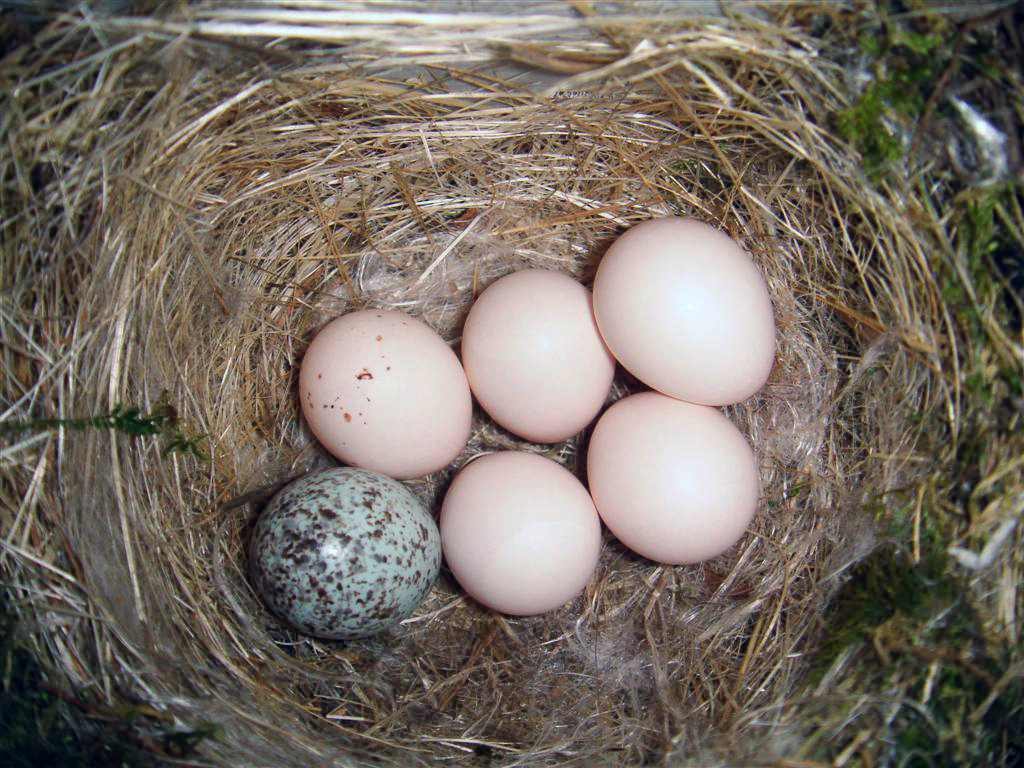


Biology and behaviour
Cowbirds forage primarily on the ground, feeding on seeds and a wide variety of invertebrates, including insects flushed by grazing animals; this association gives them the common name "cowbird" because they often follow cattle and other large mammals that disturb insects (cattle). They move in flocks outside the breeding season and can follow livestock for insects and seeds stirred up by hooves. Females are serial brood parasites: one female may lay eggs in many different host nests over a breeding season.
Parasitic strategy and life cycle
Unlike some parasitic cuckoos, most cowbird chicks do not evict host eggs; instead they typically coexist with the host's young but often grow faster and beg more vigorously, which can reduce the survival or growth of nestmates. Cowbird eggs and nestling appearance vary little to moderately across species, and because most cowbirds are generalists the eggs often differ visibly from the host's eggs. Females usually lay quickly and may remove or puncture one host egg when depositing their own.
Species, hosts and distribution
Multiple Molothrus species occur across the Americas. The widespread Brown-headed Cowbird is one of the best-known species and has parasitized over 220 host species, making it among the most catholic in host selection. Other species include the Bronzed, Shiny and Screaming Cowbirds, each with differing regional ranges and host preferences. Cowbirds are found throughout a range of habitats where hosts and open foraging areas occur, from grasslands and agricultural areas to forest edges.
Ecological impacts and conservation
Brood parasitism by cowbirds can have important ecological consequences. For many common host species the impact is limited, but for some small or declining songbirds, especially those with small ranges or specialized nesting habits, cowbird parasitism has contributed to population declines. Conservation measures have at times included targeted management such as trapping or removal of cowbirds near high-value nesting populations. The cowbird–host relationship is widely studied as an example of interspecific reproductive interaction and its evolutionary implications.
Notable facts and distinctions
- Association with livestock: cowbirds often exploit insects stirred up by large mammals and are frequently seen near insects flushed by grazing animals.
- Brood parasitism parallels: their strategy resembles that of the true cuckoos, though methods and consequences differ; see comparisons with the cuckoo.
- Taxonomic context: as members of Icteridae, cowbirds are related to orioles, grackles and other New World blackbirds and share many morphological traits with them.
- Foraging ecology: their habit of following cattle and other large herbivores shapes their movement and habitat use across the New World.
Because cowbirds affect many other species through their reproductive strategy, they remain an important focus in studies of avian ecology, behavior and conservation. For further general reading see broader treatments of the genus Molothrus and the ecology of brood parasitism (cuckoo comparisons and family-level summaries at Icteridae references).
Questions and answers
Q: What is a cowbird?
A: A cowbird is a bird of the genus Molothrus that is a brood parasite and lays its eggs in the nests of other birds.
Q: How does a cowbird trick other birds?
A: The cowbird tricks other birds into raising the young cowbirds by laying its eggs in their nests.
Q: Where is the family Icteridae limited to?
A: The family Icteridae is limited to the New World.
Q: What do cowbirds feed on?
A: Cowbirds feed on insects, including those stirred up by cattle.
Q: How many hosts does the Brown-headed Cowbird have?
A: The Brown-headed Cowbird has over 220 hosts.
Q: Do all cowbird species have the same number of hosts?
A: No, the other cowbird species have fewer known hosts.
Q: Do cowbirds choose specific hosts?
A: No, all cowbird species are generalists when it comes to choosing a host, which means that the eggs may look very different from the host's eggs.
Related articles
Author
AlegsaOnline.com Cowbird (Molothrus): brood-parasitic New World blackbirds Leandro Alegsa
URL: https://en.alegsaonline.com/art/23866
Sources
- beheco.oxfordjournals.org : beheco.oxfordjournals.org/content/15/1/109.full/content/15/1/109.full
- pnas.org : "Retaliatory mafia behavior by a parasitic cowbird favors host acceptance of parasitic eggs"
- si-pddr.si.edu : "A further contribution to knowledge of the host relations of the parasitic cowbirds"